
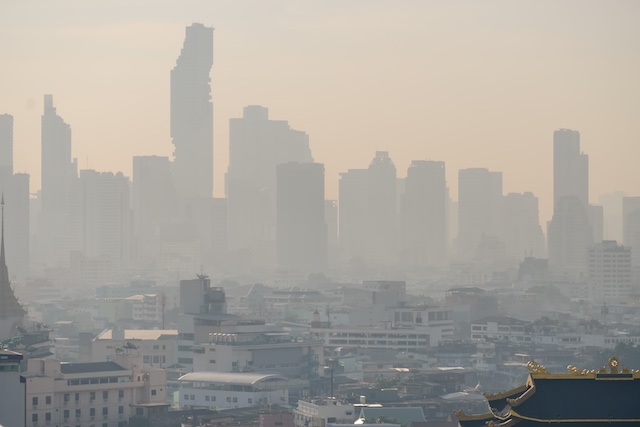
Air Pollution May Raise Obesity Risk in Children by Affecting Impulse Control
Key Takeaways:
- New peer reviewed research suggests early exposure to PM2.5 air pollution may contribute to childhood obesity by affecting children’s impulse control.
- Babies exposed to higher PM2.5 levels during their first year of life were more likely to show later difficulties with inhibitory control, which were linked to higher body fat and BMI between ages four and eight.
- Researchers say individual steps such as HEPA filtration may help reduce exposure, but wider policy action is needed to limit PM2.5 pollution.
Study links PM2.5 exposure with later weight gain
Exposure to common air pollution may contribute to childhood obesity by disrupting children’s ability to control impulses, according to new first of its kind peer reviewed research.
The study, led by researchers at Mount Sinai’s Icahn School of Medicine, focused on particulate matter 2.5, known as PM2.5. This pollutant is made up of microscopic solid or liquid particles suspended in the air. Common manmade sources include traffic emissions and the burning of fossil fuels.
PM2.5 is considered a probable carcinogen and has been linked to a range of health problems, including dementia and strokes. Previous research has also shown that PM2.5 has obesogenic properties, meaning it may disrupt metabolism and is associated with weight gain.
Impulse control identified as a possible pathway
Researchers said the new study is the first to identify impulse control as a potential pathway linking early PM2.5 exposure with childhood obesity.
The study found that babies exposed to higher levels of PM2.5 during their first year of life were more likely to develop difficulties with impulse control later in childhood. Those behavioural changes were then associated with higher body fat and higher BMI among children aged between four and eight.
“A lot of the obesity research primarily focuses on – and is being shaped by – diet and physical activity, and a lot may not include environmental exposures, including air pollution,” said Jamil Lane, a co-author with Mt Sinai’s Icahn School of Medicine.
“Our study is novel in that we are showing that high levels of air pollution early in life may cause more difficulty with self-regulation, which contributes to weight gain.”
Why early life exposure matters
The researchers examined data from 434 children born largely between 2007 and 2008 in Mexico City. The children are part of a longitudinal health study.
The authors modelled ambient PM2.5 exposure during pregnancy and during the children’s first year of life. Lane described this early period as a “very sensitive window” for brain development.
The children were later assessed for impulsivity and measures linked to obesity. According to the study, the group with the highest PM2.5 exposure showed a pattern of high impulsivity, reflecting significant deficits in inhibitory control.
How brain development and eating behaviour may be connected
Poor inhibitory control is already well established as being linked to obesity. Bob Wright, a study co-author and environmental epidemiologist at Mount Sinai, said the authors questioned whether PM2.5’s neurotoxic effects and obesity were “part of the same processes”.
“Our study shows that greater early exposure to PM2.5 in the first year of life is associated with alterations in inhibitory control function in childhood,” the study’s authors wrote. “The effect is likely due to altered eating behaviors related to inhibitory control that are programmed early in life.”
The findings suggest that air pollution exposure early in life may affect brain pathways involved in self-regulation, which could then influence eating behaviours and weight gain later in childhood.
Study limitations and wider context
The study acknowledges several limitations, including its small population size and limited covariates.
However, Cecilia Moura, a clean transportation scientist with the Union of Concerned Scientists, who was not involved in the research, said the study was sound and that the novel findings “indicate there is sufficient evidence supporting the correlation to motivate policies and regulations that mitigate exposure to PM2.5”.
The research comes against the backdrop of high levels of obesity in the United States. In 2018, about 42% of American adults were estimated to have obesity.
Steps families can take to reduce exposure
The researchers said people can take some steps to help protect themselves and their children from PM2.5 exposure.
Home HEPA air filtration systems are effective at removing PM2.5. Furnace filters rated MERV 13 or higher can also capture much of the pollutant. DIY filtration systems made with a box fan, cardboard, tape, and pleated air filters have also been shown to reduce particulate matter.
The authors advised parents to avoid high congestion areas as much as possible and to stay indoors when wildfire smoke is heavy.
Researchers call for policy action
Despite these individual measures, researchers stressed that people cannot fully protect themselves from air pollution exposure on their own. They said the findings underline the need for wider policy solutions and greater public awareness.
“There is not going to be change if people are not aware and lobbying for it, but policy change takes a long time and there are things we can do to protect ourselves,” Wright said.
CCH insights:
This study provides more evidence of the complex array of factors that can contribute to obesity, and may be one reason (of many) that people from lower socioeconomic backgrounds have a higher risk of developing obesity. When we use the term ‘obesogenic environment’ most of us think of the plethora of fast-food outlets, the abundance of UPFs in food shops and our reliance on motorised transport – but we need to think even more widely than that, to include the quality of air we are breathing.
Building that wider, evidence-based picture of what actually drives obesity – across the biological, behavioural, social and environmental – is the foundation of good obesity care, and it’s what our CPD short course Obesity Essentials is designed to give any healthcare professional. Those wanting to go further can explore our PGCert in Obesity Care, which examines the full range of contributing factors in depth.
Read More