[email protected]

+44 (0)20 3773 4895

logologologo
  • About Us
    • The College
    • Advisory Board
    • Our Faculty and Team
    • Intelligence Hub
  • Topic Areas
    • Obesity Care
    • Digital Health
    • Behaviour Change
  • Courses
    • CPD Short Courses
    • PGCert in Obesity Care
    • PGCert in Digital Health
  • Apply
    • Postgraduate Qualification in Obesity Care
    • Postgraduate Qualification in Digital Health
    • FAQs
  • Resources
    • News
    • Our Publications
    • Monthly News Bulletins
    • Funding Options
  • Contact Us
    • Contact Us
  • Student Login

No products in the cart.

logologologo
  • About Us
    • The College
    • Advisory Board
    • Our Faculty and Team
    • Intelligence Hub
  • Topic Areas
    • Obesity Care
    • Digital Health
    • Behaviour Change
  • Courses
    • CPD Short Courses
    • PGCert in Obesity Care
    • PGCert in Digital Health
  • Apply
    • Postgraduate Qualification in Obesity Care
    • Postgraduate Qualification in Digital Health
    • FAQs
  • Resources
    • News
    • Our Publications
    • Monthly News Bulletins
    • Funding Options
  • Contact Us
    • Contact Us
  • Student Login

No products in the cart.

  • About Us
    • The College
    • Advisory Board
    • Our Faculty and Team
    • Intelligence Hub
  • Topic Areas
    • Obesity Care
    • Digital Health
    • Behaviour Change
  • Courses
    • CPD Short Courses
    • PGCert in Obesity Care
    • PGCert in Digital Health
  • Apply
    • Postgraduate Qualification in Obesity Care
    • Postgraduate Qualification in Digital Health
    • FAQs
  • Resources
    • News
    • Our Publications
    • Monthly News Bulletins
    • Funding Options
  • Contact Us
    • Contact Us
  • Student Login
December 19, 2017 by Nigel Hinchliffe Global Health & Policy 0 comments

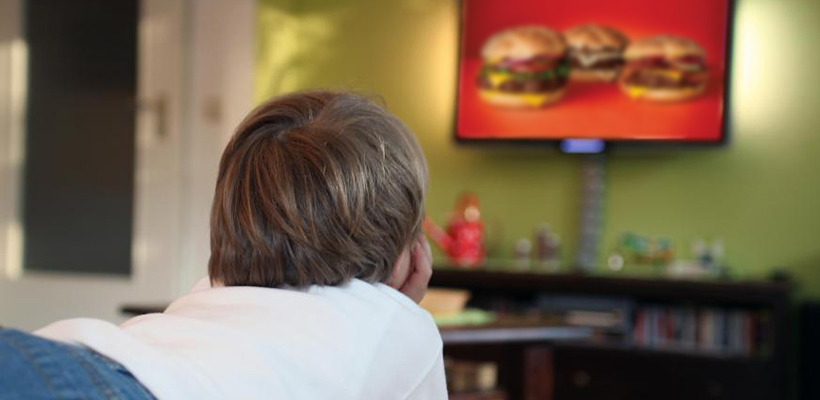
Food adverts during family TV shows encourage junk food consumption

A new report that contains research conducted at the University of Liverpool has found that six in ten food adverts shown during family programmes push junk food, including fast food, takeaways and sweets. Normally, these adverts would be banned from children’s TV under UK regulations which prohibit the advertising of food high in fat, salt or sugar (HFSS) during programmes that are specifically aimed at children. However, due to a loophole in the legislation, adverts during ‘family’ TV programmes that are popular with children do not have the same safeguards in place. This is despite the fact that significantly more children are watching these programmes than some of the more popular children’s shows.

The researchers, based at the University of Liverpool, have previously published research that demonstrated that television food advertising alters children’s food preferences, towards high fat, salt and sugar foods. In this study they found that, at its worst, junk food advertising constituted nine adverts within a 30-minute period. In total 59% of food and drink adverts were for HFSS foods, whilst only 1% were for fruit and vegetables. The researchers hope that the regulations put in place over HFSS food advertising during children’s programmes will be extended to include more family focused programmes up to the watershed of 9pm.


PREV
NEXT

Related Posts

November 16, 2017
Water with school lunches to prevent obesity
Read More
Diet plan, apple and measure tape.
January 16, 2025
Global commission proposes comprehensive framework for obesity diagnosis and treatment
Read More
Grunge stone houses in poor area of historical Indian town.
February 22, 2023
Obesity rates likely to double by 2030 with highest increases in lower-income countries
Read More
Population health and obesity
March 7, 2023
More than half of the world will have overweight or obesity by 2035 – report
Read More

CCH LINKS

FAQ
HOW TO APPLY
ACADEMIC ADVISORY BOARD
FACULTY AND STAFF
TERMS & CONDITIONS
CCH EDUCATION SERVICES

OUR PARTNERS

NOF
Haringey Obesity Alliance
Skills Active
CPD UK
ASO
REPS
Southwark
DIT
Healthcare Uk
OAC

ABOUT CCH

CONTACT US
[email protected]
+44 (0)20 3773 4895
Technopark, 90 London Road, LONDON, SE1 6LN
 

© The College of Contemporary Health