[email protected]

+44 (0)20 3773 4895

logologologo
  • About Us
    • The College
    • Advisory Board
    • Our Faculty and Team
    • Intelligence Hub
  • Topic Areas
    • Obesity Care
    • Digital Health
    • Behaviour Change
  • Courses
    • CPD Short Courses
    • PGCert in Obesity Care
    • PGCert in Digital Health
  • Apply
    • Postgraduate Qualification in Obesity Care
    • Postgraduate Qualification in Digital Health
    • FAQs
  • Resources
    • News
    • Our Publications
    • Monthly News Bulletins
    • Funding Options
  • Contact Us
    • Contact Us
  • Student Login

No products in the cart.

logologologo
  • About Us
    • The College
    • Advisory Board
    • Our Faculty and Team
    • Intelligence Hub
  • Topic Areas
    • Obesity Care
    • Digital Health
    • Behaviour Change
  • Courses
    • CPD Short Courses
    • PGCert in Obesity Care
    • PGCert in Digital Health
  • Apply
    • Postgraduate Qualification in Obesity Care
    • Postgraduate Qualification in Digital Health
    • FAQs
  • Resources
    • News
    • Our Publications
    • Monthly News Bulletins
    • Funding Options
  • Contact Us
    • Contact Us
  • Student Login

No products in the cart.

  • About Us
    • The College
    • Advisory Board
    • Our Faculty and Team
    • Intelligence Hub
  • Topic Areas
    • Obesity Care
    • Digital Health
    • Behaviour Change
  • Courses
    • CPD Short Courses
    • PGCert in Obesity Care
    • PGCert in Digital Health
  • Apply
    • Postgraduate Qualification in Obesity Care
    • Postgraduate Qualification in Digital Health
    • FAQs
  • Resources
    • News
    • Our Publications
    • Monthly News Bulletins
    • Funding Options
  • Contact Us
    • Contact Us
  • Student Login
September 20, 2018 by Nigel Hinchliffe GLP-1RAs & Medications 0 comments

Efficacy and safety of semaglutide for weight loss in patients with obesity

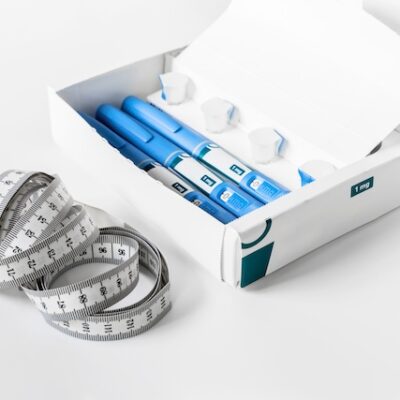
In this paper, published in The Lancet, the authors sought to assess efficacy and safety of the glucagon-like peptide-1 (GLP-1) analogue semaglutide, in comparison with a similar drug liraglutide, and placebo. The study was done in 8 countries, involving 71 clinical sites, with the primary endpoint being weight loss at week 52.

GLP-1 analogues mimic the function of human GLP-1, which regulates insulin secretion and glucagon secretion. These processes are linked with appetite, satiety and energy intake. This study found that these drugs, which were initially licensed for diabetes treatment, resulted in weight reductions which were significantly greater than the placebo group at 52 weeks. This weight loss is primarily due to the individuals consuming less energy, because of a combination of appetite suppression and enhanced satiety. Semaglutide was found to be the most effective, with weight loss of 11-14%, compared to Liraglutide’s 7-8%. In terms of side-effects, the most common complaint was of nausea. This was found to be dose dependent, so higher doses made side-effects more likely. Overall however, semaglutide was well tolerated, with no unanticipated safety or tolerability outcomes. Semaglutide has been shown to have a good benefit-risk profile which further supports its use as a weight management drug in its own right, instead of just being licensed for diabetes. Phase-3 studies are ongoing.

 

PREV
NEXT

Related Posts

February 12, 2019
Antibiotic consumption and childhood obesity
Read More
GLP-1 pen and a stethoscopes on a beige table.
February 25, 2026
Mice Study Suggests Tirzepatide Enhances Metabolism by Activating Brown Fat in Addition to Reducing Weight
Read More
May 11, 2016
Does nanoparticle drug delivery offer hope to obese patients?
Read More
Patient undergoing surgery.
October 7, 2025
Use of GLP-1 Drugs Soars Among People Undergoing Bariatric Surgery, Study Finds
Read More

CCH LINKS

FAQ
HOW TO APPLY
ACADEMIC ADVISORY BOARD
FACULTY AND STAFF
TERMS & CONDITIONS
CCH EDUCATION SERVICES

OUR PARTNERS

NOF
Haringey Obesity Alliance
Skills Active
CPD UK
ASO
REPS
Southwark
DIT
Healthcare Uk
OAC

ABOUT CCH

CONTACT US
[email protected]
+44 (0)20 3773 4895
Technopark, 90 London Road, LONDON, SE1 6LN
 

© The College of Contemporary Health