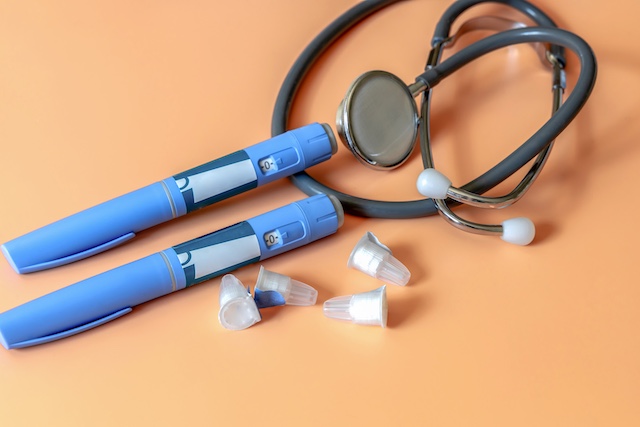
NHS plans free weight-loss injections at community pharmacies
Key Takeaways:
- The NHS is preparing a trial to offer the weight-loss medication Mounjaro at community pharmacies, aiming to improve access and reduce waiting times.
- Pharmacies like Boots and Superdrug, which already sell these medications privately, may soon provide them free of charge under NHS schemes, particularly in deprived areas with high obesity rates.
- Experts stress the need for comprehensive support, including psychological and nutritional counselling, alongside the rollout of these powerful medications to ensure safe and effective use.
Weight-loss medications such as Mounjaro and Wegovy may soon be available free of charge at high street pharmacies as part of the NHS’s expanding efforts to address obesity in the United Kingdom.
At present, these medications are accessible only through specialist NHS weight-management clinics, which are hospital-run and face waiting lists extending up to two years. Consequently, although approximately 15 million people in Britain are classified as living with obesity and meet the eligibility criteria, only around 50,000 have been able to access these treatments through the NHS.
Currently, numerous pharmacy chains — including Boots and Superdrug — offer these medications privately at a cost of roughly £150 per month, but they are not available to NHS patients via this route.
In a move designed to speed up access, the government is preparing to launch a trial in which Mounjaro, the brand name for tirzepatide (manufactured by the US pharmaceutical company Eli Lilly), will be made available through NHS community pharmacies. The programme is expected to focus on deprived areas, where high unemployment and elevated rates of obesity intersect, with the broader goal of boosting economic growth by improving public health.
Due to the high workload already faced by general practitioners (GPs), community pharmacies are increasingly involved in prescribing medications — such as antibiotics — following brief consultations. A similar model is likely to be applied for dispensing weight-loss injections.
Clinical trials have shown that Mounjaro can help people lose, on average, 20 per cent of their body weight. In December of last year, the National Institute for Health and Care Excellence (Nice), the UK’s health watchdog, approved the medication for NHS use, explicitly stating that it could be administered not only in hospital clinics but also within GP surgeries or pharmacies.
The NHS is expected to release details in the coming weeks about how Mounjaro will be incorporated into community care pathways.
Dr Kath McCullough, NHS England’s national speciality adviser for obesity, described the move as an “exciting opportunity” and emphasised that the initiative is likely to concentrate on regions with the “greatest clinical need”. Speaking after the publication of the Nice guidelines, Dr McCullough stated:
“Community pharmacies already provide a range of care — some pharmacists who will go through, for example, your blood pressure medication with you and manage that. But it’s still early days and pharmacists prescribing weight-loss injections is one of several potential models that NHS England is exploring, and ultimately it will be down to each local ICB [integrated care board] to consider. The exciting thing here is that it’s pretty much uncharted territory.”
The Tony Blair Institute for Global Change, a think tank that holds significant influence with the Labour government, released a report last year arguing that the government’s prevention agenda would be “doomed to fail” unless weight-loss medications were delivered at scale. The report advocated for NHS partnerships with online pharmacies, rather than relying solely on specialist clinics, to expand access.
In addition, the UK government has partnered with Eli Lilly to conduct a five-year trial in Manchester, aiming to evaluate whether Mounjaro can support individuals in returning to work and in preventing obesity-related diseases, thereby alleviating strain on NHS resources.
Analysis conducted by Nice suggests that widespread use of the drug can result in substantial cost savings for the NHS, particularly by preventing conditions such as type 2 diabetes, which currently costs the health service £11.4 billion annually.
Prime Minister Sir Keir Starmer has previously remarked that weight-loss medications “could be very important for our economy and for health”. Health Secretary Wes Streeting has similarly commented that the new class of drugs could have a “monumental” impact on Britain’s productivity by reducing levels of worklessness.
While access to these medications on the NHS has been limited, more than half a million individuals in the United Kingdom are currently purchasing Mounjaro and Wegovy privately from online pharmacies.
Professor Jason Halford, representing the European Association for the Study of Obesity, expressed cautious optimism about the plans, stating:
“I welcome efforts to increase availability of these drugs, and pharmacies could certainly play a part in that.
The concern is getting enough support. People need close monitoring, psychological support and advice on nutrition.
Potentially this is certainly work that pharmacies could expand into, but these are powerful drugs and they do have side-effects. I would definitely welcome efforts to trial new ways to roll out the drugs.”
As this trial advances, experts, policymakers, and healthcare providers alike will need to ensure that access to these medications is paired with comprehensive support structures, helping individuals achieve sustainable, long-term health improvements.
CCH Insights:
This sounds like a great idea, to improve access to GLP-1RAs, particularly in areas of high deprivation. However, it needs to also provide the right kind of support for patients, and the necessary funding and training to deliver it. If you are spending taxpayers’ money on GLP-1 therapy, you need to make sure it is part of an integrated approach which optimises the safety of the patient and the likelihood the treatment will be successful. This means providing an integrated approach with things like nutrition advice, psychological support and monitoring of side effects. Pharmacists would require appropriate training and referral options to be able to deliver this kind of service.
This sounds like a great idea, to improve access to GLP-1RAs, particularlyin areas of high deprivation. However, it needs to also provide the right kind of support for patients, and the necessary funding and training to deliver it. If you are spending taxpayers’ money on GLP-1 therapy, you need to make sure it is part of an integrated approach which optimises the safety of the patient and the likelihood the treatment will be successful. This means providing an integrated approach with things like nutrition advice, psychological support and monitoring of side effects. Pharmacists would require appropriate training and referral options to beable to deliver this kind of service.