
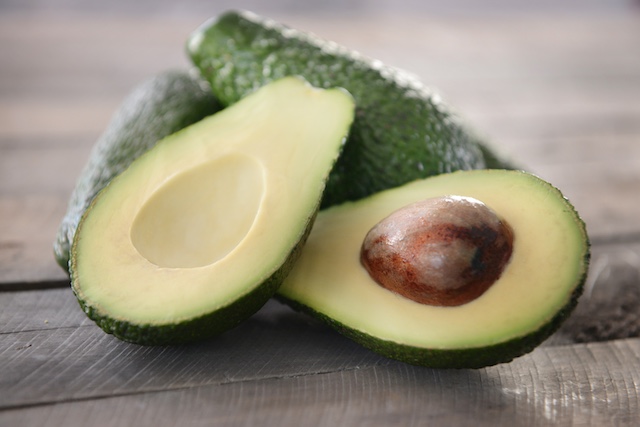
One Avocado a Day May Lower a Hidden Heart Disease Risk in Adults Living With Obesity
Key Takeaways:
- Adults living with obesity who ate one avocado a day for six months showed a fall of 49 nanomoles per litre in LDL particle concentration – equivalent to roughly a 4% reduction in heart disease risk.
- LDL particle number is a risk factor distinct from LDL cholesterol itself, and it tends to be higher in people with abdominal obesity, meaning two people with identical cholesterol readings can carry very different levels of risk.
- The benefit appeared consistently across sex, race, ethnicity, age and body mass index, suggesting that a single, sustainable dietary addition can shift a meaningful cardiometabolic marker without any wider change to diet or activity.
A single dietary change, made in the real world
Adding one avocado to the daily diet may reduce heart disease risk in adults living with obesity, according to research led by the Penn State Department of Nutritional Sciences and published in the Journal of Clinical Lipidology.
The team found that regular avocado consumption was associated with a lower concentration of low-density lipoprotein (LDL) particles – the protein particles that transport cholesterol around the body – in the blood. That reduction corresponded to an approximate 4% decrease in heart disease risk.
What distinguishes the finding is its modesty. Rather than testing a wholesale dietary overhaul, the researchers examined what happens when people make one addition and otherwise carry on as normal.
“If people want to improve the quality of their diet, making one small change might be a more feasible strategy than attempting to change their entire diet,” said Janhavi Damani, postdoctoral scholar at Penn State and first author of the study. “For people with obesity, including avocados in their daily diet might be a good starting place.”
Why particle number matters, not just cholesterol
LDL particles represent a risk factor for heart disease that is separate from LDL cholesterol – the so-called “bad cholesterol” that is itself a significant contributor to risk. The risk posed by LDL particles is typically higher in people with abdominal obesity, the researchers noted.
The distinction rests on a point of basic physiology that standard lipid panels do not capture. LDL cholesterol cannot travel through the body unaided; it must be carried by a protein particle. When a greater number of protein particles are involved in transporting the same quantity of cholesterol, heart disease risk rises – even though the measured cholesterol figure is unchanged.
Damani illustrated the point directly.
“Imagine two people with the same high levels of LDL cholesterol,” Damani said. “Person A carries their cholesterol in fewer, larger LDL particles, and Person B carries their cholesterol in more, smaller LDL particles. Person B’s heart disease risk would be higher because their overall particle count is higher even though a test of their LDL cholesterol would look identical.”
How smaller particles do more damage
Those smaller particles penetrate artery walls more easily and contribute to the accumulation known as plaque, Damani explained.
Plaque raises heart disease risk through two mechanisms working together. It narrows the space available for blood to pass through a vessel, and it reduces the vessel’s flexibility. The consequence becomes clearest under load: when a person’s heart is working hardest – through exertion, heat, stress or any other cause – their blood pressure rises more sharply than it otherwise would, because the vessel can no longer expand to accommodate the increased demand. That failure to compensate can be enough to trigger a cardiac event such as a heart attack.
This mechanistic detail matters clinically, because it explains why particle count can carry prognostic weight even when a patient’s cholesterol result looks reassuring. Practitioners working in weight management and cardiometabolic care increasingly need to interpret markers of this kind alongside anthropometric measures, and this is territory that CCH’s CPD short course provision in obesity care covers in some depth.
Inside the Habitual Diet and Avocado Trial
For this analysis, the researchers drew on data originally collected from 786 participants in the Habitual Diet and Avocado Trial, a six-month study of adults aged 25 years and older.
Eligibility was defined by waist circumference. Men qualified if their waist circumference exceeded 102 centimetres (40 inches); women qualified if theirs exceeded 89 centimetres (35 inches).
Participants were divided into two groups. Half were instructed to maintain their usual diet and activity levels. The other half were provided with one avocado to consume each day and were also instructed to maintain their usual diet and activity levels. No other dietary guidance or restriction was applied.
The original Habitual Diet and Avocado Trial had already established that adding avocado to the diets of people living with obesity did not alter weight or waist circumference, but could reduce levels of LDL cholesterol.
What the blood samples showed
In the current study, the researchers compared blood samples collected at the start and at the end of the six-month period.
Across the study, LDL particle levels in the avocado-per-day group fell by 49 nanomoles per litre. That change corresponded to an approximate 4% reduction in heart disease risk, according to the researchers.
The team was careful to set this figure in proportion.
“Four percent is a modest reduction compared with the 14% to 29% lower heart disease risk associated with improving the overall diet,” Damani said. “However, it is a step in the right direction.”
A consistent effect across the study population
One of the more notable findings concerned who benefited. Regardless of participants’ sex, race, ethnicity, age or body mass index, they were equally likely to experience improvements in LDL particle levels.
The researchers took this to indicate that anyone living with obesity could benefit from avocado consumption. They added a clear caveat, however: people should speak to a registered dietitian nutritionist or their physician for personalised, expert guidance on improving their diets.
From controlled conditions to unpredictable lives
The study’s most significant contribution may lie less in the size of the effect than in the setting in which it was demonstrated.
“Penn State researchers demonstrated several years ago that avocado consumption could reduce LDL cholesterol and levels of LDL particles,” said Kristina Petersen, associate professor of nutritional sciences and senior author of this study. “But in that study, the researchers controlled participants’ entire diets throughout the experiment. This study demonstrated benefits in the real world, where people’s diets are much less predictable. In the course of people’s normal lives, avocado consumption still contributes to a healthier diet.”
That shift – from a tightly controlled feeding study to free-living participants managing their own meals – is what makes the result relevant to everyday practice. A 4% reduction achieved under laboratory conditions tells clinicians relatively little about what patients will actually sustain. A comparable reduction achieved by people eating as they normally do, with one addition, is a different kind of evidence.
What this means for practice
For healthcare professionals supporting people living with obesity, the findings reinforce a familiar principle with fresh quantitative backing: incremental, achievable changes can move clinically meaningful markers. They also underline the value of looking beyond standard lipid measurements when assessing cardiovascular risk in patients with abdominal obesity, where LDL particle number may reveal risk that a conventional cholesterol result conceals.
None of this positions a single food as a substitute for comprehensive care. The researchers’ own framing is deliberately measured – a step in the right direction, not a solution. But in a field where adherence often determines outcomes more than the theoretical strength of an intervention, feasibility is itself a clinical variable worth taking seriously.
CCH insight
It is always re-assuring to hear about studies which show clear benefits of foods we associate with good health, so this is great news for people who eat avocados regularly and a nice reminder for others to maybe eat them more often. However, high cholesterol and other risk factors for cardiometabolic diseases are most common in populations of high deprivation, who are unable to buy avocados regularly due partly to access but mainly due to cost.
This study’s practical value lies in feasibility – one addition, sustained over six months, moving a real marker of cardiovascular risk. Translating that kind of evidence into advice patients will actually follow is the core skill of nutritional care in obesity management. CCH’s Nutrition & Weight Management Essentials (6 hours, fully online, CPD-accredited) gives healthcare professionals a solid grounding in fundamental nutrition concepts, the factors driving weight gain, and evidence-based approaches to both weight loss and long-term maintenance, with real-life case studies throughout.
Explore Nutrition & Weight Management Essentials →
Read More
Statins Bring Many People With Obesity Level With Healthy-Weight Peers on Cholesterol and Blood Pressure, Study Finds
Key Takeaways:
- Among adults over 40 in high-income countries, gaps in cholesterol and blood pressure between people with obesity and those of a healthy weight have narrowed or vanished.
- The convergence is driven largely by wider use of statins and blood-pressure medications among people living with obesity.
- In adults under 40, people with obesity still show higher cholesterol and blood pressure, and obesity continues to raise the risk of other conditions.
A narrowing gap in cardiovascular risk
Many adults living with obesity now have cholesterol and blood pressure readings that are “indistinguishable” from those of people at a healthy weight, largely because of the use of statins, a major new study has found. In some cases, researchers reported, people with obesity were “better off” than their healthy-weight counterparts.
Historically, adults with obesity were more likely to have raised blood pressure and higher levels of unhealthy cholesterol. The study found, however, that differences in unhealthy cholesterol and blood pressure have “narrowed or disappeared” among people aged 40 and over.
Experts attribute the shift chiefly to the greater use of cholesterol-lowering medications, such as statins, and blood-pressure treatments – both of which are more commonly prescribed to people living with obesity. They said the findings were important to “give a picture of the cardiovascular health” of the population most likely to be offered weight-loss medications, whose popularity has risen rapidly, and warned that it was important not to “lose sight” of these results as more people take such drugs.
What the researchers examined
The study, published in the Lancet, drew on data from almost 1 million adults aged 20 to 79 across England, Japan, South Korea, Taiwan, Thailand, Finland and the United States. Researchers analysed blood pressure, cholesterol levels and body mass index (BMI) scores recorded in 110 health surveys carried out between 1990 and 2024. They also reviewed the use of cholesterol-lowering drugs and blood-pressure treatments, known as antihypertensives.
The team found that unhealthy cholesterol levels and blood pressure “declined over time”, particularly among people aged 40 and over. Those declines were larger among people with obesity, “leading to a convergence of these risk factors between obesity and normal BMI in people older than 40 years”.
The researchers wrote: “As a result of these trends, in England, the US, Thailand, South Korea, and Japan, older people with obesity often became indistinguishable from, or better off than, those with normal BMI in terms of non-HDL cholesterol and SBP (systolic blood pressure).”
They added: “We found that differences in non-HDL cholesterol and SBP between those with obesity and those with a normal BMI narrowed or disappeared, especially in older adults, in some cases making those with and without obesity indistinguishable in terms of these cardiometabolic traits.”
Why the gap has closed
Prof Majid Ezzati, from the School of Public Health at Imperial College London, said: “Our study suggests that, in high-income countries, taking medication to lower blood pressure and cholesterol has helped middle-age and older adults lower their cardiovascular risk to levels that are similar to people with normal BMI [body mass index].
“At a time that weight-loss medications are becoming more widely used, our results give a picture of the cardiovascular health of people likely to be prescribed them, which allows the healthcare system to understand how blood pressure and cholesterol treatments benefit the population alongside weight-loss medications.”
Younger adults remain at higher risk
The convergence was not seen across all age groups. In adults under 40, people with obesity still had higher levels of unhealthy cholesterol and higher blood pressure than their healthy-weight peers.
One of the research team, Prof Edward Gregg from Imperial College London, stressed that “it doesn’t mean that obesity does not still increase your risk of other outcomes”.
Another of the authors, Yse d’Ailhaud de Brisis, also from Imperial College London, said: “While good news for older adults with obesity, our results suggest that cardiovascular health risks remain higher for adults under 40 than for their counterparts with a normal BMI.
“Early lifestyle interventions, screening and, when appropriate, medication in this younger group should be considered to prevent long-term cardiovascular complications linked to obesity.”
A public health success, with caveats
Commenting on the study, Prof Bryan Williams, the chief scientific and medical officer at the British Heart Foundation, said: “This study highlights a powerful public health success story – it shows just how effective modern treatments for blood pressure and cholesterol have become, with many people over 40 with obesity now reaching levels similar to those with a healthy weight.
“But we must not lose sight of the bigger picture. These medications are needed because of the adverse effects of obesity on cardiovascular disease risk. Moreover, obesity still affects the body in many other ways and increases the risk of other health problems, including diabetes, kidney disease and some cancers.”
Read More