
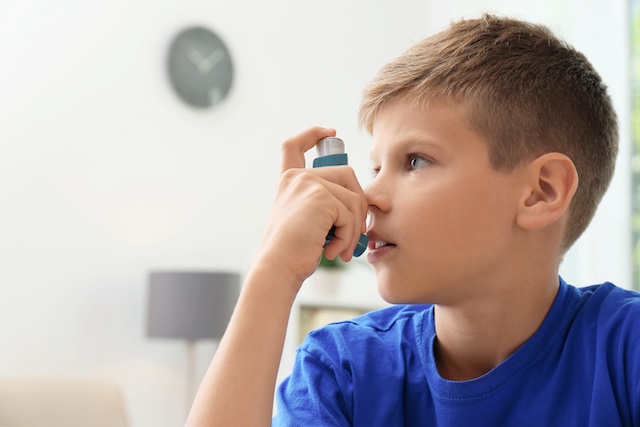
Machine Learning Tool Helps Paediatricians Identify Children at Risk of Persistent Asthma
Key Takeaways:
- A machine learning tool that reads data already held in a child’s electronic health record helped paediatricians more accurately judge which young children are at risk of persistent asthma.
- In a pilot randomised trial using standardised clinical cases, clinicians using the tool reached an average accuracy of 83%, compared with 61% for standard assessment alone.
- The tool is designed to support clinical judgement rather than replace it, and requires no additional tests or questionnaires.
Support for a difficult clinical judgement
A machine learning tool that analyses information already captured in a child’s electronic health record (EHR) has helped paediatricians assess asthma risk more accurately in standardised clinical case scenarios, according to a pilot randomised clinical trial led by a researcher at the Regenstrief Institute. The study was published in the journal Scientific Reports.
The trial evaluated a machine learning-enabled clinical decision support tool known as the Passive Digital Marker. The tool draws on routinely collected EHR data to classify young children as having either a high or a low risk of going on to develop persistent asthma.
Why early asthma risk is hard to predict
Asthma is one of the most common long-term conditions of childhood, yet predicting which young children who have wheezing or other respiratory symptoms will later develop persistent asthma remains difficult. Some children outgrow their early symptoms, while others need ongoing treatment. That uncertainty makes early risk assessment an important, but genuinely challenging, part of paediatric care.
“This tool doesn’t replace a pediatrician’s clinical judgment,” said Arthur H. Owora, PhD, Regenstrief Institute research scientist and lead author of the study. “It helps bring together years of clinical information that’s already in the electronic health record, giving clinicians another source of information when making decisions about a child’s asthma risk.”
How the Passive Digital Marker works
Unlike many prediction tools, the Passive Digital Marker requires no extra testing and asks families to complete no additional questionnaires. Instead, it analyses information that has already been documented in the child’s EHR, including respiratory symptoms, allergies, medication history, respiratory infections and family history. It then presents clinicians with a straightforward high-risk or low-risk assessment.
This approach is intended to save clinicians’ time and reduce the burden on families, since it relies on data that has been gathered over the course of a child’s routine care rather than requiring anything new at the point of decision.
What the trial found
Paediatricians using the tool correctly predicted future asthma more often than those relying on standard assessment alone, achieving an average accuracy of 83% compared with 61%. The improvement was largely driven by better identification of children who went on to develop persistent asthma – the group that is most important to recognise early and hardest to spot.
The researchers stress that the tool is meant to support clinical decision-making, not to supplant it. Its value lies in helping clinicians quickly synthesise years of patient information into a single, easy-to-interpret risk assessment that sits alongside their own expertise. That distinction – between having an AI tool to hand and knowing how to weigh what it tells you – is becoming central to how clinicians are expected to work with these systems.
Limitations and next steps
Because the study used standardised patient cases rather than real-world clinical encounters, further research is needed to establish whether the tool improves outcomes for children in everyday paediatric practice. The pilot demonstrates promise in a controlled setting, but real-world validation is the necessary next stage before wider adoption.
CCH insight
Tools like the Passive Digital Marker are only ever as good as a clinician’s ability to judge when to lean on them and when to look again. That skill – evaluating an AI tool, recognising where it can mislead, and putting sensible governance around its use – is exactly what our short course AI Essentials for GPs: Tools, Ethics and Everyday Applications is designed to build. It’s a 3.5-hour, fully online CPD course led by Prof. Mike Bewick and Dr Dipesh Naik. [Explore the course →]
Funding and authorship
The study was supported in part by the National Institutes of Health under grant K01HL166436. In addition to Owora, it was co-authored by Bowen Jiang, M.S., and Yash Shah, M.S., of the Division of Pediatric Pulmonology, Allergy/Immunology and Sleep Medicine, Department of Pediatrics, Riley Hospital for Children, Indiana University School of Medicine.
Source: Regenstrief Institute
Read More
Turning Records into Foresight: Machine Learning to Anticipate Need in Cancer Survivorship Care
Key Takeaways:
- Sylvester researchers used machine learning on records and patient-reported data from over 25,000 people who have survived cancer to predict who is most at risk.
- Adding patients’ own reports nearly doubled the models’ accuracy, with the top 10 per cent of risk capturing about half of later events.
- The work signals a shift towards proactive, personalised survivorship care, though it is not yet meant to change practice.
A new phase of care
For a growing number of people who have survived cancer, ringing the bell at the end of primary treatment marks the start of a complex new phase of care – one that is often less structured and far harder to predict. Even once therapy has concluded, people may continue to experience lingering physical symptoms, emotional distress or other unexpected medical needs. These can lead to visits to the emergency department or urgent care, to hospital admissions, and to a worsening burden of symptoms over time.
A new study from Sylvester Comprehensive Cancer Center, part of the University of Miami Miller School of Medicine, suggests that the key to anticipating these outcomes may lie in examining electronic health records and patient-reported data systematically, using novel artificial intelligence (AI) technologies.
Published in JCO – Clinical Cancer Informatics, the study demonstrates how machine learning models, when applied to clinical data and patient-reported outcomes (PROs), can help identify survivors at increased risk of unplanned healthcare use and of an elevated symptom burden during survivorship. By transforming medical records and patient-reported data into predictive signals, the research offers a potential route towards more proactive, personalised survivorship care.
Cancer survivorship care is a dynamic, ongoing process rather than a single phase of care, explained Frank J. Penedo, Ph.D., Sylvester associate director for population sciences, director of Sylvester’s Survivorship and Supportive Care Institute and the study’s senior author.
“For many patients, new or evolving challenges arise after treatment ends, just as routine clinical contact often tapers off, raising a critical question. How can we identify those at higher risk earlier, before these concerns intensify and become harder to address?” Dr Penedo said.
Listening to people’s own experiences
Patient-reported outcomes capture experiences that traditional clinical data often miss or assess only infrequently. These include emotional well-being, fatigue, functional limitations and other practical needs that may interfere with adequate survivorship care. Over the past decade, PROs have become an increasingly important component of cancer care. Yet translating large volumes of patient-reported data, and integrating them with vast amounts of medical record data to produce actionable insights – particularly across whole populations of survivors – has remained a persistent challenge.
Led by Akina Natori, M.D., M.S.P.H., a Sylvester oncologist and assistant professor in the Division of Medical Oncology at the Miller School, the study reframed PROs. Rather than treating them as retrospective descriptions of what a person has already experienced, the team used them as prospective indicators of future need.
“PROs tell us how patients are actually feeling and functioning,” said Dr Natori, first author of the study. “We wanted to know whether those self-reported experiences, in combination with clinical data such as cancer and treatment type, could help us identify which survivors might be at higher risk for significant symptom burden or unplanned health care use down the line.”
Unplanned healthcare use can include emergency department visits or hospital admissions that arise outside scheduled follow-up. Such events often signal unmet needs or gaps in survivorship and supportive care. Being able to forecast that risk could allow care teams to step in earlier, with targeted symptom management, psychosocial support or closer monitoring.
Applying machine learning to survivorship data
To explore that possibility, the research team analysed data from more than 25,000 people who have survived cancer, followed over three years, using machine learning to detect patterns that traditional statistical methods can miss. The advantage of these approaches is their ability to weigh many factors at once – clinical history, treatments, symptoms, emotional well-being and patterns of healthcare use – and to find the subtle interactions that signal which people are heading towards trouble.
The answers turned out to depend on what was being predicted. For acute events such as emergency room visits and hospital admissions, recent clinical activity was the strongest signal: what was happening with a person over the last few months mattered more than where they had started. For symptom burden, longer-term trends told a clearer story. Crucially, adding patient-reported outcomes nearly doubled how well the models performed compared with clinical data alone. When the researchers flagged the highest-risk 10 per cent of people, that group accounted for roughly half of all subsequent healthcare events and elevated symptom episodes.
Building models that clinicians can trust
“This type of risk stratification problem is well-suited for machine learning,” said Jerry R. Bonnell, Ph.D., a postdoctoral associate at the University of Miami’s Frost Institute for Data Science and Computing. “The challenge is developing models that are not only accurate, but also interpretable and meaningful for clinicians making real-world decisions.”
That emphasis on interpretability shaped the study’s design. Rather than treating the models as opaque, “black box” systems, the team built them to show their reasoning. This surfaced which factors were driving a given person’s risk score, and how those factors shifted over time. The goal is a tool that gives clinicians not just a number, but a starting point for conversation: about who needs closer follow-up, what they may need, and when to step in before a problem escalates.
An interdisciplinary approach
The project drew together expertise from clinical oncology, psychosocial oncology, population sciences and data science, reflecting the multifaceted nature of survivorship care. Contributors included Vasileios Stathias, Ph.D., assistant director for data science at Sylvester, alongside collaborators across the University of Miami.
“Survivorship sits at the intersection of biology, behavior and health systems,” Dr Stathias said. “By combining patient-reported and clinical data with advanced analytics, we can begin to see patterns that might otherwise remain invisible and that can inform more proactive care strategies.”
Additional authors included:
- Sara Fleszar Pavlovic, Ph.D., a Miller School research assistant professor of medical oncology
- Mitsunori Ogihara, Ph.D., programme director of UM’s Big Data Analytics and Data Mining program
- Andrew Wang, A.B.
- Ravi Vadapalli, Ph.D., director of advanced computing for the Frost Institute for Data Science and Computing
- Blanca Silvia Noriega Esquives, M.D., Ph.D., a Sylvester postdoctoral associate
- Tracy Crane, Ph.D., RDN, co-leader of the Cancer Control Program and director of lifestyle medicine, prevention and digital health at Sylvester
Implications for cancer survivorship care
While the authors emphasised that the findings are not intended to change clinical practice immediately, they highlighted the broader implications of the work. As populations of people living beyond cancer continue to grow, health systems face mounting pressure to deliver long-term care that is precise, proactive and sustainable.
“This is about shifting from reactive to proactive survivorship care,” Dr Penedo said. “If we can identify patients who are more likely to struggle, we can begin to align supportive resources earlier and more effectively.”
The team also noted the potential impact of predictive models that combine clinical and PRO-based data on healthcare access. Because PROs reflect patient voices directly, they may help surface unmet needs that are less likely to be captured through routine clinical encounters alone.
Looking ahead
Future research will focus on continuing to refine and validate these models across broader populations of survivors, and on exploring how risk stratification driven by electronic health record and PRO data could be integrated into survivorship standards of care.
“The expertise of our multidisciplinary team provides a unique opportunity to create a data ecosystem that facilitates the implementation of AI-powered analytics to guide proactive and precision care to reduce the burden of cancer on patients and health systems. This study is among several initiatives that are working towards this goal,” said Dr Penedo.
“Our long-term goal is to ensure that survivorship care keeps pace with advances in treatment,” said Dr Natori. “That means using data not only to describe outcomes, but to anticipate them, so we can more proactively support patients in the years after cancer.”
Source: University of Miami Miller School of Medicine
Read More
AI Model Improves Early Detection of Serious Lung Disease in Newborns
Key Takeaways:
- Researchers at the University of Rochester have developed a time-series AI machine learning model that predicts bronchopulmonary dysplasia (BPD) in premature newborns more accurately than existing prediction tools.
- The model uses detailed electronic health record data rather than the limited datasets used in many current online BPD calculators.
- Researchers hope the technology could eventually support real-time clinical decision-making in neonatal intensive care units and help reduce the severity of lung disease in vulnerable infants.
AI and neonatal care
A research team from the University of Rochester has developed a new artificial intelligence and machine learning model designed to improve the prediction of bronchopulmonary dysplasia (BPD), a serious lung disease that affects premature newborns. Their findings were published in The Journal of Pediatrics in a study titled “Time-Series Machine Learning for Prediction of Bronchopulmonary Dysplasia.”
The project centres on the use of time-series machine learning, an approach that analyses patterns in data collected over time, allowing researchers to build more dynamic and potentially more accurate disease prediction models.
Understanding bronchopulmonary dysplasia
Bronchopulmonary dysplasia is a chronic lung condition that primarily affects babies born prematurely and with low birth weight. Because their lungs are still underdeveloped, many premature infants require oxygen therapy and mechanical ventilation shortly after birth to survive. However, this early exposure to oxygen and ventilatory support can contribute to lung injury and long-term respiratory complications.
Children who develop BPD may experience ongoing breathing difficulties and other long-term health challenges linked to impaired lung development.
“We take great effort in the neonatal intensive care unit to prevent lung damage,” said Associate Professor Andrew Dylag, MD, from the Department of Pediatrics, Neonatology. “Despite this, premature infants still develop BPD. There are BPD ‘calculators’ on the internet that can predict the severity of lung disease while the baby is still in the hospital, but they use a very limited set of data.”
According to the research team, recently updated versions of these existing calculators demonstrated lower accuracy than earlier models, prompting the group to explore a different strategy.
“We thought that using more detailed data from the University’s electronic health record would improve disease predictions and allow us to pinpoint vulnerable times when we might be able to intervene to prevent lung disease in newborns,” Dylag said.
Funding supports new collaboration
To support the project, the researchers secured a 2023 Digital Health Seedling award from the Clinical and Translational Science Institute (CTSI).
“We hoped that CTSI could help us test the hypothesis that machine learning could improve disease predictions in hospitalized premature newborns,” Dylag said. “The 2023 Digital Health Seedling award was exactly the type of funding we needed to develop new collaborations across the University community and kickstart our team’s academic interactions.”
The funding enabled the formation of a multidisciplinary research team combining expertise from neonatology, engineering, computer science, biostatistics and health informatics.
The collaboration included Jiebo Luo, PhD, Albert Arendt Hopeman Professor of Engineering in the Department of Computer Science, who connected graduate students to the project, as well as Professor Xing Qiu, PhD, from the Department of Biostatistics and Computational Biology.
“The neonatology team brought content and clinical expertise to the work, the computer science team developed and tested the models, and the biostatisticians ensured the rigor and testing of the models and algorithms,” Dylag said.
The project also expanded on an existing partnership with the University of Rochester Clinical and Translational Science Institute’s Informatics and Analytics group, particularly in relation to electronic health record research.
Building a secure AI research environment
Because the project relied on a very large dataset containing sensitive patient information, the research required substantial data security and privacy protections.
“We initially got involved by helping the study team pull clinical data from eRecord,” said Jack Chang, PhD, associate director of Research Informatics. “Recognizing the project involved a very large patient population and massive data including Protected Health Information, we identified a need for a more secure analytical workspace.”
To address these concerns, the Informatics team transitioned the data into the Secure Environment for Research Data Analytics (SERDA), a protected platform designed for high-risk clinical research and advanced analytics.
High-risk healthcare data projects typically involve extensive administrative oversight and cybersecurity requirements to ensure patient privacy and regulatory compliance.
“SERDA removes that obstacle by providing a secure, scalable, and ‘ready-to-go’ environment tailored for advanced analytics and machine learning,” Chang said. “It allows researchers to focus on their science while knowing their data is protected and compliant with all privacy regulations.”
Chang said the Informatics team worked closely with institutional partners to build the infrastructure required for the study.
“Our team—working with our ISD partners—handled the technical heavy lifting: setting up virtual machines, configuring project shares, ensuring secure access with the security team, and customizing the environment with specialized analytical software,” Chang said. “We also provided training and facilitated the numerous exports of analytical outcomes from SERDA for their publication.”
Towards real-time clinical decision support
Researchers believe the improved AI model may help clinicians identify which infants are most likely to benefit from early intervention and more precise treatment strategies.
The long-term goal is to integrate the model into clinical decision support systems capable of updating disease risk predictions in real time as patient conditions evolve.
“We want to build clinical decision support tools to identify how disease predictions change in real time,” Dylag said. “If we validate our algorithm and can present the disease prediction to the clinical team, we can test guideline implementation for how to manage or treat infants that may reduce BPD severity.”
The research team said that continued collaboration between departments, alongside infrastructure support from CTSI and ISD, will be essential as the project progresses into its next phase of development and validation.
Source: University of Rochester Medicine
Read More