
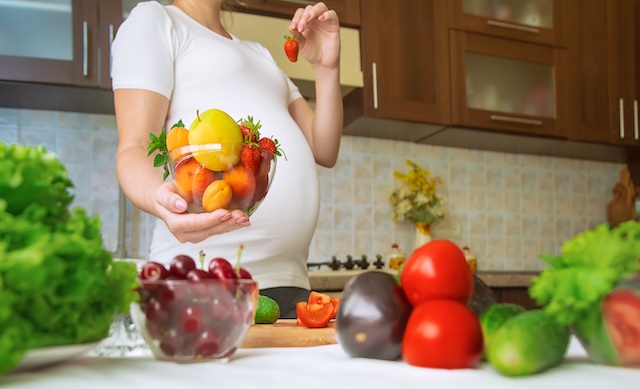
Maternal Fruit and Vegetable Intake Linked to Lower Childhood Obesity Risk
Key Takeaways:
- Higher maternal fruit and vegetable intake during pregnancy was associated with lower odds of overweight or obesity in children at four years of age.
- Commercial fruit juice intake was linked to higher odds of these outcomes, though the authors classed this as exploratory. Natural and total juice showed no association.
- The study was observational and relatively small, so it cannot establish cause and effect.
Why prenatal nutrition is under the spotlight
Maternal diet shapes offspring development from the earliest stages of gestation. A recent study published in the journal Nutrients reports that higher maternal fruit and vegetable intake during pregnancy was associated with lower odds of overweight or obesity in children at four years of age. In contrast, overweight and obesity were more common among children whose mothers reported higher intakes of commercial fruit juices, though not natural fruit juices. The authors were careful to frame this second result as exploratory.
Childhood obesity has risen steadily across the world over recent decades, and Spain records the second-highest prevalence among European nations. The associations between paediatric obesity and a range of adverse physical and psychosocial outcomes are well documented in the literature.
That trajectory has prompted growing interest in preventive strategies that begin before birth. Maternal diet during pregnancy is considered particularly influential because it helps determine the intrauterine environment and may shape fetal metabolic programming, with potential consequences for the child’s long-term risk of obesity.
Greater adherence to healthy dietary patterns in pregnancy has been associated with improved growth, reduced adiposity and a lower risk of childhood overweight and obesity. Such patterns are characteristically high in fruit and vegetable consumption. These foods deliver an abundance of essential vitamins, minerals, dietary fibre and bioactive compounds with antioxidant and anti-inflammatory properties.
There is also a postnatal dimension. Maternal dietary habits often persist after childbirth and may influence a child’s developing food preferences and consumption patterns through mechanisms such as parental modelling and early exposure to a wide range of flavours.
What was already known, and what was missing
Previous studies examining maternal fruit and vegetable (FV) consumption during pregnancy have focused largely on birth weight and infant growth up to six months of age. Fruit juice consumption during pregnancy has been linked inconsistently to offspring adiposity or overweight, and earlier work did not distinguish between natural and commercial fruit juices.
To the authors’ knowledge, no prospective study had comprehensively examined maternal consumption of fruit and vegetables alongside different types of fruit juice in relation to childhood overweight and obesity. The current study set out to examine these associations in children up to four years of age.
Study characteristics
The researchers drew on data from the ECLIPSES trial, a community-based study conducted in Spain. All participants were healthy pregnant women aged at least 18 years, with a gestational age of 12 weeks or less at recruitment.
This observational analysis included 252 women from the trial who had provided dietary data via a food frequency questionnaire at 12, 24 and 36 weeks of pregnancy, together with information on the overweight or obesity status of their four-year-old children born from the index pregnancy.
Participants included in this analysis had higher educational attainment and were older than those who were not included. Within the sample, 24.6% of children were living with overweight or obesity.
Average maternal intakes were approximately 119 g/day for fruit and 74.5 g/day for vegetables. Fruit juice consumption averaged 105 g/day, with natural fruit juice accounting for 55% of that total.
Findings: fruit and vegetables
Greater maternal fruit and vegetable intake was inversely associated with overweight or obesity in the offspring when the highest tertile of intake was compared with the lowest. However, when fruit and vegetables were examined separately, neither showed an independent association with the children’s weight outcomes.
Findings: fruit juice
Neither total nor natural fruit juice consumption was associated with overweight or obesity in the offspring. Commercial fruit juice intake, by contrast, was linked with higher odds of these outcomes. The authors treated this as an exploratory finding, because multiple correlated dietary exposures and comparisons were evaluated.
It is important to note how the category was defined. “Commercial fruit juice” was a broad grouping that encompassed all commercially produced or packaged juices regardless of added sugar, including 100% packaged juice, juice from concentrate, nectars and fruit drinks. These subtypes were not analysed separately.
Sensitivity analyses produced broadly similar estimates to the primary results. None of the associations reached statistical significance when intake was modelled continuously in 100 g/day increments, and no evidence of departure from linearity was observed.
Biological pathways the authors propose
These findings add to a growing body of evidence suggesting that maternal diet in pregnancy may influence offspring health. The authors postulate that the rich antioxidant and anti-inflammatory content of fruit and vegetables, stemming from multiple bioactive compounds, may reduce oxidative stress and systemic inflammation while helping to regulate metabolic pathways.
The abundant dietary fibre in fruit and vegetables, coupled with their typically low glycaemic load, may also support glucose regulation during pregnancy. The authors are explicit that these mechanisms are biologically plausible but cannot be proved by the findings of the current study.
The role of family eating patterns after birth
Postnatal family eating patterns may also help explain the observed relationship. Relevant factors include a child’s exposure to fruit and vegetables in early childhood, the home food environment and parental example. Previous studies have reported higher fruit and vegetable intake in early childhood where maternal diet during pregnancy was of higher quality.
This hypothesis could not be tested in the present analysis, as the children’s dietary intake was not followed up and no information on the home food environment was available.
Why commercial juice may behave differently
The authors offer several possible explanations for the association between maternal commercial fruit juice consumption in pregnancy and overweight or obesity in childhood. A previous compositional analysis cited by the authors reported higher sucrose and total carbohydrate contents in commercially available juices than in natural juices. Prenatal exposure to sweet flavours may also influence the development of taste preferences for sweet foods after birth.
In addition, commercial fruit juice consumption during pregnancy might act as a marker of a broader family lifestyle pattern that affects a child’s risk of obesity. As with the proposed biological mechanisms, none of these hypotheses were tested in the study.
For practitioners working with families in this space, the interplay between prenatal nutrition, the early home food environment and later weight trajectories is precisely the territory covered by The College of Contemporary Health’s CPD short course Childhood Obesity Essentials, which supports clinicians in translating this kind of evidence into everyday practice.
Limitations
The observational nature of the study precludes causal inference. Residual confounding from maternal, family and postnatal infant or child factors also remains possible.
The results were not adjusted for gestational diabetes, paternal BMI, family socioeconomic status, or the child’s dietary and physical activity profile. Longitudinal data on the children’s dietary intake up to age four were unavailable.
A high rate of loss to follow-up from initial recruitment produced notable differences in maternal age and educational level between the initial and final samples, which may have introduced selection bias. Self-reported dietary intake is a further potential source of error.
The relatively small number of overweight and obesity cases increased the risk of statistical overfitting, and the multiple correlated dietary comparisons mean that chance findings cannot be ruled out, particularly in relation to commercial fruit juice.
Finally, the findings may not be generalisable to other populations.
Conclusion
The study found that higher maternal fruit and vegetable consumption was associated with lower odds of overweight and obesity in children at four years of age. An exploratory analysis further suggested that higher maternal consumption of commercial fruit juice was associated with higher odds of these outcomes.
Given the observational design, the study cannot establish causality and should not be taken as support for specific dietary interventions. Future research should follow up children within larger cohorts while adjusting for the wider range of maternal, family and child-related factors that could shape this association. The underlying pathways also remain to be elucidated.
CCH insight
Evidence on early-life determinants of weight is developing quickly, and the practical questions it raises – how to discuss nutrition in pregnancy, how to support families without stigma, and how to use people-first language with confidence – arrive in clinic long before the science is settled.
Childhood Obesity Essentials is a CPD short course from The College of Contemporary Health designed for healthcare professionals who support children, young people and their families. It offers a grounding in the contemporary evidence base and the communication skills needed to apply it sensitively.
Explore Childhood Obesity Essentials →
Read More
Maternal Obesity Before Pregnancy Tied to 64% Higher Childhood Obesity Risk
Key Takeaways:
- Children whose mothers had obesity before pregnancy were 64% more likely to be affected by overweight or obesity by age 3.
- Gaining excess weight during pregnancy – common among about 41% of mothers studied – was linked to a 39% higher risk.
- Maternal weight factors mattered at different stages, and the links varied between Hispanic and non-Hispanic families.
The roots of childhood obesity may begin in the womb
New research led by the George Mason University College of Public Health has found that children whose mothers began pregnancy with obesity were 64% more likely to be affected by overweight or obesity by age 3. Excessive weight gain during pregnancy was associated with a 39% increase in that risk.
“Our findings suggest that childhood obesity risk may not develop in a single, uniform way, but maternal health before and during pregnancy may play a larger role than many people realize,” said study lead author Hua Min, associate professor in the Department of Health Administration and Policy.
Timing appears to matter
Different pregnancy-related weight factors appeared to matter at different stages. Excess weight gain during pregnancy was more closely linked to infant weight, while maternal obesity was more strongly associated with weight later in toddlerhood. Researchers also found that excess weight gain during pregnancy was common, affecting about four in 10 mothers in the study.
A large, ethnically diverse US study
Published in the International Journal of Obesity, the research is among the largest and most ethnically diverse longitudinal studies in the United States to examine how maternal weight may influence obesity risk in early childhood. Researchers tracked nearly 3,000 mother-child pairs, drawing on data from a Northern Virginia birth cohort taking part in the National Institutes of Health’s Environmental influences on Child Health Outcomes (ECHO) Program.
The George Mason research team included Michael S. Bloom of the Department of Global and Community Health, along with Grace Lawrence, Alma Fuller and Kathi C. Huddleston of the School of Nursing.
Why this matters
Childhood obesity remains one of the most pressing health challenges in the United States. The study notes that nearly 90% of children with obesity at age 3 will continue to be affected by overweight or obesity into early adulthood. Those early patterns can carry long-term consequences, increasing the risk of diabetes, cardiovascular disease and other chronic health problems.
Researchers say the findings reinforce the importance of maternal health before and during pregnancy – not just for pregnancy outcomes, but also for a child’s long-term health trajectory. The findings also suggest that obesity risk may develop differently across populations, with patterns varying among demographic groups.
Study details
The findings were based on the First Thousand Days of Life Study, a Northern Virginia birth cohort taking part in the ECHO Program, which examines how early-life experiences affect child health. George Mason was selected as an ECHO research site in 2019.
Researchers enrolled 2,899 mother-child pairs in Northern Virginia between 2012 and 2019, following families from pregnancy through to age 3.
Key findings
The strongest signal came from maternal weight before conception. Children whose mothers had obesity before pregnancy were 64% more likely to be affected by overweight or obesity by age 3, and the risk rose incrementally with weight: for every one-point increase in maternal pre-pregnancy body mass index (BMI), the likelihood of childhood overweight or obesity climbed by about 4%.
Weight gain during pregnancy carried its own, separate risk. Children whose mothers gained excessive weight while pregnant were about 39% more likely to be affected by overweight or obesity by age 3, and roughly 41% of mothers in the study gained more than national guidelines recommend. Notably, the two factors seemed to act at different points in early life: excess weight gain during pregnancy showed stronger links to higher weight in infancy, whereas maternal weight before pregnancy became more strongly associated with higher child weight later in early childhood. The associations also differed between Hispanic and non-Hispanic families, suggesting that obesity risk may develop differently across populations.
Looking ahead
Taken together, the findings point to the period before and during pregnancy as a meaningful window for a child’s long-term health, rather than a single moment or cause. Because the maternal weight factors appeared to matter at different stages, and because the associations varied between demographic groups, the researchers suggest that efforts to understand and address childhood obesity may need to account for how risk builds over time and how it differs across populations.
Source: George Mason University
Read More