
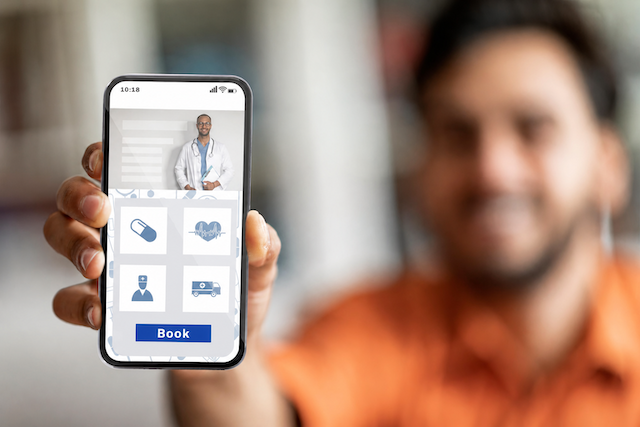
NHS App to Use AI to Decide Which Service Suits Patients Best
Key Takeaways:
- New AI triage software on the NHS App will direct patients to the most suitable service, reaching all app users by April 2028.
- An early Sussex trial cut phone queuing for appointments by 29%, part of a £10bn government drive to modernise NHS technology.
- AI note-taking tools will also expand across England, with health bodies urging safeguards on safety, confidentiality and digital inclusion.
A new AI front door to NHS services
NHS England has announced that artificial intelligence software will be used within the NHS App to work out which service is most appropriate for patients in England. The new triage tool asks patients a series of questions and uses their answers to direct them towards the most suitable option, whether that is a GP appointment, a pharmacy, A&E, a community service, or self-care advice.
The health service has described the change as part of a “major overhaul” of its technology. NHS England said the update would reach more than 200,000 patients over the next 12 months and would be available to all NHS App users by April 2028.
The rollout has been largely welcomed. However, some health bodies have urged the NHS to keep patient safety, confidentiality and inclusion front of mind as clinical services grow more reliant on AI.
How the triage tool will work
According to NHS England, the tool will offer advice, suggest services and book appointments. One of its central aims is to reduce the time people spend waiting on the phone – a familiar pressure point when GP surgeries typically open their phone lines at 08:00.
Early trial results and the clinician’s view
An initial trial at Wealden Ridge Medical Partnership in Sussex saw a 29% reduction in the number of people queuing on the phone for an appointment.
Dr Ragu Rajan, who works at the practice, said that integrating the tool “means our patients can tell us what they need, when they need it, and be directed to the right care first time.”
He added that the technology had supported rather than supplanted clinical judgement: “It hasn’t replaced our judgement – it’s given us back the time to use it.”
Ministerial backing and investment
Health Secretary James Murray sought to reassure the public that the rollout did not mean an AI programme would ultimately decide whether patients saw a doctor. Speaking on the BBC’s Sunday with Laura Kuenssberg programme, he said the change meant investment would be put in to “modernise” the NHS and to ensure the benefits were spread “around the country”.
The initiative forms part of a £10bn investment, allocated by the government in 2025, to overhaul the NHS’s technology, digital and data systems.
Sir Jim Mackey, chief executive of NHS England, said the tool would “help get patients to the best service for their needs first time… so that clinicians can make sure those most in need of a GP appointment can get one sooner”.
AI note-taking to expand across England
Alongside the triage tool, there will be an England-wide rollout of AI tools that record conversations between patients and NHS staff in order to generate real-time transcriptions and clinical summaries.
The expansion will begin with hospital appointments that do not require an overnight stay at four NHS trusts in and around London: St George’s, Epsom and St Helier, Croydon, and Kingston and Richmond.
Alder Hey Children’s NHS Foundation Trust in Liverpool and Manchester University NHS Foundation Trust are also expanding their existing AI note-taking programmes.
A trial led by Great Ormond Street Hospital for Children, carried out across nine NHS sites in London, found that NHS staff spent almost 25% more of their time interacting with patients when using the note-taking technology.
Welcome tempered by calls for safeguards
The Royal College of Nursing’s chief nursing officer, Prof Lynn Woolsey, said the rollout could mark “an important step in upgrading technology in the NHS” and could “ease the administrative burden on nursing staff”. She stressed, however, that patient safety and confidentiality must be at the “heart of any AI triage system, with a guarantee that a health professional will be the one making decisions at key points in that process”.
Pritesh Mistry, a fellow at the King’s Fund think-tank, said the announcement “could help turbo-charge improvements in how [the] NHS uses modern technology to deliver better care for patients”.
“People should find it easier to have support at the right time and in a way that best suits them, digitally or physically,” she added. “And this means the NHS will need to keep a strong focus on ensuring that people are not digitally excluded as clinical services become increasingly reliant on technology.”
Political response
Conservative shadow health secretary Stuart Andrew said: “Any innovation that improves patient care and helps the NHS work more effectively should be welcomed.
“But new technology must be introduced with a fully-funded plan that delivers value for taxpayers.”
Source: BBC News
Read More
Half a Million NHS Staff to Receive AI Tools to Free Up More Time for Patients
Key Takeaways:
- NHS England is rolling out Microsoft 365 Copilot to 505,000 clinicians and support staff, with the full rollout expected to be complete by October 2026.
- The world’s largest healthcare AI trial of its kind found that the tool could save staff an average of 43 minutes a day – the equivalent of around five weeks a year, or roughly two days of administrative time every month.
- Copilot is expected to support a wide range of roles, including clinical administration, ward clerks, medical secretaries, core services such as HR and finance, and management.
A major step forward in NHS AI adoption
More than half a million NHS staff are being given access to new artificial intelligence (AI) tools that could free up an average of two days every month from administrative duties, creating more time for the work that matters most to patients and staff.
NHS England announced today that it is significantly accelerating the adoption of AI across healthcare services by providing 505,000 clinicians and support staff with access to Microsoft 365 Copilot.
The AI personal assistant is designed to help clinicians draft documents and analyse data more efficiently, so they can devote more of their time to caring for patients.
What the world’s largest healthcare AI trial found
The agreement follows the largest AI trial of its kind anywhere in the world in healthcare, which gave more than 30,000 NHS workers across 90 NHS organisations access to Microsoft 365 Copilot.
The trial found that AI-powered administrative support could save an average of 43 minutes per staff member each day, or more – the equivalent of five weeks of time per person every year.
Results from the trial indicated that a full rollout of Microsoft 365 Copilot could save millions of hours of staff time per month.
NHS England and government leaders welcome the rollout
Rob Thompson, Chief Digital, Data and Technology Officer at NHS England, said: “The NHS wants to embrace cutting-edge technology and this Microsoft partnership will mean staff can be freed from admin so they can focus more of their time on what matters most – improving care for patients.
“Innovations like this will help drive NHS productivity so patients can get the treatment they need sooner and there is better value for taxpayers.
“The potential to save NHS staff around 2 days of admin time every month could be a gamechanger for patients.
“As part of our 10 Year Health Plan, we’re making sure every pound is spent on cutting waiting times and boosting care”.
Health Innovation and Safety Minister Preet Kaur Gill said: “Technology should support our NHS staff, not slow them down.
“Every day, doctors, nurses and other healthcare professionals spend valuable time on administrative tasks that take them away from patients. By rolling out Microsoft Copilot across the NHS, we can reduce that burden, free up clinicians’ time and help staff focus on what they do best caring for patients.
“This government is putting innovation to work for patients: helping staff work more efficiently, improving productivity and supporting a modern NHS that delivers better care, faster access to treatment and better value for taxpayers”.
Darren Hardman, CEO, Microsoft UK and Ireland, said: “By rolling out Microsoft 365 Copilot at scale, NHS teams can cut through everyday admin and spend more time where it matters most.
“Bringing AI safely into the flow of healthcare will help ease pressures, improve productivity and support better decision-making across the health service.
“We’re proud to work with NHS England to help tackle some of its biggest challenges and accelerate digital transformation for the benefit of staff and patients alike”.
How Copilot will be used across the health service
Copilot is designed to help users create, analyse and complete work more quickly. NHS England anticipates that it will be harnessed in a variety of ways across all aspects of the healthcare service, including:
- Clinical administration: supporting clinicians in drafting letters and in registrar training.
- Ward clerks: assisting with patient discharge processes, service data analysis, rota building and bed management.
- Medical secretaries: helping to draft patient letters and meeting minutes, and creating templates to maintain consistency.
- Core services: supporting human resources, finance and procurement functions.
- Management: assisting with drafting board papers, briefings and organisational analysis.
Licensing and timeline for the rollout
Each NHS trust will receive a central allocation of licences based on its organisational headcount, typically starting at around 2,000 Microsoft 365 Copilot licences.
The rollout to more than 500,000 staff across the NHS is expected to be complete by October 2026.
Source: NHS England
Read More