
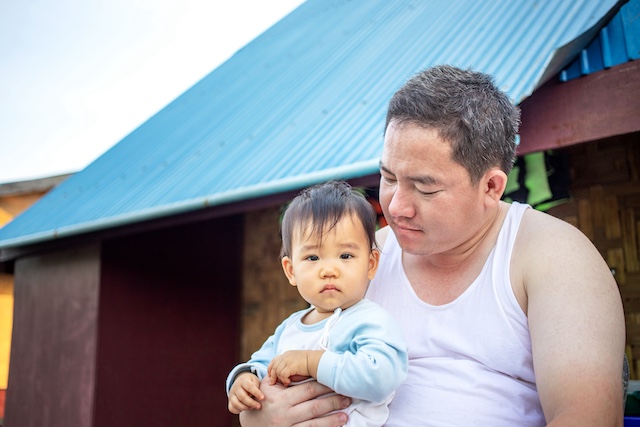
Childhood Obesity Risk May Begin With Fathers, Long Before Birth
Key Takeaways:
- A review in Current Obesity Reports argues that fathers influence their children’s obesity risk through several interacting biological, behavioural, and environmental pathways that begin before conception – not only through the mother.
- Paternal obesity is linked to poorer sperm quality and to epigenetic changes in sperm that can alter gene expression in the developing embryo, although some of these changes appear reversible through lifestyle modification before conception.
- The authors call for obesity prevention to include fathers explicitly – through preconceptional counselling, perinatal education for both parents, supportive workplace policies, and more research into the paternal role.
A wider lens on obesity research
A recent review published in the journal Current Obesity Reports suggests that fathers shape their children’s risk of obesity through multiple interacting pathways that begin before conception. The authors argue that efforts to prevent and study childhood obesity should focus on fathers as well as mothers.
Childhood obesity continues to rise in the United States, alongside increasing rates of overweight and obesity among adults. Current projections suggest that more than 250 million Americans could be living with overweight or obesity by 2050.
Research shows that children are more likely to develop obesity when one or both parents are affected, and the risk is highest when both parents have obesity. This pattern reflects the complex interplay of genetic, biological, behavioural, and environmental factors that influence obesity risk across generations.
The Developmental Origins of Health and Disease (DOHaD) framework holds that the periconceptional period is critical in setting the foundation for long-term outcomes, including cardiometabolic disease, through exposure to environmental factors. Maternal nutrition, obesity, and metabolism have been studied in detail because they shape the fetal environment.
More recently, the Paternal Origins of Health and Disease (POHaD) framework has been brought under the DOHaD umbrella. The current review examined the biological, psychological, and behavioural pathways through which paternal factors affect children’s health – though not in isolation from family dynamics and other environmental and social factors. The authors stress that paternal influences operate alongside maternal and broader family influences rather than separately from them.
How obesity alters sperm and offspring metabolism
Around 40% to 70% of obesity is heritable, mediated by hundreds of obesity-linked genetic variants. Obesity in fathers can affect the metabolic health of their offspring through several routes.
Paternal obesity influences sperm quality, reducing sperm concentration and motility and increasing the rate of sperm DNA fragmentation. These changes are linked to the adverse effects of obesity on paternal metabolism. The same sperm abnormalities are reflected in a 30% to 66% increase in the risk of infertility among men with obesity, and they raise the risk of pregnancy loss independently of maternal factors.
Obesity is associated with metabolic dysregulation through disrupted endocrine regulation of sperm production, testicular and systemic inflammation, and epigenetic alterations in sperm. Because sperm cells are produced continuously and mature over several months before conception, there is a wide window during which environmental exposures can leave their mark.
These epigenetic changes are heritable and can affect gene expression in the developing embryo, across pathways tied to appetite regulation, insulin signalling, and fat metabolism. In animal studies, a high-fat diet in the father is associated with obesity-related changes in the offspring. Even so, while animal research provides strong evidence for these mechanisms, the equivalent biological pathways in humans remain incompletely understood.
Notably, some obesity-associated epigenetic changes in sperm appear to be reversible through lifestyle modification before conception.
How a father’s habits shape his child’s behaviours
Becoming a father tends to be associated with weight gain and with changes across multiple health behaviours, for better or worse. A healthy preconceptional paternal diet is associated with improved sperm quality and concentration, regardless of age and body mass index (BMI), while a poor-quality diet has the opposite effect.
The quality of a father’s diet, his physical activity habits, his feeding practices, and his parenting style all influence a child’s eating and activity levels – both directly and indirectly through role modelling. The same applies to a father’s physical activity and sedentary habits.
How neighbourhood and food access shape outcomes
A father’s risk of obesity is influenced by many other factors, including income, education, and neighbourhood type.
The residential neighbourhood affects a child’s diet directly, through food access, and indirectly, through its association with food security, socioeconomic status, and the father’s mental health. Food insecurity is linked to higher consumption of high-calorie foods and an increased risk of obesity. Likewise, limited access to safe recreational spaces restricts physical activity and raises obesity risk.
These factors operate at the family level, touching everything from the father’s physiology and parenting style to the child’s developmental environment. Together they interact to compound the increase in obesity risk across generations.
Mental health is particularly important. A father living with depression is less likely to have an engaged or positive parenting style, or to value preventive healthcare for himself or his family. This can worsen a child’s eating and sleep behaviours and increase obesity risk. Children living with a parent experiencing depression are also at greater risk of adverse childhood experiences (ACEs), which may affect their long-term obesity risk.
Why fathers may shape obesity risk from the start
The authors conclude that fathers play an important role in how obesity risk is transmitted across generations – a process that begins preconceptionally and continues through childhood. They note, however, that much of the current evidence is observational, and that further human research is needed to better understand the biological mechanisms linking paternal health and offspring obesity risk.
They suggest that obesity prevention strategies should include preconceptional counselling that addresses fathers as well as mothers; perinatal education aimed at both parents; the inclusion of fathers in obesity prevention methods; workplace policies that support paternal involvement in childcare; and greater priority for research examining the father’s role in transmitting obesity risk across generations.
CCH insights:
At CCH we have been interested in the mounting evidence around the paternal origins of health and disease (POHaD) for some time, particularly in relation to obesity. This review provides a comprehensive summary of the evidence so far for the important role of fathers, not just in terms of their biological intergenerational impact, but also through health-related behaviours and their influence on the child’s environment.
Read More