
Bariatric Surgery Delivers Greater Weight Loss and Disease Remission Than GLP-1 Drugs, Large Analysis Finds
Key Takeaways:
- A large real-world analysis involving more than 430,000 patients found that metabolic and bariatric surgery produced substantially greater weight loss than GLP-1 medications after 12 months.
- Surgery was associated with higher remission rates for obesity-related conditions including type 2 diabetes, hypertension and high cholesterol.
- Researchers and clinicians said GLP-1 medications represent an important advance in obesity care, but cautioned that they should not be viewed as a replacement for metabolic and bariatric surgery in people requiring more substantial and durable outcomes.
Surgery outperformed GLP-1 drugs across key outcomes
Metabolic and bariatric surgery may provide significantly greater weight loss and higher rates of obesity-related disease remission than glucagon-like peptide-1 receptor agonist medications, according to a major new real-world comparison presented at the American Society for Metabolic and Bariatric Surgery (ASMBS) Annual Meeting 2026.
The systematic review and analysis, described as one of the largest and most comprehensive comparisons of the two treatment approaches to date, evaluated data from 30 clinical studies involving more than 430,000 patients. Researchers found that although both treatments produced meaningful clinical benefits for people living with obesity, metabolic and bariatric surgery consistently outperformed GLP-1 therapies across all major outcomes assessed.
The research was conducted by investigators from Yale School of Medicine, Coreva-Scientific, Vanderbilt University and UT Health San Antonio.
Greater weight loss after surgery
According to the findings, people who underwent metabolic and bariatric surgery experienced more than 20% greater weight loss at 12 months compared with those treated with GLP-1 receptor agonist medications.
Researchers also reported that surgery was linked to substantially higher remission rates for several obesity-related health conditions. Compared with GLP-1 therapy, metabolic and bariatric surgery was associated with:
- 42% higher remission rates for type 2 diabetes
- 12.8% higher remission rates for hypertension
- 20.8% higher remission rates for high cholesterol
The analysis focused specifically on studies that directly compared bariatric surgery with GLP-1 receptor agonists. Studies that combined surgery and medication therapies were excluded from the review.
The primary endpoint examined was weight loss at 12 months. Secondary endpoints included remission of obesity-related conditions such as type 2 diabetes, hypertension and hyperlipidaemia.
Researchers highlight durability of surgical outcomes
The study authors noted that although GLP-1 medications have transformed obesity treatment and expanded evidence-based care options, metabolic and bariatric surgery continues to deliver greater and more durable results for many patients.
“While GLP-1 medications are an important advance, they do not match the magnitude or durability of outcomes achieved with metabolic and bariatric surgery, which remains one of the most underutilized treatments in medicine. Once the medications are discontinued, whether due to side effects, cost or other factors, their benefits often diminish or disappear, whereas the benefits of surgery endure.” – John M. Morton, MD, MPH, FASMBS, Study Co-Author, Professor of Surgery and Vice-Chair, Quality, Surgery at Yale School of Medicine
The findings add to ongoing discussions within obesity care about how best to position GLP-1 therapies and surgical interventions within long-term treatment pathways.
Evidence gap in direct comparisons
Despite the rapid growth in the use of GLP-1 medications such as semaglutide and tirzepatide, researchers noted that direct comparisons between these drugs and bariatric surgery remain limited.
The review involved a comprehensive search of PubMed and EMBASE databases to identify relevant studies comparing the two treatment approaches.
Commenting on the findings, an independent obesity surgery expert said the analysis helps address a major evidence gap in the field.
“Despite the explosive growth of GLP-1 drugs, no randomized controlled trials have directly compared them to bariatric surgery. This analysis helps fill that evidence gap,” said John Scott, MD, FACS, FASMBS, clinical professor of surgery at the University of South Carolina School of Medicine Greenville and metabolic and bariatric surgery director for Prisma Health, who was not involved in the study.
“GLP-1s have expanded evidence-based treatment options, but they should not be seen as a replacement for surgery – especially for patients who require the level of outcomes that only metabolic and bariatric surgery can provide.”
Expanding treatment options in obesity care
The findings come amid growing global interest in obesity treatment strategies as the use of GLP-1 receptor agonists continues to rise rapidly. Medications in this class have demonstrated significant effectiveness for weight reduction and metabolic health improvement, but concerns remain regarding long-term adherence, cost, side effects and weight regain after discontinuation.
Metabolic and bariatric surgery, meanwhile, has long been associated with substantial and sustained weight loss as well as improvements in obesity-related conditions such as type 2 diabetes and cardiovascular risk factors. However, experts have repeatedly argued that surgery remains significantly underutilised despite its established effectiveness.
The researchers concluded that while both treatment approaches play an important role in obesity management, metabolic and bariatric surgery continues to provide the most substantial improvements in weight loss and disease remission outcomes based on current comparative evidence.
Source: American Society for Metabolic and Bariatric Surgery
Read More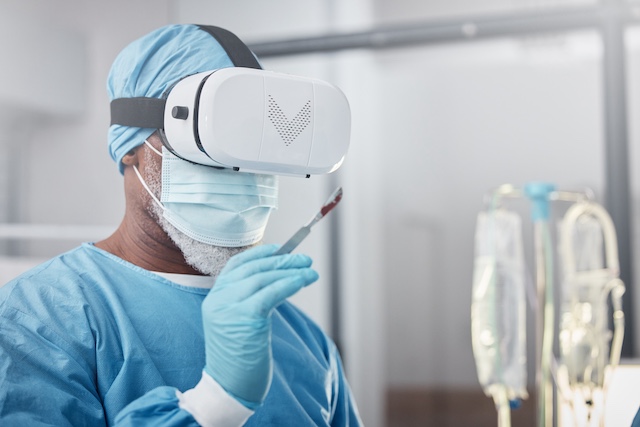
First UK Long-Distance Robotic Surgery Connects London Surgeon with Gibraltar Patient
Key Takeaways:
- A London-based surgeon has performed the UK’s first long-distance robotic cancer surgery on a patient in Gibraltar, marking a major milestone in telesurgery
- The procedure demonstrated minimal delay and high precision, suggesting remote surgery could expand access to specialist care in underserved regions
- Patients living far from specialist centres may benefit from reduced travel, lower costs and improved continuity of care
A landmark moment in remote surgery
A surgeon based in London has carried out what is believed to be the United Kingdom’s first long-distance robotic surgical procedure, operating on a patient located approximately 1,500 miles (2,400 km) away in Gibraltar.
Professor Prokar Dasgupta, a leading robotic urological surgeon, performed a prostate removal on 62-year-old Paul Buxton. Reflecting on the experience, he said it felt “almost as if I was there”, despite the geographical distance between surgeon and patient.
For Buxton, who is living with prostate cancer, the decision to participate in the procedure was straightforward. He described it as a “no-brainer” and an opportunity to become “part of medical history”.
Expanding access to specialist care
The development of long-distance robotic surgery is seen as a potential solution to longstanding challenges in healthcare access, particularly for people living in remote or underserved regions.
Such approaches could reduce the “vast expense and inconvenience” associated with travelling for specialist treatment, while enabling patients to receive care closer to home.
This milestone builds on previous advances involving UK-based surgical teams. Earlier work included a transatlantic robotic stroke procedure conducted over a distance of 4,000 miles on a cadaver – a body donated to science – which demonstrated that long-distance surgery was technically feasible.
A patient’s perspective
Buxton, originally from Burnham-on-Sea in Somerset, has lived in Gibraltar for four decades. As a British Overseas Territory, Gibraltar has limited healthcare infrastructure, with only one hospital – St Bernard’s Hospital at Europort. Patients requiring more complex care often need to travel abroad, commonly to the United Kingdom for NHS treatment if eligible.
Following his prostate cancer diagnosis shortly after Christmas, Buxton initially expected to join an NHS waiting list. However, he chose instead to take part in the remote surgery trial.
“A lot of people actually said to me: ‘You’re not going to do it, are you?’”
“I thought, I’m giving something back here,” he said.
Buxton also highlighted the practical advantages of the approach:
“If I hadn’t gone for the telesurgery in Gibraltar, then I would have had to have flown to London, I would have had to go on the NHS waiting list, get the procedure done and I would have probably been in London for three weeks.
“So I thought: ‘This is a no-brainer’.
“It is pioneering for Gibraltar, because you don’t need to leave Gibraltar.”
Following the operation on 11 February, he reported a positive recovery, stating he was “really well looked after” and “feeling fantastic”.
How the technology works
The procedure was conducted from The London Clinic using a robotic surgical system equipped with a high-definition 3D camera and four robotic arms. These were controlled remotely via a surgical console.
The connection between London and Gibraltar was enabled through fibre-optic cables, supported by a backup 5G link. The system achieved an extremely low latency, with a delay of just 0.06 seconds, allowing for precise and responsive control.
A surgical team in Gibraltar remained on standby throughout the operation to intervene if necessary, although the connection remained stable for the duration of the procedure.
The operation utilised the Toumai Robotic System and was delivered through a collaboration between The London Clinic and the Gibraltar Health Authority.
Looking ahead: scaling telesurgery
Professor Dasgupta emphasised the broader implications of the innovation:
“This gives us the opportunity to treat patients in remote areas and smaller communities by literally being able to take the best surgeon anywhere.”
The procedure forms part of an initial series of test cases. A second operation involving a 52-year-old patient in Gibraltar was carried out on 4 March, with a further procedure scheduled for 14 March.
The upcoming operation will be live-streamed to 20,000 leading urological surgeons attending the European Association of Urology congress, highlighting the global interest in this emerging field.
Reflecting on the future, Dasgupta added:
“I think it is very, very exciting, the humanitarian benefit is going to be significant.”
Alignment with broader surgical trends
This development sits alongside wider efforts to expand the use of robotic-assisted surgery within the NHS. Current ambitions include scaling up to 500,000 robot-supported operations annually by 2035.
While the NHS is prioritising local access to robotic surgery, advances in telesurgery suggest a complementary pathway – one that could extend specialist expertise beyond physical borders and reshape how surgical care is delivered globally.
CCH insight
Telesurgery is one of the most striking examples yet of a much broader shift: the rapid digital transformation of healthcare. From remote care to AI and connected devices, digital health is fast becoming core to practice rather than a niche – and being equipped for this new frontier is increasingly imperative for healthcare professionals. CCH’s CPD-accredited digital health short courses are designed to help practitioners build the practical skills and judgement to keep pace, quickly and flexibly around a clinical schedule.
Explore CCH’s Digital Health courses →
New AI Model Predicts Donor Viability and Could Cut Wasted Organ Transplant Efforts by 60%
Key Takeaways:
- A new machine learning model developed at Stanford University predicts whether a donor is likely to die within the critical timeframe needed for safe organ recovery.
- The system reduced futile liver procurement attempts by 60% and outperformed senior transplant surgeons.
- The tool could improve efficiency, reduce resource waste and expand access for people waiting for a donor organ.
A data-driven approach to a long-standing challenge
Thousands of people worldwide remain on transplant waiting lists, with demand far exceeding the supply of suitable donor organs. For people who require a liver transplant, recent advances have broadened access by enabling the use of donors who die following cardiac arrest. These cases, known as donations after circulatory death (DCD), have significantly increased potential donor numbers.
However, almost half of DCD liver transplant procedures are cancelled. In every case, timing is critical. After life support is withdrawn, the donor must die within 45 minutes to protect liver viability. If death occurs outside this narrow window, surgeons often reject the organ because of the increased risk of complications for the recipient.
This contributes to substantial resource waste, operational strain on transplant centres and missed opportunities for people waiting for life-saving surgery.
A new predictive tool outperforms top surgeons
Researchers, clinicians and scientists at Stanford University have developed a machine learning model designed to improve prediction accuracy around donor viability. The tool estimates whether a donor is likely to die within the period during which their organs remain suitable for transplantation.
The model surpassed the predictions of highly experienced surgeons and reduced the rate of futile procurements by 60%. Futile procurements occur when surgical teams begin preparing for a transplant but cannot proceed because the donor dies too late for the organ to remain viable.
Dr Kazunari Sasaki, clinical professor of abdominal transplantation and senior author of the study, explained the significance of the advance. “By identifying when an organ is likely to be useful before any preparations for surgery have started, this model could make the transplant process more efficient,” he said. “It also has the potential to allow more candidates who need an organ transplant to receive one.”
The findings were published in The Lancet Digital Health.
How the model works
The machine learning tool was trained using data from more than 2,000 donors across multiple US transplant centres. It analyses neurological, respiratory and circulatory indicators to estimate a donor’s progression towards death more accurately than previous tools or clinical judgment alone.
During retrospective and prospective testing, the model maintained strong predictive accuracy even when some donor data were missing. Researchers emphasised that this makes it especially practical for real-world clinical settings, where data completeness can vary.
Addressing resource strain and improving outcomes
Currently, transplant centres primarily rely on surgeons’ judgment to assess whether a donor is likely to die within the necessary timeframe. These predictions can vary considerably and may lead to unnecessary preparation of operating theatres, mobilising teams and allocating resources that ultimately go unused.
A reliable, data-driven tool has the potential to improve decision-making, reduce operational burden and ensure that efforts are more closely aligned with the likelihood of a successful transplant.
As the research team noted, the model demonstrates “the potential for advanced AI techniques to optimise organ utilisation from DCD donors”.
Next steps
The team now plans to adapt and test the model for heart and lung transplantation. If successful, this approach could transform prediction processes across multiple organ types, improving access for people waiting for donor organs and enhancing the efficiency of transplant systems worldwide.
Read More