
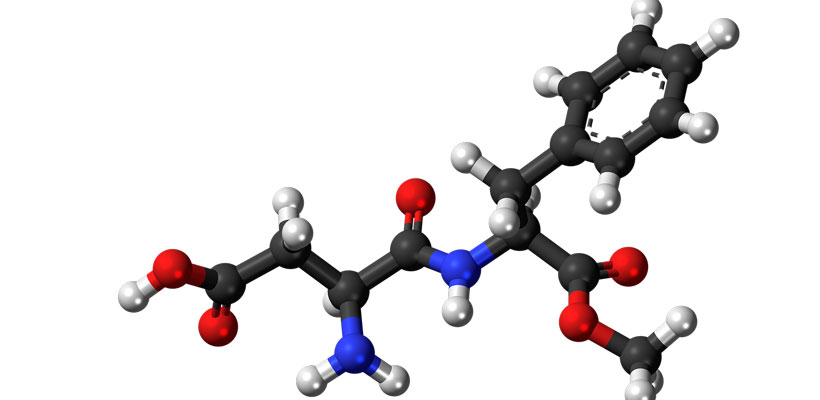
Sugar substitute may not promote weight loss
A team of researchers from Massachusetts General Hospital have found a possible mechanism that may help explain why aspartame, a sugar substitute, does not help promote weight loss. Their report was published in Applied Physiology, Nutrition and Metabolism, and it explains that phenylalanine, a breakdown product of aspartame may interfere with the actions of an enzyme which prevents metabolic syndrome. Using mouse models, the researchers found that a diet with aspartame actually increases weight, whilst a non-aspartame diet does not.
During this study, a series of experiments was carried out, with one showing that the activity of an enzyme, known as IAP, was greatly reduced when added to a solution containing an aspartame sweetened drink, this was not the case in the sugar sweetened drink. This is particularly worrying as sugar substitutes are often used to promote weight loss by limiting the consumption of sugar. Now a number of epidemiological studies are looking into whether these substitutes are genuinely effective. The researchers want to highlight that other mechanisms may be involved, and this is only one such mechanism that may point to the use of artificial sweeteners being counter-productive.
Read More
Large BMI increase during puberty may predispose to death by cardiovascular disease later in life
A study published in The Lancet Diabetes & Endocrinology has found that boys with a large increase in BMI during puberty are at an increased risk of death due to CVD in later life. The study itself included over 37,000 men born between 1945 and 1961, and the change in BMI was calculated using BMI values at 8 and 20 years of age. The aim of the study was to evaluate the contribution of BMI for cardiovascular mortality, with the focus being the developmental period of puberty.
There was no increase in cardiovascular risk for those who were overweight before puberty, or those whose BMI normalised during puberty. BMI normally increases during puberty, however this study found that when BMI increases by more than 7 units, the risk of cardiovascular mortality later in life is also increased; this is by 22 per cent for every extra BMI unit. The researchers are now urging schools to monitor their students’ BMIs to ensure that they do not suffer from cardiovascular complications in the future.
Read More
Does fatty food cause mental health issues?
A recent study published in Molecular Psychiatry has found that excess fatty intake can affect the cognitive function of brains. This study was conducted in mice, and found that diets rich in fat reduce levels of an important protein called reelin that helps synapses in the brain signal to one another, resulting in possible cognitive and psychiatric issues. Reelin deficiency is also a feature of brain disorders such as schizophrenia and Alzheimer’s disease. The researchers saw changes as early as four weeks into the experiments, after the mice had been fed high-fat diets. The cognitive results were evident even before the animals started gaining weight. Interestingly, the results were only seen in mice that were adolescent and not fully adult mice.
The changes were mostly evident in the prefontal cortex of the mice, in humans, this is associated with decision making, expressing personality and controlling social behaviour. With the supposed drop in the quality of diets over the past few decades, this study has found some worrying results. Furthermore, the study found the results to be particularly pronounced in adolescent mice, in humans this is a period where people will start to make their own decisions about food, especially with increased calorific needs, the researchers have suggested that more education must therefore be provided about the potential pitfalls in choosing high fat diets.
Read More
Diet and exercise improves kidney function in fatty liver patients
Non-alcoholic steatohepatitis (NASH) is characterised by excess fat in the liver that can cause inflammation and scarring. This may progress to cirrhosis and liver cancer; it can also compromise kidney function. A recent study has found that patients with confirmed NASH, who were put on a low-calorie/fat diet and participated in an exercise programme, experienced reduced liver inflammation and an improved kidney function.
These results were seen after controlling for compounding factors such as diabetes, hypertension and medications. However, the exact mechanism by which these outcomes were made is not fully understood yet. The researchers have hypothesised that oxidative stress, insulin sensitivity,inflammation, and vascular endothelial function all have roles to play. Hopefully, more research will be done in this area to fully understand the therapeutic benefits of such programs for patients with NASH.
Read More
Not eating breakfast or getting enough sleep can make children overweight
Mothers smoking in pregnancy, children skipping breakfast, and children not getting enough sleep, all appear to be important factors in predicting whether a child will become overweight or obese. Researchers from UCL have published a paper in Pediatrics that calls for prompt intervention in order to slow the growth of overweight and obesity in children. The paper looked at data from 19,244 families over a 9 year period, using the Millennium Cohort Study. The researchers were using observational information, meaning that they cannot draw firm conclusions, however the sample size was large and they were able to take into account a range of lifestyle factors that could impact the results.
It is already known that children of obese parents are more likely to be overweight themselves; this could be due to their obesogenic environment, or a genetic predisposition. However, this research also highlights the importance of lifestyle choices that can greatly contribute to the risk of obesity. Disrupted routines, as well as a lack of sleep, can increase appetite and the consumption of energy dense foods. Overall, the researchers were hoping to increase parental education with their findings, so that the growth of overweight and obesity can be curbed.
Read More
Gastric bypass patients have reduced risk of death after 10 years
Patients who have undergone gastric bypass surgery have a reduced risk of death from obesity or other disease by up to 48% after 10 years. In a Obesity. new study researchers followed almost 2,700 gastric bypass patients over a period of 10 years and found that mortality benefits became apparent after only two years post-surgery. The biggest reduction in risk was found in patients over 60 and in patients that suffered from diabetes before the surgery. The lead author of the study attributed this to the fact that improvements in long-term metabolic and cardiovascular health would be made
Bariatric surgery has been shown, previously, to be the most effective and long-lasting treatment for severe obesity, and the reduction in weight does result in lower rates of heart disease, diabetes, some cancers, arthritis, high blood pressure and many other diseases and conditions. The results from this study show that rather than being discouraged from having surgery, people of an older age should be supported and offered the option of surgery.
Read More
Does brain volume predict successfulness at weight loss?
Scientists at the Wake Forest Baptist Medical Centre claim that they are able to predict an individual’s chances of success at weight loss with a simple brain scan and have published their findings in Obesity. The researchers used MRI scans to assess the amount of white and grey matter in the participants and were able to predict weight loss with 78% accuracy based on the brain volume. The study was performed with 52 people between the ages of 60 and 79, all participants were overweight or obese. They were scanned and then split into three separate groups, diet only, diet plus exercise, and diet plus resistance exercise. The scan results were then compared to their actual weight loss after 18 months.
The researchers hope to continue assessing people who want to lose weight, as those with a higher chance of losing weight may respond to less intensive treatments, whilst those with a lower chance may have to resort to more intensive routes. The study itself had a small sample size, therefore the researchers are hoping to perform follow-up studies with more people and to broaden the types of intervention used in order to improve the predictive nature of the scans.
Read More
Canola oil reduces fat
In a new study, canola oil has been shown to reduce abdominal fat. A known risk factor for cardiovascular disease abdominal fat is also associated with increased risk for metabolic syndrome; canola oil is high in monounsaturated fat which is known to decrease abdominal fat. The researchers had participants adhere to using canola oil in their diets, and found that fat was not just redistributed in the body, but lost all together. Normally it is difficult to focus weight loss on particular areas, however monounsaturated fat seems to target abdominal fat, the mechanism for which is not yet fully understood.
The researchers tested the effect of canola oil in 101 participants over a period of four weeks. A range of different diet types were compared across all individuals. Canola oil was incorporated into the test diets so as to not exceed the participants’ daily needs. The researchers point out that further studies should be conducted in order to examine the long term effects of a diet high in monounsaturated fats, whose source could indeed be canola oil.
Read More
Childhood obesity increases during the summer holidays
A new study published in Obesity has found that children are more likely to gain weight during their summer holidays than during the school year. Researchers examined the measurements from 18,000 kindergarteners over a period of two years, finding that rates of obesity increase in the summer and not at all during the school year. The results raise questions as to whether policy makers are doing enough to help children maintain healthy weights when they are not in school. Furthermore, they show that if efforts to curb the obesity epidemic are only made in school, it may not have the desired outcome, as many changes occur during the summer anyway.
The researchers hope that in the future school-based interventions will do more to positively shape out-of-school behaviours of children, as well as maintain improvements such as the changes to school meals and the amount of physical activity that occurs. Overall, the researchers are appealing to parents, teachers and public health advocates to increase the awareness of these significant findings, so that more can be done to limit the increase in childhood obesity.
Read More
Genes identified that burn more calories
A new study has identified a pathway in muscle tissue that increases the rate at which we burn calories. The study is one of the first to actively look at the relationship between genetic variants and energy expenditure. Dr Paolo Piaggi, from the National Institute of Diabetes and Digestive and Kidney Diseases, one of the authors of the study, explained that as obesity research continues, the area of genetic traits must be further explored to identify potential causes of, and treatments for, the disease.
Skeletal muscle biopsies were taken from 219 healthy donors and weight change was measured over 7 years. The researchers found that the expression of the THNSL2 gene in skeletal muscle had the strongest association with low energy expenditure and weight gain. They also found that the production of a cytokine (a type of chemical signaller) was heavily involved with energy expenditure. This has helped further research into the inflammatory process that underpins obesity. Overall, the research helps to further our understanding about how two people with similar diets may vary in weight, this study extends current research covering genetic traits and obesity, and even identifies a potential target for a treatment in THNSL2
Read More
Differences in obesity between children with and without autism
Children with autism spectrum disorders (ASD) are more likely to become obese, and stay obese, than their peers without an ASD, a new study has shown. It has been shown before that children with ASD are more likely to become obese, however this study showed that during their adolescent years, the rate of obesity amongst children with ASD lowered, whilst the rate in children with ASD stayed the same. The researchers analysed data from 43,777 children aged between 10 and 17, factors such as race and socioeconomic status were taken into account and controlled for. They were expecting to see the rate of obesity increasing amongst the ASD group, and the rate staying the same in the non-ASD group, instead the ASD group rate stayed the same, whilst the non-ASD group rate lowered.
Obesity in childhood can have long-term effects for those with ASD and the researchers believe that many factors should be considered when looking at why children with ASD maintain their obesity. Some of these factors are alluded to by the last author, Dr Linda Bandini: the need for routine, behavioural rigidity, use of food as a reward, mealtime stress and parental stress. Furthermore, when it comes to exercise, many children take part in competitive sports, however this is uncommon for children with ASD. The researchers hope that further research will be undertaken, such as interviews with adolescents and caregivers, in order to better understand the behavioural factors that may contribute to the prevalence of obesity in the ASD population. Furthermore, children with ASD often have complex medical needs, and if these are not taken into account it can be very difficult to treat them, therefore more focus must be placed on understanding their needs and how this might affect them.
Read More
GPs should not be afraid to recommend weight loss programmes
A recent study published in The Lancet has described how many doctors do not address some patient’s weight due to lack of time, fear of causing offence, and doubting that interventions will be effective. This is in spite of official guidelines recommending that doctors screen for obesity and direct patients to appropriate weight loss programmes. This trial, led by Oxford University, included 137 GPs and 1,882 people attending consultations that were unrelated to weight loss. The patients were split into 2 groups; the first being offered a 12-week weight management programme and follow-up appointments, whilst the second group were told by their GP that weight loss would be beneficial to their health and offered further follow-up appointments.
After follow-up it was found that the group who were offered a full programme lost on average 1.43kg more than those who were just given advice at the original consultation. Overall, patients were enthusiastic about the suggestion for help, in fact 81% across both groups found the post-consultation intervention appropriate and useful. Individuals across both groups had taken action, but is was found that five times more people in the ‘programme’ group had taken effective action. On average, people consult their doctor five times per year; this study highlights an effective way to address weight concerns in patients on a large scale, and – due to the fact that many of the patients felt it was appropriate at the time – doctors should not feel intimidated by approaching the subject.
Read More