
Duration of overweight linked to cancer risk
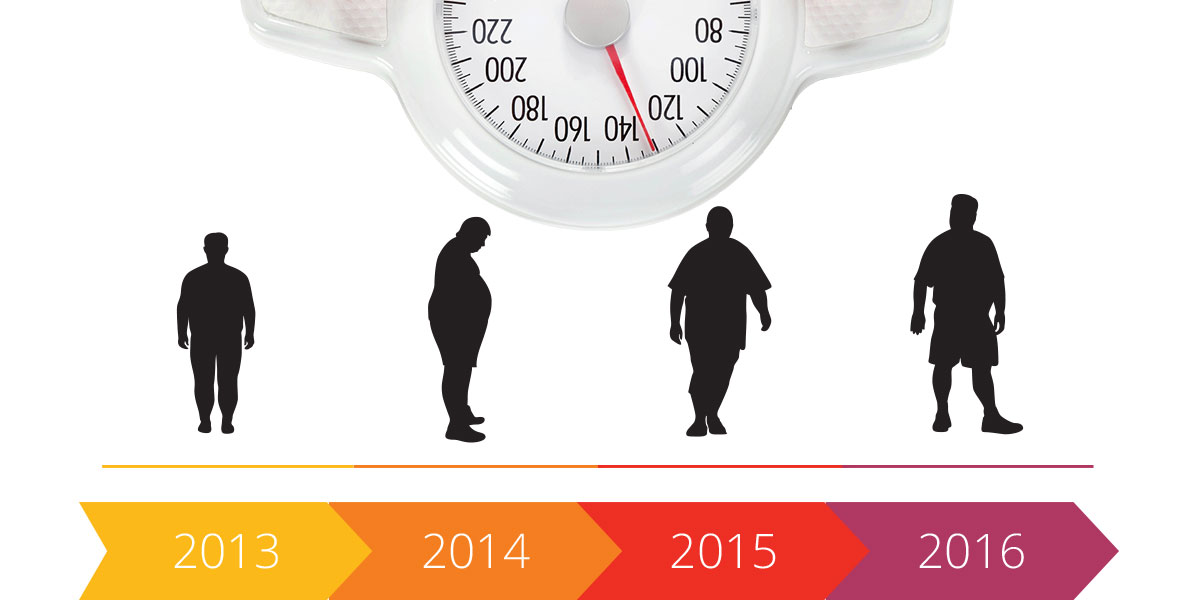
The length of time that a woman spends of her adulthood as overweight or obese is directly linked to the development of a range of cancers. Up until now many studies that have looked at the associated risk between cancer and obesity have been cross-sectional, meaning that multiple measurements over a period of time haven’t been analysed. This study examined the BMI measurements of around 74,000 women and its association with cancer risk. They also took into account other compounding factors such as physical activity, diet, smoking and medications.
They found that for every 10 years that a person spent as overweight their risk of developing all obesity related cancers increased by 7%, a 5% increase in breast cancer risk and a 17% increase in the risk of endometrial cancer. The authors are keen to show that the health care teams should recognise that cancer prevention should be a part of obesity management. This study focused solely on women and the results for a similar study in men would be interesting.
Read More
Brains of obese people show premature ageing
A study performed at the University of Cambridge has found that the brains of obese individuals display the differences seen in lean individuals that are 10 years their senior. Brains are known to shrink with age and these changes are found in the white matter part of the brain. This study analysed cross-sectional data from 473 individuals and found that the white matter of obese individuals was different to that of a lean person of the same age, but the same of that of a lean person 10 years older.
The researchers only noticed this difference in middle-aged and older individuals, suggesting that our brains are more vulnerable during this period of time. Dr Lisa Ronan, from the Department of Psychiatry at the University, explained that we are still unsure what the specific mechanisms involved are. However, the team further mentioned that the combination of the ageing population as well as the rise of obesity meant that this issue will be very important in the coming years and that they are hoping to continue this work in the future.
Read More
Obesity rates differ amongst elementary school groups
A study conducted in Southeastern Texas has found that the obesity trajectory rates amongst elementary school children differ with gender, ethnicity and socioeconomic status. The researchers set out to examine whether there were distinct BMI trajectory groups, and if they could develop predictors for these groups. 1,651 school children were involved in the study, and data was collected biannually from when the children were 5 to when they were 11 years old.
The researchers found that boys, Hispanic and non-hispanic black children were at a much higher risk of becoming overweight or obese during their time at elementary school. Highlighting a possible need for focused obesity treatment. Furthermore, it was found that post-kindergarten and the summer months were when most children transitioned to becoming overweight or obese. The authors of the study are hoping to continue this work and identify which particular diet and lifestyle factors are largely responsible for the varying group trajectories so that more of an effort can be made in preventing overweight and obesity from developing.
Read More
Reward centres of obese women act differently to those of normal weight
A new study has shown that the parts of the brain that control feelings of reward continue to respond after severely obese women are already full. The brains of 15 obese women were compared with the brains of 15 lean women. It was found that activity in certain parts of the brain were increased in both groups before a meal, whilst they were hungry, however after the meal these centres continued to respond in the obese women. Whilst the appeal of pictures of food dropped by 15% for lean women, the obese women only had a 4% drop, further to this the reward centres in the obese women’s brains maintained activation.
The authors of the study described the obese women as having ‘an instinctive drive to keep eating’. These findings may help to explain why some obese people report underlying and irresistible drives to continue eating, despite the fact that they are no longer hungry. This also highlights some of the more difficult factors to address when attempting to treat obesity in a handful of the population.
Read More
Take part in Sheffield Hallam University’s physical activity and Pokémon Go™ survey
On the 14th July 2016, Pokémon Go™ was released in the UK. The App relates to the animated game Pokémon™, that allows users to capture different characters and complete challenges. It is made explicit to the user when downloading the App that they will need to be physically active to engage with the game.
Researchers from the Academy of Sport and Physical Activity at Sheffield Hallam University are studying whether the Pokémon Go™ App has increased physical activity in the last 7 days.
The research team are recruiting people aged 18 years and older from across the world to complete an online survey. If you would like to complete the survey or for more information, please follow the link below:
https://shusls.eu.qualtrics.com/SE/?SID=SV_4Git5qVSH4ZA1al
Read More
Lack of weight management discussions in primary care
A recent review has found that weight-related communication in primary care is uncommon and there is a lack of focus on patient weight-related outcomes. This comes after 20 papers were included in the final review that all examined weight-related communication and its relationship to patient weight outcomes. As primary care is effectively placed for a role within patient weight management, the authors of this study wanted to assess to what end weight management is discussed in primary context.
The paper found that specific patient centred communication from the medical practitioner and motivational interviewing led to improved outcomes. The authors hope that future research will measure doctor and patient communications during weight discussion in order to develop an intervention that assists doctors and improves overall outcomes for the patient.
Read MoreBariatric surgery increasing the risk of fracture
Patients undergoing weight loss surgery are more likely to suffer from fractures both before and after surgery compared to their obese and non-obese counterparts who don’t need surgery. This is the conclusion from a large study from Canada that has been published in the BMJ. The study included over 177,000 participants who were categorised into ‘weight-loss group’, ‘obese’, and ‘non-obese’. Both before and after the surgery the weight loss group suffered more fractures.
The authors speculate that the increased risks are due to falls, and obesity related comorbidities, as well as anatomical nutritional changes. Many of these changes aren’t very well understood and they explain that more needs to be done to investigate the full effects of weight loss on bone physiology. They also highlight that as this is an observational study, no definite conclusions can be drawn from the results about cause and effect. They do however go on to call for more research on management strategies to counter the supposed effects of weight loss surgery that have been highlighted in this study.
Read More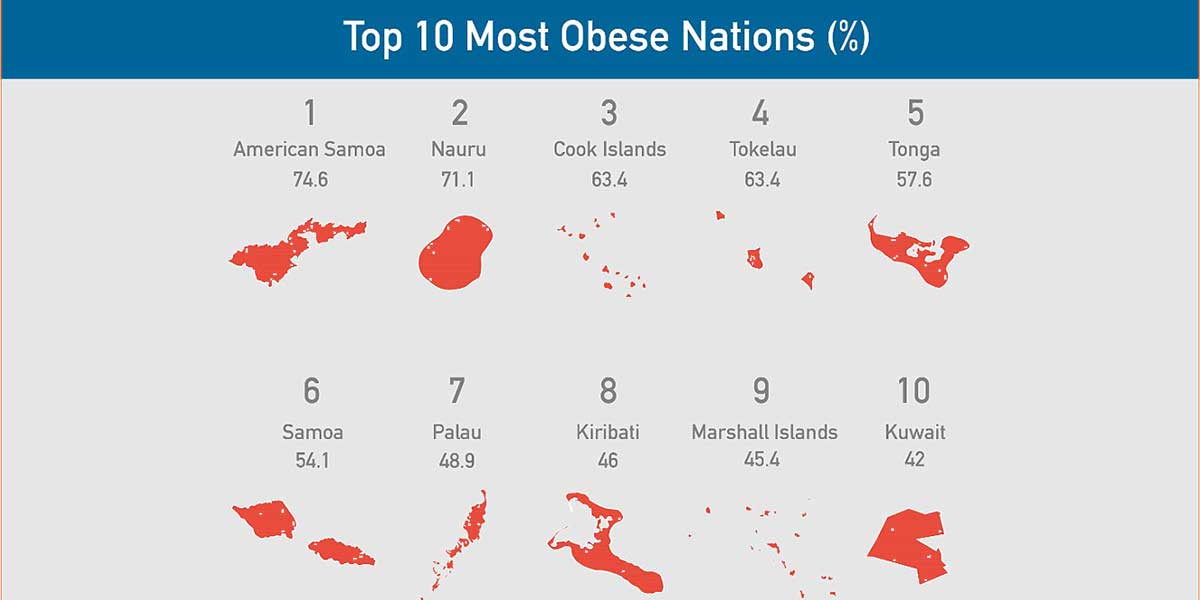
The Samoan thrifty gene
In recent times Samoa has had some of the world’s leading obesity rates. A new study has identified a genetic variant that may contribute to this obesity risk. The paper, published in Nature Genetics, describes a ‘thrifty gene’ that promotes the storage of fat. The study included over 3,000 participants and the researchers believe that this gene could be associated with a 35% higher odds of being obese compared with not having the gene. After careful analysis of the whole genome, the researchers found that chromosome 5 was strongly associated with overweight. They had a more in depth look at the chromosome, eventually uncovering the mutation in the CREBRF gene.
In collaboration with the University of Pittsburgh the mutation was implanted into the fat cells of mice and it was found that these mice stored more fat. The researchers admit that this gene is one part of many factors that have led to 80% of males and 91% of females in Samoa being overweight or obese in 2010, this gene only gives an elevated risk of developing obesity, and with the right diet and lifestyle interventions, many Samoans may be able to avoid putting on weight.
Read More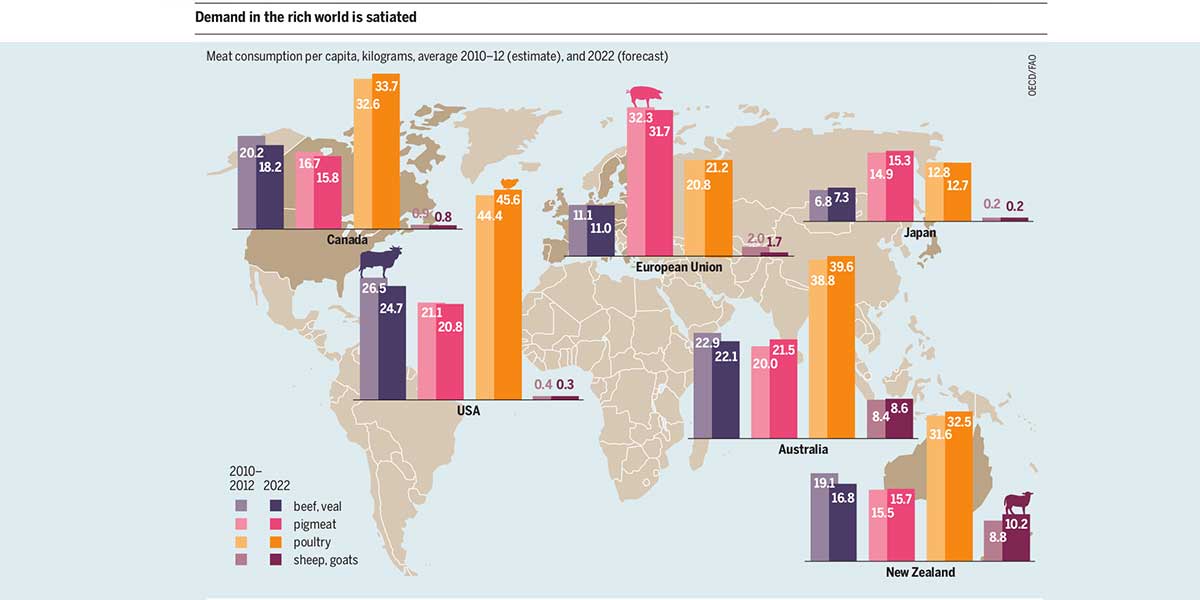
Does meat consumption contribute to global obesity?
A team from the University of Adelaide has found that meat offers surplus energy in the modern diet and have presented their findings in BMC Nutrition. The analysis involved data from 170 countries and suggested that meat consumption has as much of an effect on the development of obesity as sugar consumption does. The study is led by PhD student Wenpeng You who has explained that fats and carbohydrates in modern diets supply enough energy for the average person. This means that meat protein, which takes longer to digest, is actually surplus. This energy is then converted to fat and stored within the body.
Previous papers that have linked meat to obesity have often blamed the fat content of meat, however this study is now suggesting otherwise. Whilst this paper does not definitively prove that meat protein causes obesity steps will be taken to further this research in order to properly understand its impact.
Read More
Risk of premature death increases, alongside risk of obesity and overweight
A major study that has been published in The Lancet has shown that being overweight or obese is directly associated with a higher risk of premature death. Many recent studies have suggested that excess weight does not have deleterious effects on chronic disease; however this study has highlighted many methodological limitations in previous research. For example, much research had been confounded by smokers, as they tend to have a lower BMI than non-smokers, but a higher mortality.
In 2013, researchers pooled resources to form the Global BMI Mortality Collaboration, involving over 500 investigators from over 300 institutions. The efforts of this group have recently been focused on resolving the confusion between BMI and mortality. In total, this study analysed data from 10.6 million participants across 45 years. It found that those of a healthy weight (BMI between 22.5 and 25) had the lowest mortality, whilst every 5 units above 25 was associated with a 31% higher risk of premature death. The study also found that those who were underweight also had a higher mortality risk. Overall the study has highlighted that the higher the BMI of an individual, the higher their chance of premature death for a wide range of populations.
Read More
Healthy infant sleep habits help prevent obesity
Parents should be taught bedtime techniques that encourage healthy sleep habits to help prevent obesity in their children. This is the conclusion of a study coming from Penn State College of Medicine. The researchers are investigating the use of a new intervention that is being trialled in the INSIGHT study (Intervention Nurses Start Infants Growing on Healthy Trajectories), one part of this intervention is the improvement of sleep related behaviours for both parents and children. It was found that children of parents who had been trained in special bedtime techniques were more likely to self-soothe to sleep without being fed, and were less likely to wake up during the night requiring feeding.
The lead author, Dr Ian M. Paul, mentioned how many parents try to keep their baby up later so that they sleep longer during the night, however this was shown to not be the case, and actually led to unhealthy behaviours for the children. He went on to say that children should be put to bed early and left to self-soothe. Whilst helping to prevent obesity, this would also result in positive effects for the child’s development and the mental health of the parents.
Read More
Weight loss interventions do not result in higher fertility
A randomised controlled study has taken place in the Netherlands and has found that weight loss interventions preceding fertility treatment did not result in higher birth rates. The study included 577 women, who were split into two groups, one who received lifestyle intervention advice, and one that did not. Weight loss was found to be higher in the intervention group, however, birth rates were comparable. A further analysis did however find that the rate of ongoing pregnancies following natural conception was higher in the intervention group than the control.
Obese women may suffer from anovulation, where they do not release an ovum to be fertilised monthly. This study has shown that whilst a lifestyle intervention may be able to treat anovulation, the rates of healthy live births are not affected.
Read More