AI-Powered Pregnancy Ultrasound Set for NHS Clinical Trial
Key Takeaways:
- A new NHS-backed trial will test whether AI-assisted ultrasound scans improve detection of congenital anomalies during the 20-week pregnancy scan.
- The study will involve more than 9,500 pregnant women across four NHS hospitals and will examine cost-effectiveness, efficiency, and patient experience.
- Results, expected in 2027, could pave the way for nationwide adoption of AI tools in pregnancy screening and influence global prenatal care standards.
A major new trial in obstetric imaging
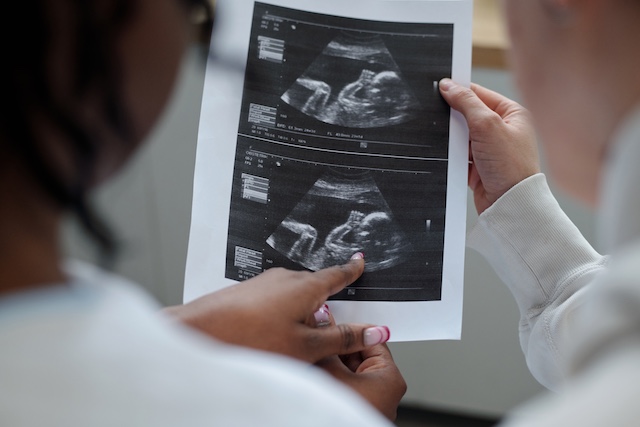
An artificial intelligence (AI) obstetric imaging tool is to be trialled across four NHS hospitals, with the aim of improving the detection of congenital problems during the routine 20-week pregnancy scan.
The trial centres on Fraiyascan, a solution developed by the UK-based FemTech start-up Fraiya in partnership with King’s College London. The technology is designed to support clinicians during anomaly scans by automating real-time image acquisition, quality checks, anatomical measurements, and aspects of clinical reporting.
Congenital abnormalities affect approximately 2% of pregnancies in the UK. Early and accurate diagnosis is critical for improving neonatal outcomes and supporting informed parental decision-making.
Trial design and scale
The clinical trial, funded by the National Institute for Health and Care Research (NIHR), will begin a phased rollout in winter 2025 and will run for 12 months. More than 9,500 pregnant women will be recruited across four sites:
- Guy’s and St Thomas’ NHS Foundation Trust
- Lewisham and Greenwich NHS Trust
- Liverpool Women’s University Hospital
- Royal Devon University Healthcare NHS Foundation Trust
The trial will compare standard ultrasound scans with AI-supported screening, focusing on cost-effectiveness, workflow efficiency, workforce impact, and patient experience.
Clinical perspectives
Professor Reza Razavi, Chief Executive at Fraiya and Chief Investigator of the trial, emphasised the potential significance:
“We see this trial as a turning point. It’s not just about proving our AI tools work, it’s about proving they add value to the health system.
As a clinician who looks after babies with congenital problems, I see the difference between those who are diagnosed in pregnancy and get planned care with parents who are fully informed and prepared for what’s to come, and those who unfortunately were not picked up during the pregnancy scans, who arrive at our hospital very unwell and without a diagnosis, with very anxious parents, and have a more difficult journey.
Fraiya’s mission is to address this problem of a lack of diagnosis during pregnancy, so all parents are aware of congenital problems with their babies, and babies are given the best care right from birth.”
Building on past innovation
Fraiya emerged from the iFIND project at King’s College London and Imperial College London – a £10 million research initiative funded by the Engineering and Physical Sciences Research Council (EPSRC) and the Wellcome Trust.
Fraiyascan itself is a CE-marked Class IIa medical device, meaning it complies with regulatory requirements for safety and performance. It has been designed to integrate directly into existing ultrasound systems and workflows, allowing clinicians to adopt it without the need for entirely new infrastructure.
Focus on real-world implementation
Dr Jackie Matthew, Chief Medical Officer and clinical academic sonographer at Fraiya, highlighted the importance of testing the system in practice:
“We’re focused on leveraging the unique capabilities of ultrasound and developing solutions to make it smarter, faster, and more reliable, with clinicians at the centre of that transformation.
This trial will assess the effectiveness of Fraiyascan in real world conditions.
Importantly, the frontline staff and patient feedback will help us to understand the acceptability of the technology, where time-pressured scans, staffing gaps, and service variability, that can affect outcomes, may also impact the performance and adoption of AI-based innovations.”
Looking ahead
If the trial demonstrates positive outcomes, Fraiyascan could be integrated into NHS workflows nationwide. Such an adoption would represent a significant shift in fetal anomaly detection, with results expected in early 2027. The findings may also inform international standards in prenatal care, potentially influencing how pregnancy scans are conducted around the world.
Fraiya’s trajectory has been supported by strong investment. Since October 2024, the company has raised £3.5 million in funding through grants, awards, venture capital, and angel investors, alongside its clinical and academic partnerships.