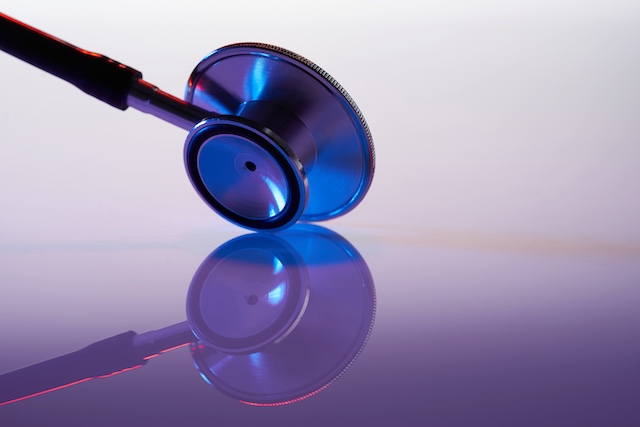
AI stethoscope could transform early detection of heart disease
Key takeaways:
- An AI-powered stethoscope has been shown to detect heart failure, heart valve disease and abnormal rhythms within seconds.
- A large study involving over 12,000 patients found the device improved detection rates significantly compared with standard care.
- Researchers describe the tool as a potential “game-changer” that could enable earlier diagnosis and treatment across the NHS.
A 21st-century update to the stethoscope
The stethoscope, first invented in 1816, has been an essential tool for physicians to listen to the internal sounds of the body. More than two centuries later, researchers in the United Kingdom have reimagined it with artificial intelligence.
A team from Imperial College London and Imperial College Healthcare NHS Trust has developed a device that can identify three serious heart conditions almost instantly: heart failure, heart valve disease and abnormal heart rhythms. Unlike the traditional stethoscope, this new version replaces the chest piece with a device about the size of a playing card. It uses a microphone to capture sounds from the heart and blood flow, detecting subtle variations that are often beyond the range of the human ear.
The device also performs an electrocardiogram (ECG), recording the heart’s electrical activity. This data is securely uploaded to the cloud, where AI models trained on tens of thousands of patient records analyse it to produce rapid diagnostic insights.
Findings from a large-scale NHS study
In a study covering 205 GP practices across west and north-west London, more than 12,000 patients were examined using the AI-enabled stethoscope. Their results were compared with patients from 109 GP practices where the technology was not deployed.
The outcomes were striking:
- Patients assessed with the AI device were 2.33 times more likely to be diagnosed with heart failure within 12 months.
- Abnormal heartbeat patterns, which often have no obvious symptoms but carry a higher risk of stroke, were 3.5 times more detectable using the tool.
- Heart valve disease was 1.9 times more likely to be identified compared with usual practice.
Researchers believe these improvements in early detection could allow many more people to begin treatment before their condition progresses to an advanced stage.
Clinical perspectives
Dr Sonya Babu-Narayan, clinical director at the British Heart Foundation (BHF) and consultant cardiologist, emphasised the significance of the innovation:
“This is an elegant example of how the humble stethoscope, invented more than 200 years ago, can be upgraded for the 21st century.”
She added that these technologies are crucial in tackling heart disease:
“So often this condition is only diagnosed at an advanced stage when patients attend hospital as an emergency. Given an earlier diagnosis, people can access the treatment they need to help them live well for longer.”
Next steps for NHS adoption
The findings were presented at the European Society of Cardiology annual congress in Madrid, the world’s largest cardiology conference, attended by thousands of doctors and researchers.
Following the successful trial, there are now plans to introduce the AI stethoscope to GP surgeries in south London, Sussex and Wales. Researchers hope that in time the device will be available throughout the NHS, transforming how heart disease is detected and managed in primary care.