Pioneering AI tool developed by NHS teams to transform patient care
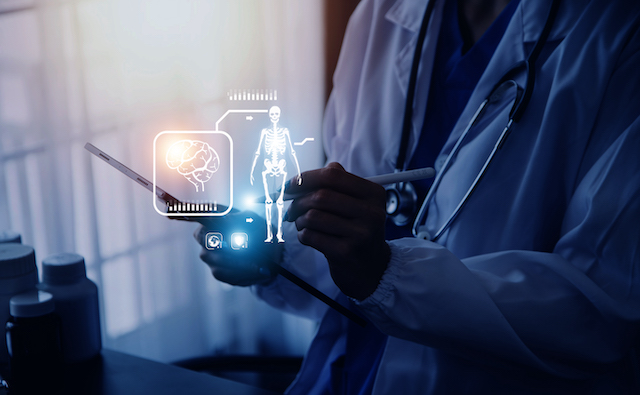
A ground-breaking artificial intelligence (AI) tool, designed to forecast patient health trajectories, has been developed by a collaboration of healthcare researchers within the NHS. Dubbed “Foresight,” this innovative tool is poised to revolutionise clinical decision-making processes, enhance monitoring in healthcare environments, and bolster clinical trials.
The development team is composed of specialists from two NHS foundation trusts in London—King’s College Hospital and Guy’s and St Thomas’—as well as academic experts from King’s College and University College London. Utilising the Cogstack platform, which is renowned for its capability in information retrieval and extraction, Foresight leverages natural language processing to efficiently mine data from NHS electronic health records. This allows the tool to be trained on vast amounts of healthcare data, employing a deep learning methodology to identify intricate patterns within both structured and unstructured data sources.
A critical evaluation published in The Lancet Digital Health illustrates Foresight’s effectiveness: the tool successfully predicted the next ten possible health disorders in a patient’s timeline with impressive accuracy rates—68% at King’s College Hospital, 76% at Maudsley NHS Foundation Trust, and an outstanding 88% with the US-based MIMIC-III dataset.
The tool’s utility was further underscored through a practical test where five clinicians created 34 hypothetical patient timelines based on simulated scenarios. An impressive 93% of the predictions made by Foresight were deemed clinically relevant, affirming their practical applicability in real-world settings.
According to a report from the NIHR Maudsley Biomedical Research Centre, Foresight’s capabilities are not limited to forecasting; it can also emulate clinical trials, facilitate longitudinal research, generate synthetic datasets, and simulate interventions to study disease progression. Professor Richard Dobson, a leading figure in medical informatics at King’s College London and the senior author of the study, expressed enthusiasm about the multitude of applications for Foresight. He highlighted its potential in creating digital health twins and advancing medical education, among other uses.
Professor Dobson emphasised the importance of employing high-quality data to refine AI models and expressed a vision for expanded collaboration. His aim is to involve more hospitals in the development of “Foresight 2,” an iteration that promises even greater accuracy through enhanced language models.
This initiative has garnered substantial support, receiving funding from the NHS AI Lab, the National Institute for Health and Care Research, and Health Data Research UK (HDRUK). Professor Andrew Morris, director of HDRUK, noted that the success of such innovations hinges on the quality and representativeness of the data used. He advocated for continued investment in the UK’s data infrastructure to ensure these advancements can be realised in a manner that is both secure and respectful of patient privacy.