Smartwatch data shown to spot early Parkinson’s signs more accurately than traditional tests
Key Takeaways:
- A UK-led study found that data from ordinary smartwatches can detect early biological changes linked to Parkinson’s disease more sensitively than established clinical risk scores.
- The research demonstrated that a digital risk score derived from wearable data outperformed traditional assessments and closely aligned with gold-standard brain scans and spinal fluid tests.
- This approach could provide a simpler, non-invasive screening method, making early Parkinson’s detection more accessible and cost-effective.
Wearable technology uncovers early Parkinson’s signs
Data collected from smartwatches have been shown to detect early brain changes associated with Parkinson’s disease with greater sensitivity than widely used clinical risk assessments, according to new research.
The study, led by Dr Cynthia Sandor at the UK Dementia Research Institute at Imperial College London, highlights the potential of wearable devices to identify subtle, early signs of Parkinson’s long before a formal diagnosis. The findings, published in eBioMedicine, suggest that everyday technology could offer a more accessible and less invasive way to screen for Parkinson’s risk.
Comparing smartwatch data with traditional clinical and biological tests
Previous work from Dr Sandor’s team had already demonstrated that wearable devices could predict Parkinson’s years ahead of diagnosis by analysing subtle changes in movement. However, this latest study is the first to directly compare smartwatch-derived data with gold-standard biological markers – including specialist brain imaging and cerebrospinal fluid tests – as well as with established clinical scoring systems.
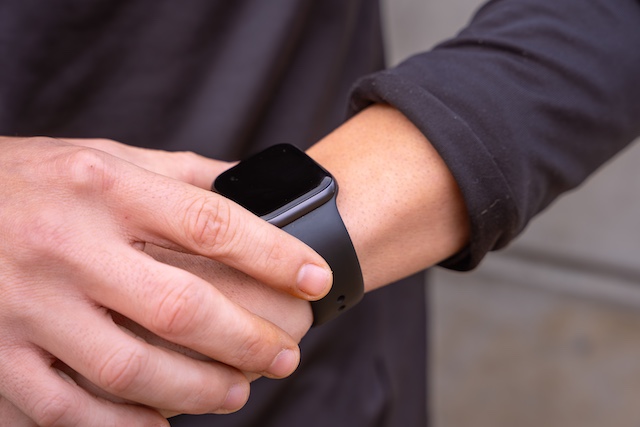
The researchers used data from the Parkinson’s Progression Markers Initiative (PPMI), a major international study led by the Michael J. Fox Foundation. Participants in this project wore Verily smartwatches for an average of 16 months, during which the devices continuously and passively tracked their sleep patterns, heart rate and physical activity.
These biological markers included dopamine transporter imaging (DaTscan), a type of brain scan that highlights loss of dopamine function, and cerebrospinal fluid tests looking for misfolded α-synuclein – both considered key hallmarks of early Parkinson’s.
Developing a more sensitive digital risk score
Drawing on the extensive smartwatch data, the research team developed a digital risk score designed to differentiate people living with Parkinson’s from healthy individuals. They compared this digital score with the Movement Disorder Society (MDS) research criteria, a widely used clinical risk score for Parkinson’s, and also assessed it in a separate group of individuals who were considered at increased risk due to either genetic variants or early symptoms.
The digital score not only correlated strongly with both the clinical and biological markers but also demonstrated higher sensitivity than the MDS criteria in detecting early Parkinson’s-related changes. Notably, when the digital risk score was combined with a smell test (to detect hyposmia, a common early sign of Parkinson’s), it identified over 80% of people who had abnormal brain scans or spinal fluid markers.
Towards simpler, earlier detection
The study’s authors believe that this digital approach could pave the way for a straightforward, non-invasive screening tool to help identify individuals most likely to benefit from more detailed neurological assessments. This could potentially make early diagnosis of Parkinson’s both more widely available and more affordable.
Dr Cynthia Sandor, Edmond & Lily Safra Assistant Professor in Parkinson’s Disease at Imperial’s Department of Brain Sciences, said:
“Our findings suggest that everyday smartwatch data could help flag early signs of Parkinson’s long before a clinical diagnosis is made. The accuracy of this data is on par with current standard tests, which can be expensive and invasive. This kind of digital monitoring could be a game-changer – offering a simple, non-invasive way to screen those most at risk and helping to guide who should receive more definitive testing.”