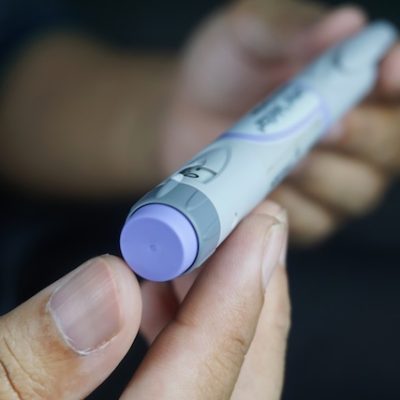
New Study Suggests Semaglutide May Reduce Epilepsy Risk in Adults with Type 2 Diabetes
Key Takeaways:
- Initiating semaglutide was associated with a significantly lower risk of developing epilepsy or seizures compared with other glucose-lowering therapies.
- The observed effect does not appear to be primarily driven by improvements in blood glucose or body weight.
- Findings are preliminary and should be interpreted as an early signal rather than a basis for changing clinical practice.
Background – seizure risk in type 2 diabetes
People living with type 2 diabetes mellitus face a higher risk of developing seizures and epilepsy. This increased risk is thought to be partly driven by inflammatory processes that affect the central nervous system. While glucagon-like peptide-1 receptor agonists (GLP-1 RAs) are primarily used for glucose regulation, there has been growing scientific interest in their potential neurological effects.
However, until now, the relationship between GLP-1 RAs and seizure risk has remained unclear.
Study design and population
The findings were presented at the American Academy of Neurology Annual Meeting, held in Chicago from April 18 to 22, 2026.
Researchers conducted a retrospective study using a target trial emulation approach, drawing on data from the National Institutes of Health All of Us Controlled Tier Dataset. The analysis focused on adults aged 18 years and older with type 2 diabetes mellitus who initiated one of the following treatments between December 2018 and December 2021:
- Semaglutide
- Sodium-glucose cotransporter-2 inhibitors (SGLT2 inhibitors)
- Other glucose-lowering therapies
Participants were followed through to December 2023.
To ensure comparability between groups, inverse probability of treatment weighting was applied to balance baseline characteristics. Time-to-event analyses were then used to assess the risk of developing epilepsy or seizures.
Cohort characteristics
A total of 393,596 individuals met eligibility criteria. Within this population:
- 8,533 individuals were included in the semaglutide versus other glucose-lowering drug comparison (2,397 vs 6,136)
- 7,455 individuals were included in the semaglutide versus SGLT2 inhibitor comparison (1,650 vs 3,725)
Key findings – reduced risk of seizures
After statistical adjustment, initiation of semaglutide was associated with a lower risk of epilepsy or seizures compared with both comparator groups:
- Compared with other glucose-lowering drugs:
- Hazard ratio: 0.46
- 95% confidence interval: 0.25–0.83
- P = .010
- Compared with SGLT2 inhibitors:
- Hazard ratio: 0.44
- 95% confidence interval: 0.22–0.86
- P = .017
These findings suggest a meaningful reduction in relative risk among those initiating semaglutide.
Absolute risk reduction and clinical interpretation
Further modelling provided estimates of absolute risk reduction:
- Compared with other glucose-lowering therapies:
- Absolute risk reduction: -0.014
- Number needed to treat: 69
- P < .001
- Compared with SGLT2 inhibitors:
- Absolute risk reduction: -0.008
- Number needed to treat: 129
- P < .001
These results indicate that, while the relative risk reduction is notable, the absolute reduction in risk remains modest.
Mechanisms – not driven by glycaemic control alone
To explore potential mechanisms, the researchers conducted mediation analyses. These analyses assessed how much of the observed effect could be explained by changes in glycated haemoglobin or body mass index.
The results showed that:
- Glycated haemoglobin accounted for only 1.1% of the effect compared with other glucose-lowering drugs and 3.6% compared with SGLT2 inhibitors
- Body mass index contributed 0.3% or less in both comparisons
This suggests that the reduced seizure risk may not be primarily driven by improvements in glycaemic control or weight loss, pointing towards other possible mechanisms.
Expert perspective
Yoonhyuk Jang, MD, PhD, Postdoctoral Fellow in the Department of Immunology at Harvard Medical School, commented on the findings:
“This study suggests that semaglutide may be associated with a lower risk of adult-onset seizures or epilepsy in patients with type 2 diabetes, with the signal appearing more pronounced in late-onset cases among adults aged 60 years or older.”
He added:
“Given that age-associated brain insults are major contributors to adult-onset seizures and epilepsy, these findings may have implications beyond seizure risk alone and raise the possibility that semaglutide could also be relevant to broader brain health; however, because this was a retrospective target trial emulation with a relatively small number of events, it is not yet practice-changing and should instead be viewed as a signal that supports further research into the role of GLP-1 receptor agonists in epileptogenesis.”
Limitations and future directions
The authors emphasised that the study design was observational, despite using advanced statistical methods to emulate a clinical trial. As such, causality cannot be definitively established.
Additionally, the relatively small number of seizure events limits the strength of the conclusions. These findings should therefore be interpreted cautiously and seen as hypothesis-generating.
Further prospective and randomised studies will be needed to determine whether GLP-1 receptor agonists such as semaglutide have a direct role in reducing seizure risk or influencing broader neurological health.
Disclosures
One study author reported affiliations with biotechnology, pharmaceutical, or device companies. Full disclosure details are available in the original study source.
Source: Neurology Advisor