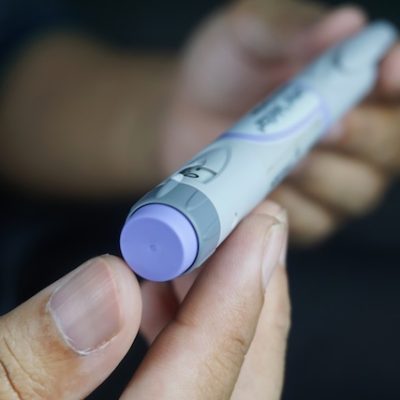
AstraZeneca reports early success for experimental obesity pill in Phase I trial
AstraZeneca announced on Monday (4th of November) that its experimental oral treatment for weight loss, developed in collaboration with China’s Eccogene, has shown promising safety and tolerability outcomes in an early-stage Phase I trial. According to AstraZeneca, side effects were consistent with those expected in the GLP-1 drug class, which includes some of the most effective weight-loss medications currently on the market.
The Phase I trial, involving 72 participants, was focused on assessing the safety and tolerability of the treatment, a critical objective for early-stage clinical trials. Participants included both volunteers of a healthy weight without obesity, and individuals living with type 2 diabetes. This diverse enrolment provided AstraZeneca with an initial understanding of how different individuals might tolerate the treatment.
Sharon Barr, AstraZeneca’s Executive Vice President of Biopharmaceuticals R&D, expressed confidence in advancing the treatment to Phase II clinical trials based on the encouraging results. “These initial findings have given us the confidence to move forward,” Barr stated during a media briefing ahead of the ObesityWeek conference in San Antonio, Texas, where the data would be presented. She confirmed that one of the upcoming trials would focus on the average reduction in body weight among participants living with obesity or who have overweight. AstraZeneca aims to complete this study by the end of 2025.
When AstraZeneca first announced its partnership with Eccogene in 2023, the company committed up to $2 billion to licence this once-daily oral treatment, hoping it might offer a more convenient alternative with fewer side effects than existing injectable treatments. Currently, injectable GLP-1 receptor agonists such as Eli Lilly’s Zepbound and Novo Nordisk’s Wegovy lead the market. Barr highlighted AstraZeneca’s optimism for the treatment’s future, remarking on its potential to offer a safer alternative to injectables, which often present a high barrier for long-term adherence among people seeking weight loss.
Barr noted a “dose-dependent increase in nausea and vomiting,” typical of the GLP-1 receptor agonist class. GLP-1 receptor agonists function by slowing down digestion and promoting a feeling of fullness, which can lead to reduced food intake. Both Zepbound and Wegovy belong to this drug class. Importantly, AstraZeneca’s trial results did not reveal any serious adverse events, which Barr believes will support the treatment’s safety profile moving forward.
When AstraZeneca’s Chief Executive, Pascal Soriot, announced the Eccogene deal, he acknowledged that AstraZeneca had joined the obesity treatment market later than competitors Novo Nordisk and Eli Lilly, both of whom had already achieved notable success with their injectable GLP-1 agonists. However, AstraZeneca remains optimistic about its potential within this market segment. Unlike many other treatments currently in development, AstraZeneca’s obesity pill is a small molecule, which may enable it to be used in combination with other small molecule drugs. Barr emphasised this as a crucial factor, noting that “more than 60% of people with obesity or who have overweight also live with at least one other medical condition.”
In the competitive landscape, AstraZeneca is not the only company advancing oral treatments for obesity. On the same day, U.S. biotech company Viking Therapeutics released results from its early-stage trial for an oral obesity treatment that, according to analysts, compared favourably to some competitors. Viking’s positive results led to a 9% increase in its share price. Similarly, Pfizer and Eli Lilly are also working on oral weight-loss drugs within the GLP-1 drug class, with their products currently in later-stage clinical trials.
AstraZeneca’s continued progress in the obesity treatment field highlights its commitment to addressing a growing health challenge affecting millions worldwide.