[email protected]

+44 (0)20 3773 4895

logologologo
  • About Us
    • The College
    • Advisory Board
    • Our Faculty and Team
    • Intelligence Hub
  • Topic Areas
    • Obesity Care
    • Digital Health
    • Behaviour Change
  • Courses
    • CPD Short Courses
    • PGCert in Obesity Care
    • PGCert in Digital Health
  • Apply
    • Postgraduate Qualification in Obesity Care
    • Postgraduate Qualification in Digital Health
    • FAQs
  • Resources
    • News
    • Our Publications
    • Monthly News Bulletins
    • Funding Options
  • Contact Us
    • Contact Us
  • Student Login

No products in the cart.

logologologo
  • About Us
    • The College
    • Advisory Board
    • Our Faculty and Team
    • Intelligence Hub
  • Topic Areas
    • Obesity Care
    • Digital Health
    • Behaviour Change
  • Courses
    • CPD Short Courses
    • PGCert in Obesity Care
    • PGCert in Digital Health
  • Apply
    • Postgraduate Qualification in Obesity Care
    • Postgraduate Qualification in Digital Health
    • FAQs
  • Resources
    • News
    • Our Publications
    • Monthly News Bulletins
    • Funding Options
  • Contact Us
    • Contact Us
  • Student Login

No products in the cart.

  • About Us
    • The College
    • Advisory Board
    • Our Faculty and Team
    • Intelligence Hub
  • Topic Areas
    • Obesity Care
    • Digital Health
    • Behaviour Change
  • Courses
    • CPD Short Courses
    • PGCert in Obesity Care
    • PGCert in Digital Health
  • Apply
    • Postgraduate Qualification in Obesity Care
    • Postgraduate Qualification in Digital Health
    • FAQs
  • Resources
    • News
    • Our Publications
    • Monthly News Bulletins
    • Funding Options
  • Contact Us
    • Contact Us
  • Student Login
September 2, 2015 by Nigel Hinchliffe Obesity Care 0 comments

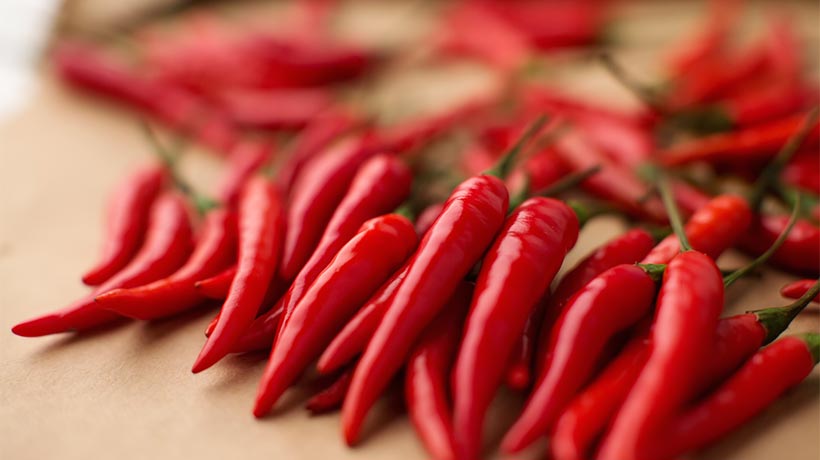
Chillies becoming hot topic in fight against obesity

Researchers in Australia have investigated the association between hot chilli pepper receptors (TRPV1) and the feeling of fullness in mice. As the stomach fills it begins to stretch, which activates nerves that inform the body that the stomach is filling and when it has reached capacity. The researchers found that this activity is regulated by TRPV1 receptors, also known as hot chilli pepper receptors. This builds on previous knowledge that capsaicin, the chemical that makes chillies hot, reduces food intake in humans.

The study also found that deletion of TRPV1 receptors dampened the response of gastric nerves to stretch. This resulted in a delayed feeling of fullness and consumption of more food, showing that the capsaicin mechanism is potentially vital in controlling how much food we eat. Dr Stephen Kentish, one of the study authors, hopes to ‘see how feasible this is as a potential treatment not just for obesity itself but maybe in the prevention of gaining weight.’ These exciting findings could inform further research in this area and lead to the development of novel therapies.


Read more

PREV
NEXT

Related Posts

February 1, 2017
New detoxifying diet results in significant weight loss
Read More
November 30, 2015
Clinicians not seeing obesity through the eyes of the patient
Read More
Boy eating at a Kitchen table.
April 8, 2026
Children with Obesity Face Elevated Long-Term Health Risks Even with Normal Test Results, Study Finds
Read More
Medical student at desk.
February 2, 2023
Scant obesity training in medical school leaves doctors ill-prepared to help patients
Read More

CCH LINKS

FAQ
HOW TO APPLY
ACADEMIC ADVISORY BOARD
FACULTY AND STAFF
TERMS & CONDITIONS
CCH EDUCATION SERVICES

OUR PARTNERS

NOF
Haringey Obesity Alliance
Skills Active
CPD UK
ASO
REPS
Southwark
DIT
Healthcare Uk
OAC

ABOUT CCH

CONTACT US
[email protected]
+44 (0)20 3773 4895
Technopark, 90 London Road, LONDON, SE1 6LN
 

© The College of Contemporary Health