[email protected]

+44 (0)20 3773 4895

logologologo
  • About Us
    • The College
    • Advisory Board
    • Our Faculty and Team
    • Intelligence Hub
  • Topic Areas
    • Obesity Care
    • Digital Health
    • Behaviour Change
  • Courses
    • CPD Short Courses
    • PGCert in Obesity Care
    • PGCert in Digital Health
  • Apply
    • Postgraduate Qualification in Obesity Care
    • PGCert/PGDip/MSc in Digital Health
    • FAQs
  • Resources
    • News
    • Our Publications
    • Monthly News Bulletins
    • Funding Options
  • Contact Us
    • Contact Us
  • Student Login

No products in the cart.

logologologo
  • About Us
    • The College
    • Advisory Board
    • Our Faculty and Team
    • Intelligence Hub
  • Topic Areas
    • Obesity Care
    • Digital Health
    • Behaviour Change
  • Courses
    • CPD Short Courses
    • PGCert in Obesity Care
    • PGCert in Digital Health
  • Apply
    • Postgraduate Qualification in Obesity Care
    • PGCert/PGDip/MSc in Digital Health
    • FAQs
  • Resources
    • News
    • Our Publications
    • Monthly News Bulletins
    • Funding Options
  • Contact Us
    • Contact Us
  • Student Login

No products in the cart.

  • About Us
    • The College
    • Advisory Board
    • Our Faculty and Team
    • Intelligence Hub
  • Topic Areas
    • Obesity Care
    • Digital Health
    • Behaviour Change
  • Courses
    • CPD Short Courses
    • PGCert in Obesity Care
    • PGCert in Digital Health
  • Apply
    • Postgraduate Qualification in Obesity Care
    • PGCert/PGDip/MSc in Digital Health
    • FAQs
  • Resources
    • News
    • Our Publications
    • Monthly News Bulletins
    • Funding Options
  • Contact Us
    • Contact Us
  • Student Login
November 11, 2015 by Nigel Hinchliffe Obesity Care 0 comments

Components of breastmilk contributing to passing on of obesity

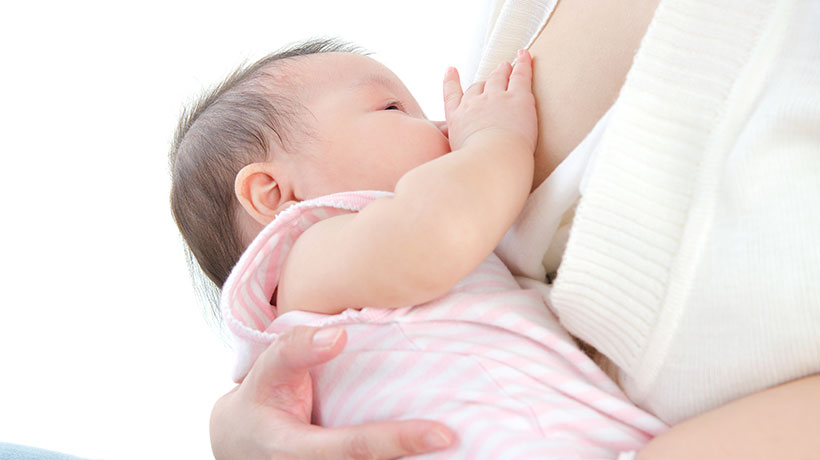
New research has shown that complex carbohydrates found in breastmilk are associated with infant obesity. Michael Goran, the corresponding author from the Keck School of Medicine of the University of Southern California identified variations of human milk oligosaccharides (HMOs) as either protective or as risk factors for obesity. Previous studies conducted in this area have produced varying results, with most showing that breastfeeding decreases the risk of developing obesity; this study in particular looked at 71 past reports, finding breastfeeding to reduce excess weight by about 10%. However it is largely dependent on the composition of the mother’s breast milk and the specific mix of HMOs that makes the difference.

HMOs themselves can’t be digested and so accumulate in the colon and shape the gut microbiome of the baby. The study examined 25 mother and child pairs and used measures at 1 and 6 months. Although small, the study results are promising as the aim was to identify which HMOs are most important in obesity protection. Goran stated that these HMOs could then be used as supplements in those that are breastfeeding or alongside formulae. It must be stressed that breastfeeding is not being vilified in this study, only that it is helping us to understand better how a child might develop obesity, as breastfeeding has many benefits too.

Read more

PREV
NEXT

Related Posts

April 19, 2018
Cardiorespiratory fitness as a Determinant Factor for the 30% of Obese Individuals That are Metabolically Healthy
Read More
October 15, 2015
Fat responds to nerves activation
Read More
March 20, 2018
Rethinking public mental health: learning from obesity
Read More
August 18, 2016
The Samoan thrifty gene
Read More

CCH LINKS

FAQ
HOW TO APPLY
ACADEMIC ADVISORY BOARD
FACULTY AND STAFF
TERMS & CONDITIONS
CCH EDUCATION SERVICES

OUR PARTNERS

NOF
Haringey Obesity Alliance
Skills Active
CPD UK
ASO
REPS
Southwark
DIT
Healthcare Uk
OAC

ABOUT CCH

CONTACT US
[email protected]
+44 (0)20 3773 4895
Technopark, 90 London Road, LONDON, SE1 6LN
 

© The College of Contemporary Health