[email protected]

+44 (0)20 3773 4895

logologologo
  • About Us
    • The College
    • Advisory Board
    • Our Faculty and Team
    • Intelligence Hub
  • Topic Areas
    • Obesity Care
    • Digital Health
    • Behaviour Change
  • Courses
    • CPD Short Courses
    • PGCert in Obesity Care
    • PGCert in Digital Health
  • Apply
    • Postgraduate Qualification in Obesity Care
    • Postgraduate Qualification in Digital Health
    • FAQs
  • Resources
    • News
    • Our Publications
    • Monthly News Bulletins
    • Funding Options
  • Contact Us
    • Contact Us
  • Student Login

No products in the cart.

logologologo
  • About Us
    • The College
    • Advisory Board
    • Our Faculty and Team
    • Intelligence Hub
  • Topic Areas
    • Obesity Care
    • Digital Health
    • Behaviour Change
  • Courses
    • CPD Short Courses
    • PGCert in Obesity Care
    • PGCert in Digital Health
  • Apply
    • Postgraduate Qualification in Obesity Care
    • Postgraduate Qualification in Digital Health
    • FAQs
  • Resources
    • News
    • Our Publications
    • Monthly News Bulletins
    • Funding Options
  • Contact Us
    • Contact Us
  • Student Login

No products in the cart.

  • About Us
    • The College
    • Advisory Board
    • Our Faculty and Team
    • Intelligence Hub
  • Topic Areas
    • Obesity Care
    • Digital Health
    • Behaviour Change
  • Courses
    • CPD Short Courses
    • PGCert in Obesity Care
    • PGCert in Digital Health
  • Apply
    • Postgraduate Qualification in Obesity Care
    • Postgraduate Qualification in Digital Health
    • FAQs
  • Resources
    • News
    • Our Publications
    • Monthly News Bulletins
    • Funding Options
  • Contact Us
    • Contact Us
  • Student Login
July 20, 2015 by Nigel Hinchliffe Obesity Care 0 comments

Following in the father’s footsteps

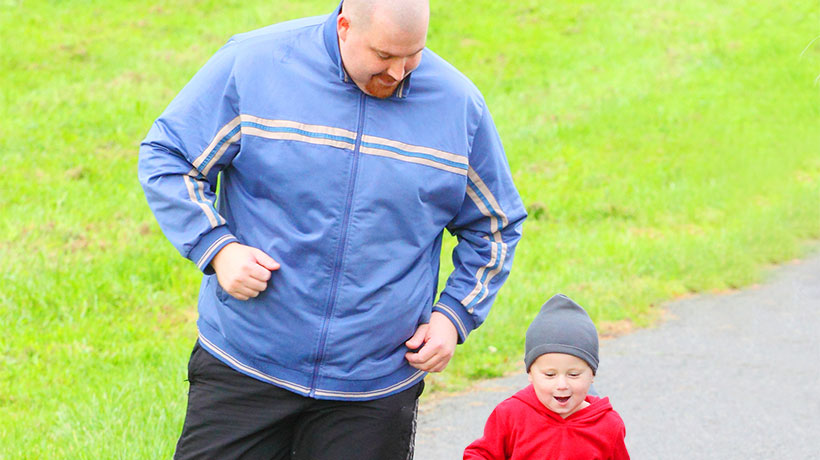
Does the effect of the growing obesity epidemic only come from the mother? No! New research has shown conditions that can affect a father’s health can ultimately alter the genes he passes down to his children. This is a new and upcoming area of study that is receiving a lot more attention, alongside the influence of the father’s health after birth.

An observational study conducted by Emily Freeman and colleagues found that a father’s weight status was a better predictor of obesity risk than a mother’s. It was concluded: “father’s are a key influence in shaping the family environment that leads to the development of child obesity”. Interventions that are used to test the effectiveness of treating overweight fathers are a significant and novel strategy. The interventions can have a major impact on weight status in the childhood obesity epidemic and consequently should be a priority.

Fathers may ultimately be a strategic target for prevention and treatment of childhood obesity.
Emily Freeman study

PREV
NEXT

Related Posts

A pregnant woman holding a large plate of fresh vegetable salad.
July 29, 2024
Exploring the role of the Mediterranean diet in mitigating gestational diabetes risk
Read More
fertility
July 22, 2016
Weight loss interventions do not result in higher fertility
Read More
Young guy sleeping in bed next to an alarm clock.
February 2, 2026
Dietary Melatonin Intake Linked to Lower Rates of Obesity and Depression
Read More
December 7, 2016
Sugar substitute may not promote weight loss
Read More

CCH LINKS

FAQ
HOW TO APPLY
ACADEMIC ADVISORY BOARD
FACULTY AND STAFF
TERMS & CONDITIONS
CCH EDUCATION SERVICES

OUR PARTNERS

NOF
Haringey Obesity Alliance
Skills Active
CPD UK
ASO
REPS
Southwark
DIT
Healthcare Uk
OAC

ABOUT CCH

CONTACT US
[email protected]
+44 (0)20 3773 4895
Technopark, 90 London Road, LONDON, SE1 6LN
 

© The College of Contemporary Health