[email protected]

+44 (0)20 3773 4895

logologologo
  • About Us
    • The College
    • Advisory Board
    • Our Faculty and Team
    • Intelligence Hub
  • Topic Areas
    • Obesity Care
    • Digital Health
    • Behaviour Change
  • Courses
    • CPD Short Courses
    • PGCert in Obesity Care
    • PGCert in Digital Health
  • Apply
    • Postgraduate Qualification in Obesity Care
    • Postgraduate Qualification in Digital Health
    • FAQs
  • Resources
    • News
    • Our Publications
    • Monthly News Bulletins
    • Funding Options
  • Contact Us
    • Contact Us
  • Student Login

No products in the cart.

logologologo
  • About Us
    • The College
    • Advisory Board
    • Our Faculty and Team
    • Intelligence Hub
  • Topic Areas
    • Obesity Care
    • Digital Health
    • Behaviour Change
  • Courses
    • CPD Short Courses
    • PGCert in Obesity Care
    • PGCert in Digital Health
  • Apply
    • Postgraduate Qualification in Obesity Care
    • Postgraduate Qualification in Digital Health
    • FAQs
  • Resources
    • News
    • Our Publications
    • Monthly News Bulletins
    • Funding Options
  • Contact Us
    • Contact Us
  • Student Login

No products in the cart.

  • About Us
    • The College
    • Advisory Board
    • Our Faculty and Team
    • Intelligence Hub
  • Topic Areas
    • Obesity Care
    • Digital Health
    • Behaviour Change
  • Courses
    • CPD Short Courses
    • PGCert in Obesity Care
    • PGCert in Digital Health
  • Apply
    • Postgraduate Qualification in Obesity Care
    • Postgraduate Qualification in Digital Health
    • FAQs
  • Resources
    • News
    • Our Publications
    • Monthly News Bulletins
    • Funding Options
  • Contact Us
    • Contact Us
  • Student Login
September 16, 2016 by Nigel Hinchliffe Obesity Care 0 comments

Standing desks lower BMI

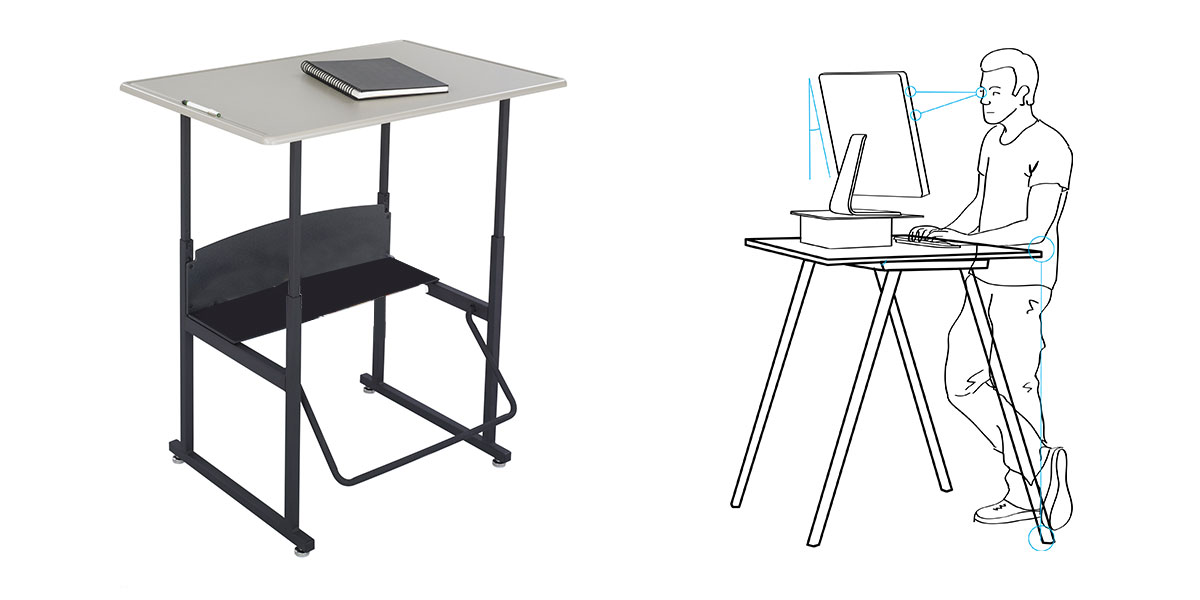
A recent study has shown that standing desks lower the BMI trajectory in school children over a 2 year span. Twenty four classrooms at three elementary schools in Texas participated in the study. 193 students took part and those with standing desks were compared with those who sat at their desks. The researchers found that those who were standing averaged a 3% drop in BMI, whilst those at normal desks noticed a 2% increase, which was considered normal for that age. Furthermore, there were no significant differences between gender and race, suggesting that this is an effect that is generalised across many demographic groups.

Whilst it is difficult to measure the BMI of children, as they should be gaining weight over time as they grow taller and get older, percentiles can be used to gain a better idea of how that child compares to others. This is what was used in this study, and indeed many other studies that assess BMI in children. The students who were a healthy weight when they began the study remained a healthy weight at the end, suggesting that whilst other children may lose weight by using standing desks, they can also be used in prevention strategies. The researchers are hoping to further this study by performing it on a larger scale.


PREV
NEXT

Related Posts

May 22, 2018
Metabolically Healthy Obesity, Transition to Metabolic Syndrome, and Cardiovascular Risk
Read More
February 1, 2017
Blood tests can help predict surgery outcome
Read More
Patient giving money to medical doctor in hospital setting.
December 10, 2024
Reducing BMI in adults associated with lower healthcare costs, study suggests
Read More
March 2, 2017
The heavier you are the slimmer your chances of receiving hospice care
Read More

CCH LINKS

FAQ
HOW TO APPLY
ACADEMIC ADVISORY BOARD
FACULTY AND STAFF
TERMS & CONDITIONS
CCH EDUCATION SERVICES

OUR PARTNERS

NOF
Haringey Obesity Alliance
Skills Active
CPD UK
ASO
REPS
Southwark
DIT
Healthcare Uk
OAC

ABOUT CCH

CONTACT US
[email protected]
+44 (0)20 3773 4895
Technopark, 90 London Road, LONDON, SE1 6LN
 

© The College of Contemporary Health