
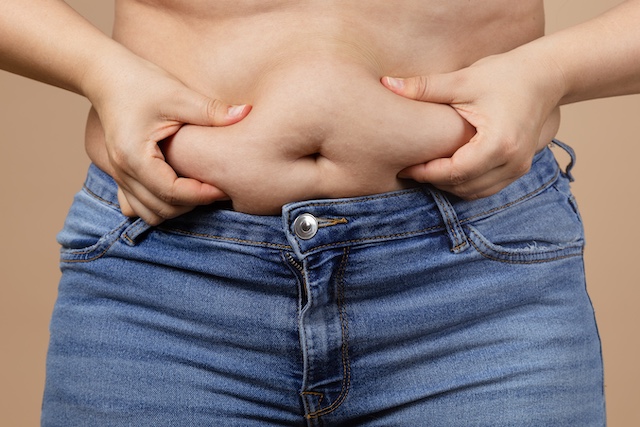
Visceral Fat and Biological Ageing: New Research Links Deep Belly Fat to Faster Cellular Ageing
Key Takeaways:
- A study of nearly 4,800 adults aged 45 to 69 from the Busselton Healthy Ageing Study found that higher levels of visceral fat – the fat stored deep within the abdomen – were associated with faster biological and cellular ageing in both men and women.
- Among female participants, greater visceral fat was also linked to shorter telomere length, a recognised marker of cellular ageing.
- The associations held even after researchers adjusted for overall body fat, body mass index (BMI), waist circumference and lifestyle factors, suggesting visceral fat exerts an effect beyond general measures of body composition.
New research from The University of Western Australia suggests that visceral fat, the type of fat stored deep within the abdominal cavity and wrapped around internal organs, may contribute to faster biological ageing in middle-aged adults independently of overall body weight or general obesity measures. The findings were published in the journal Obesity.
A large population-based analysis
The study was co-authored by Adjunct Associate Professors Jennie Hui and Kun Zhu, both of The University of Western Australia, with the analysis led by Mr Riorden O’Shea, a resident medical officer with the WA Country Health Service. Researchers drew on data from nearly 4,800 participants – 2,614 of them women – aged between 45 and 69 years, all enrolled in the Busselton Healthy Ageing Study.
The team examined how visceral fat related to markers of biological ageing, including indicators of cellular ageing such as telomere length. Telomeres are the repetitive DNA sequences that cap the ends of chromosomes; their progressive shortening over time is widely regarded as a key biological signature of cellular ageing.
The analysis found that greater visceral fat was associated with accelerated biological ageing in both men and women. In women, higher visceral fat was additionally linked to shorter telomere length.
“Our study shows that visceral fat is associated with faster biological and cellular ageing,” said Associate Professor Hui, who is Director of the Busselton Health Study Laboratory. “Understanding what drives faster ageing helps us find better ways to stay healthy for longer.”
An effect that holds after adjusting for other body measures
A central finding of the study is that the link between visceral fat and accelerated ageing persisted even when researchers controlled for other indicators commonly used to assess body composition and adiposity.
“Importantly, these associations remained significant even after accounting for overall body fat, body mass index, waist circumference and lifestyle factors,” Associate Professor Zhu said.
This suggests that visceral fat may have implications for ageing that are not fully captured by routine measures such as BMI or waist circumference – measures that have long been criticised for failing to distinguish between fat stored just under the skin and the metabolically distinct fat located deep within the abdomen.
Why visceral fat behaves differently
Visceral fat is biologically active in ways that subcutaneous fat is not. It secretes inflammatory signalling molecules and contributes to a chronic, low-grade inflammatory state that researchers have increasingly linked to chronic disease and accelerated ageing.
“Visceral fat is metabolically active, secreting a range of pro-inflammatory proteins, which contribute to systemic inflammation and metabolic stress,” Associate Professor Zhu said.
She also noted a practical point that is likely to resonate in clinical settings: visceral fat does not require specialised, costly imaging to assess. “It can be easily measured using imaging technology, which is widely used in routine bone density scans,” she said. This positions visceral fat as a metric that could plausibly be folded into existing clinical workflows without significant additional cost.
The value of long-running cohort data
The findings rest on one of the most established population-health datasets in the world. Established in 1966, the Busselton Health Study is internationally recognised as one of the longest-running population health programmes ever conducted, providing a rich longitudinal dataset that continues to support research into chronic disease and healthy ageing.
Mr O’Shea, who led the analysis, said the project demonstrated the enduring scientific value of sustained cohort studies of this kind. “Access to high-quality longitudinal data allowed us to better understand how clinical risk factors relate to long-term health outcomes,” he said.
Implications for healthier ageing
The findings reinforce a growing body of evidence that abdominal fat distribution – not just total body fat – is an important consideration in healthy ageing. While the study is observational and does not establish that reducing visceral fat will directly slow ageing, the authors argue the results support the case for targeting abdominal fat as part of broader strategies to promote healthier ageing in middle and later life.
For clinicians, the practical takeaway is that visceral fat may warrant attention even in people whose BMI or waist circumference appears unremarkable, and that the imaging tools needed to measure it are already widely available in routine care.
The study, “Visceral fat is associated with accelerated biological and cellular ageing,” is published in Obesity.
Read More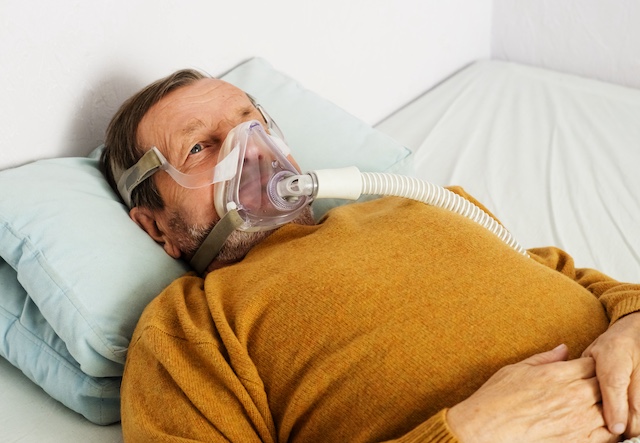
Severe Obesity Accelerates Lung Ageing by Altering Tissue Structure, Study Finds
Key Takeaways:
- Researchers at the University of Bonn have shown that severe obesity causes structural and molecular changes in lung tissue that mimic those of natural ageing.
- Obesity leads to the accumulation of fat within lung connective tissue cells, disrupting their normal function and reducing lung elasticity.
- These findings help explain why people living with obesity often experience breathing difficulties and may face a higher risk of lung-related complications.
Obesity found to accelerate ageing in the lungs
A research team led by Professor Dr Veronika Lukacs-Kornek from the ImmunoSensation2 Cluster of Excellence at the University of Bonn and the Institute for Molecular Medicine and Experimental Immunology (IMMEI) at the University Hospital Bonn (UKB) has discovered that severe obesity causes the lungs to age prematurely. The findings, published in Cell Reports, shed new light on how excessive body weight affects lung function and structure at the molecular level.
The study explored how the lungs respond to nutritional challenges associated with obesity, revealing that excess body fat significantly remodels the extracellular matrix (ECM) – the protein-based “scaffolding” that provides the lungs with their shape, strength, and stability. These alterations in lung architecture closely resemble those typically observed during the natural ageing process, suggesting that obesity accelerates the biological ageing of lung tissue.
Multi-omics analysis reveals profound structural changes
To investigate these effects, the researchers employed state-of-the-art multi-omics techniques – a set of advanced tools that allow for the simultaneous study of proteins, lipids, and genes. This integrative approach enabled the team to map how obesity influences the lungs at multiple biological levels.
By combining molecular analyses with microscopic imaging and functional experiments that tested how lungs perform, the team was able to capture a comprehensive picture of obesity’s impact. They compared the lungs of obese and lean mice, examined human lung fibroblasts (connective tissue cells), and studied the overall composition of lung tissue to identify both molecular and functional differences.
Fat accumulation and loss of elasticity in lung tissue
The results showed that in obesity, lung fibroblasts – the cells responsible for maintaining the connective tissue – begin to accumulate fat, becoming more mobile and displaying early signs of premature ageing. At the same time, the matrisome, which refers to the entire collection of ECM proteins, undergoes significant changes.
These changes disturb the delicate balance of protease inhibitors, enzymes that regulate tissue maintenance and repair. As a consequence, the lungs become less elastic and more prone to stiffness. This reduced elasticity helps explain why people living with obesity often experience shortness of breath and other respiratory difficulties.
“Interestingly, these changes are similar to those normally seen in older people – pointing to obesity as a driver of accelerated lung ageing,” the authors noted.
Overcoming complex research challenges
Studying the lung’s connective tissue presented major technical challenges. The fibroblastic stroma – the supportive framework of the lungs – comprises numerous cell types with highly specialised roles, making it difficult to isolate and analyse. Furthermore, the extracellular matrix itself is notoriously complex: many of its proteins are insoluble and possess intricate structures that resist standard laboratory analysis.
To address this, the team had to develop novel analytical methods that could overcome these limitations and enable the simultaneous study of multiple molecular components within the tissue. This innovative approach has allowed researchers to better understand how obesity-induced changes at the cellular level translate into functional impairments in lung performance.
Implications for understanding obesity-related lung disease
The study provides compelling evidence that obesity accelerates biological ageing processes in the lungs, underscoring the broader systemic impact of excess body weight beyond metabolic and cardiovascular complications.
By demonstrating that obesity alters both the composition and function of lung tissue, the findings open new avenues for exploring how weight management and metabolic interventions might help preserve lung health and mitigate premature ageing in people living with obesity.
CCH insight:
This is an interesting study. It shows that shortness of breath in people with obesity is not simply a case of poor cardiorespiratory fitness or due to mechanical difficulties due to accumulation of adipose tissue in the chest – it actually involves structural changes to lung tissue, similar to biological aging. It would be interesting to compare the lung tissue of people with obesity who have a sedentary inactive lifestyle with that of people with obesity who are active and physically fit, to see if exercise and better cardiorespiratory fitness can prevent these tissue changes and premature aging of the lungs.
Read More