
Study Finds Higher Rates of Nail Detachment Among People Taking GLP-1 Medications
Key Takeaways:
- In a study of 1,904 people across four countries, nail detachment was reported by 39 per cent of people taking GLP-1 medications, compared with 9 per cent of people with type 2 diabetes or obesity who had never taken them, although around half of those taking the drugs reported nail problems before treatment began.
- The study was cross-sectional and based on self-reported symptoms, so it shows an association rather than proving that GLP-1 medications cause nail changes.
- Dermatologists describe the changes as frequent and usually benign, and advise people who notice nail, hair or scalp changes to speak with their doctor rather than stop treatment on their own.
A new question for people starting GLP-1 treatment
When a person begins a new medication and notices a change in their body, a natural question often follows: is the drug responsible? Changes to the nails can prompt exactly that question.
In a new study, researchers set out to investigate whether nail problems are more common among people taking GLP-1 medications, which are used to treat obesity and type 2 diabetes. Their analysis of 1,904 people across four countries found a notable difference.
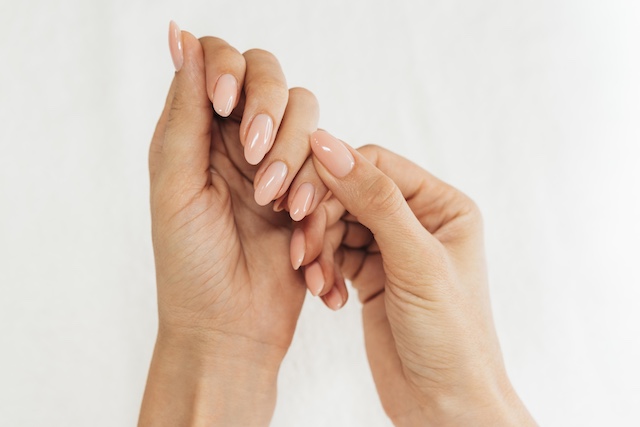
Nail detachment was reported by 39 per cent of people taking GLP-1 medications, compared with 9 per cent of people with type 2 diabetes or obesity who had never taken the drugs. However, around half of the people taking the medications reported having nail problems before their treatment began.
The findings were presented at the European Academy of Dermatology and Venereology (EADV) Congress 2026 in Vienna.
How the study was designed
The researchers compared 575 people taking GLP-1 medications with 1,329 people with type 2 diabetes or obesity who had never used them. Participants were recruited across France, the United States, Brazil and Mexico.
According to an EADV press release, 66 per cent of people taking GLP-1 medications reported at least one nail disorder, compared with 53 per cent of the control group. Nail discolouration was reported by 46 per cent of people taking the medications, compared with 17 per cent of controls.
“Our findings show a clear association, but they also underline an important point,” says study author Charles Taïeb, the managing director of the European Market Maintenance Assessment.
“Not everything that happens during GLP-1 treatment is necessarily caused by the treatment itself.”
Why the findings cannot prove cause and effect
The study relied on participants describing their own symptoms. It was cross-sectional, meaning it captured participants’ experiences at a single point in time rather than following them through treatment with standardised dermatological examinations. As a result, it cannot establish that the medications caused the changes reported.
The extent of the nail detachment described in the study is also unclear. The researchers have not specified whether the term covers partial separation from the nail bed, complete nail loss, or both. The information currently available also does not distinguish between fingernails and toenails.
Understanding nail detachment
In general, separation of the nail plate from its bed is known as onycholysis. DermNet explains that it can affect the fingers or toes and has several possible causes, including injury, skin disease and infection. However, this general background does not establish which conditions participants in this particular study experienced.
The 39 per cent figure should therefore not be interpreted as evidence that nearly four in ten people taking GLP-1 medications lost their nails completely. Nor does it estimate the likelihood that a person newly starting the medication will develop the problem.
Accounting for other factors
When analysing the results, the researchers accounted for dermatological conditions and nutritional deficiencies. Some of the associations weakened as a result, but nail detachment and discolouration remained around two to three times more frequent among people taking GLP-1 medications, according to the press release.
The exact adjusted estimates and confidence intervals have not been provided. Without them, the precision of these comparisons cannot be assessed from the announcement alone.
The team also examined the role of weight loss. Differences remained statistically significant when the analysis focused only on participants who had lost weight, suggesting that weight loss alone may not explain the findings. Even so, this does not demonstrate a direct effect of the medications on the nails.
Hair and scalp symptoms
A companion study involving the same participants looked at hair and scalp symptoms, adding to growing interest in possible links between GLP-1 pathways and hair loss.
Unusual hair loss was reported by 50 per cent of people taking GLP-1 medications, compared with 34 per cent of controls. Reduced hair volume or density affected 42 per cent of people taking the medications, compared with 19 per cent of controls.
Among people taking the medications, hair loss was usually accompanied by scalp symptoms such as itching, redness or scaling.
Study author and dermatologist Bruno Halioua, from the Société Française des Sciences Humaines sur la Peau (SFSHP), suggests that this pattern could go beyond the hair shedding typically seen after rapid weight loss and may involve inflammation.
Because the hair findings came from the same group of people, they do not independently replicate the nail results. Instead, they offer another perspective on the symptoms reported within this sample. Whether similar patterns appear in other populations, and how often problems begin after treatment starts, remain questions for future research.
Important limitations to consider
The press release does not identify which GLP-1 medications participants were taking, nor does it provide results for any specific drug. The findings therefore cannot establish a nail effect linked to any single medication.
The release cites conference presentations as the sources for both studies and does not reference a published paper reporting them.
The nail study was conducted with institutional support from DUCRAY Laboratories, part of the Pierre Fabre Group, which develops dermatological and hair care products.
What comes next
The researchers now plan to follow patients from the start of their treatment. Standardised dermatological examinations and biological monitoring could help to establish when changes develop, what contributes to them, and whether they are reversible.
For healthcare professionals, findings like these highlight the value of asking about skin, hair and nail changes during routine reviews, and of recording any pre-existing problems before treatment begins. The College of Contemporary Health’s GLP-1RA Therapy: The Complete Programme course is designed for clinicians who prescribe GLP-1 receptor agonists and support people throughout their treatment.
Advice for people noticing changes
Halioua describes the changes as frequent and usually benign. For people who notice nail changes, hair loss, or an itchy or red scalp, his advice is to discuss these symptoms with their doctor rather than stopping treatment themselves.
CCH insight
As GLP-1 receptor agonists become more widely used, people taking them are increasingly likely to raise questions about side effects, including changes to their nails, hair and skin. Feeling confident in discussing these concerns, recognising what may be linked to treatment, and encouraging people to continue the conversation rather than stop their medication are all key parts of good care.
Our GLP-1RA Therapy: The Complete Programme course helps healthcare professionals build the knowledge and confidence to prescribe and support people on GLP-1RA therapy safely and effectively.
Explore GLP-1RA Therapy: The Complete Programme →
Source: European Academy of Dermatology and Venereology (EADV) Congress 2026
Read More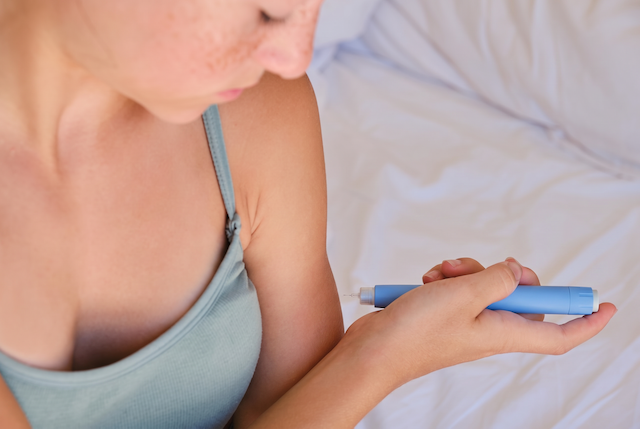
Greater Weight Loss, More Side Effects: What GLP-1 RAs Mean for Women
Key Takeaways:
- Real-world studies show women treated with GLP-1 receptor agonists (GLP-1 RAs) report side effects such as headache, vomiting and dizziness more often than men, even though placebo-controlled trials suggest similar rates in both sexes.
- Women tend to lose more weight on GLP-1 RAs than men, while improvements in blood sugar control are comparable, possibly due to higher drug exposure, stronger suppression of food-motivated behaviours and interactions between GLP-1 signalling and oestrogen.
- The authors call for mandatory sex- and ethnicity-stratified trial reporting, more research across every stage of women’s lives, and equitable global access to genuine GLP-1 RAs, as nearly 80% of eligible adults live in low- and middle-income countries where access remains minimal.
A call to action on GLP-1 RA use in women
The second of a Series of papers presented at the Annual Meeting of the European Association for the Study of Diabetes (EASD) in Milan, Italy (28 September – 2 October), and published in The Lancet Obstetrics, Gynaecology & Women’s Health, examines the wide-ranging issues surrounding GLP-1 RA use in women.
The authors, including Professor Paul Franks of Lund University and Helsingborg Hospital, Helsingborg, Sweden, and Professor Claire Meek of the Leicester Diabetes Research Centre and Leicester NIHR Biomedical Research Centre, Leicester, UK, alongside colleagues, issue a call to action to strengthen the evidence base for GLP-1 RA use in women worldwide.
The global burden of obesity among women
The prevalence of obesity is estimated to be slightly higher among women than among men, and this difference varies according to socioeconomic status. A recent analysis by the Global Burden of Disease group estimated that, in 2021, the global prevalence of overweight or obesity was 46.7% in females and 43.4% in males. Projections for 2050 rise to 60.3% and 57.4%, respectively.
This gender gap is more pronounced in low- and middle-income countries (LMICs), with the largest gaps seen in sub-Saharan Africa and south Asia. By contrast, men in high-income countries can have higher prevalence rates. The trend is likely to continue in the coming decades and is linked to socioeconomic inequalities, highlighting how broader social barriers disproportionately affect women in many regions of the world.
Why women may lose more weight on GLP-1 RAs
Weight loss with GLP-1 RAs is greater in women than in men, yet improvements in blood sugar control are comparable between the sexes. Several mechanisms could explain this greater weight-loss efficacy in women:
- Higher systemic drug exposure has been observed in women, even after adjusting for body mass.
- Women treated with GLP-1 RAs may experience enhanced suppression of food-motivated behaviours and greater inhibition of palatable food intake.
- Pre-clinical studies have highlighted possible interactions between GLP-1 signalling and oestrogen.
Side effects and weight regain
Real-world studies comparing adverse event rates in women and men treated with these medications have found a higher overall frequency of reported side effects among women, including increased rates of headache, vomiting and dizziness. This contrasts with placebo-controlled trials, which suggest similar rates in both sexes. The authors therefore stress that more studies are needed to quantify side-effect profiles in women and to develop strategies to mitigate them.
It is also well established that weight can be regained rapidly after GLP-1 RA treatment is stopped. Regaining fat without regaining additional muscle raises concerns about longer-term health and physical function in women, and further research is needed to ensure these powerful medications support women’s wellbeing over the long term.
Mental health and psychiatric safety
Trial data to date support the overall psychiatric safety profile of GLP-1 RAs, while reinforcing the importance of individualised risk assessment. Careful, routine screening for depression, anxiety and eating disorders is recommended for people of both sexes, both before treatment begins and during follow-up.
For healthcare professionals prescribing or supporting people on these medications, The College of Contemporary Health’s GLP-1RAs in Focus course offers a grounding in GLP-1 receptor agonist therapy, helping clinicians approach treatment decisions, monitoring and patient conversations with confidence.
Affordability and access in low- and middle-income countries
Independent manufacturing estimates suggest that semaglutide, for example, could be produced for less than $1 per month’s supply in oral form and $5 per month as an injection. However, recent analyses across 99 countries indicate that nearly 80% of adults who meet clinical eligibility criteria for GLP-1 RAs live in LMICs, where access remains minimal. In many of these settings, retail prices exceed $90 per month, placing treatment beyond the reach of women who rely on publicly funded care or out-of-pocket payments.
Diverse populations and polyendocrine metabolic ovarian syndrome
The paper explores multiple areas in which GLP-1 RAs affect women’s health, and highlights the need for further research in each. For example, many women with type 2 diabetes in LMICs are lean, and the BMI threshold at which type 2 diabetes begins to develop is often lower than for people of European ancestry. As a result, significant weight loss could have a more pronounced impact on these women.
Polyendocrine metabolic ovarian syndrome (PMOS; formerly polycystic ovary syndrome) affects around 12% of women worldwide, with the highest rates in the eastern Mediterranean region and south-east Asia. Although weight loss leads to various health improvements in women with PMOS, GLP-1 RAs are not generally available or centrally funded for PMOS in most healthcare systems.
Research priorities across women’s lives
The authors conclude that extensive research into GLP-1 RA use in women is needed across a range of domains, including:
- mental health and eating disorders
- contraception, fertility and polyendocrine metabolic ovarian syndrome
- optimising pre-pregnancy health
- preventing complications
- safety during pregnancy and breastfeeding
- optimising health and body composition during menopause
- optimising cardiovascular health and preventing multimorbidity
- frailty and healthy ageing
The authors’ call to action
In their call to action, the authors say:
- “Women face the highest burden of obesity and its related complications, and should have access to high-quality, equitable, multidisciplinary obesity care worldwide”
- “Sex-stratified and ethnicity-stratified reporting of clinical trials related to GLP-1 receptor agonist use should be mandatory to facilitate future meta-analyses”
- “As the main users of GLP-1 receptor agonists and incretin-based therapies, women’s care should be guided by high-quality studies assessing their treatment’s efficacy and safety, specifically in conditions affecting women (eg, before, during, and after pregnancy)”
- “Existing access pathways to GLP-1 receptor agonists disadvantage women – to maximise the treatment’s benefits, companies, health-care funders, research funders, insurers, and policy makers should promote equitable access to high-quality, genuine GLP-1 RAs for women worldwide”
The authors conclude: “Tackling the global challenges in access to GLP-1 receptor agonists provides substantial opportunities to improve women’s health internationally. However, achieving equitable access will require coordinated action to strengthen supply chains, enhance regulatory vigilance against falsified and compounded products, and embrace innovative therapies – such as oral agents – that are stable, scalable, and potentially more affordable…Advancing women-centred obesity care demands targeted research, including trials inclusive of diverse ethnic groups, women of reproductive age, and LMIC populations, alongside women-focused cost-effectiveness and implementation studies.”
CCH insight
This study highlights one of the biggest global challenges of obesity medicine – how to get obesity medications to the people who need them most, especially in low- and middle- income countries (LMICs). The emergence of GLP-1RAs in pill form should be a major development in this area, both in terms of bringing the price down and making the drugs more accessible as refrigeration is not required. Another positive step would be to produce these drugs generically or with compulsory licensing to bring prices down in LMICs.
As GLP-1 RAs become central to obesity and diabetes care, understanding how they affect different groups, including women at different life stages, is increasingly important for safe, effective prescribing. Build your knowledge with our GLP-1RAs in Focus CPD course.
Explore GLP-1RAs in Focus – Why Drugs Like Ozempic Work →
Source: European Association for the Study of Diabetes
Read More