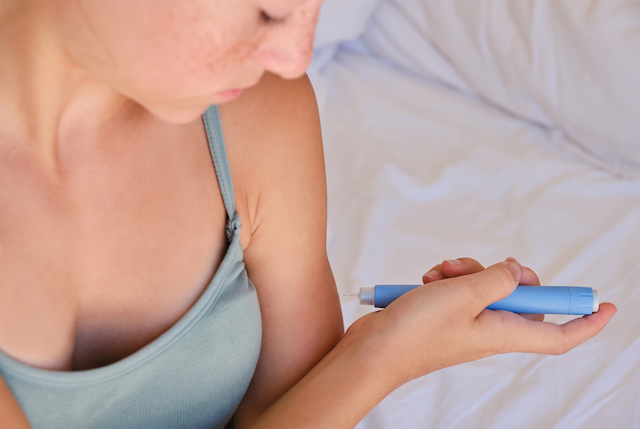
Greater Weight Loss, More Side Effects: What GLP-1 RAs Mean for Women
Key Takeaways:
- Real-world studies show women treated with GLP-1 receptor agonists (GLP-1 RAs) report side effects such as headache, vomiting and dizziness more often than men, even though placebo-controlled trials suggest similar rates in both sexes.
- Women tend to lose more weight on GLP-1 RAs than men, while improvements in blood sugar control are comparable, possibly due to higher drug exposure, stronger suppression of food-motivated behaviours and interactions between GLP-1 signalling and oestrogen.
- The authors call for mandatory sex- and ethnicity-stratified trial reporting, more research across every stage of women’s lives, and equitable global access to genuine GLP-1 RAs, as nearly 80% of eligible adults live in low- and middle-income countries where access remains minimal.
A call to action on GLP-1 RA use in women
The second of a Series of papers presented at the Annual Meeting of the European Association for the Study of Diabetes (EASD) in Milan, Italy (28 September – 2 October), and published in The Lancet Obstetrics, Gynaecology & Women’s Health, examines the wide-ranging issues surrounding GLP-1 RA use in women.
The authors, including Professor Paul Franks of Lund University and Helsingborg Hospital, Helsingborg, Sweden, and Professor Claire Meek of the Leicester Diabetes Research Centre and Leicester NIHR Biomedical Research Centre, Leicester, UK, alongside colleagues, issue a call to action to strengthen the evidence base for GLP-1 RA use in women worldwide.
The global burden of obesity among women
The prevalence of obesity is estimated to be slightly higher among women than among men, and this difference varies according to socioeconomic status. A recent analysis by the Global Burden of Disease group estimated that, in 2021, the global prevalence of overweight or obesity was 46.7% in females and 43.4% in males. Projections for 2050 rise to 60.3% and 57.4%, respectively.
This gender gap is more pronounced in low- and middle-income countries (LMICs), with the largest gaps seen in sub-Saharan Africa and south Asia. By contrast, men in high-income countries can have higher prevalence rates. The trend is likely to continue in the coming decades and is linked to socioeconomic inequalities, highlighting how broader social barriers disproportionately affect women in many regions of the world.
Why women may lose more weight on GLP-1 RAs
Weight loss with GLP-1 RAs is greater in women than in men, yet improvements in blood sugar control are comparable between the sexes. Several mechanisms could explain this greater weight-loss efficacy in women:
- Higher systemic drug exposure has been observed in women, even after adjusting for body mass.
- Women treated with GLP-1 RAs may experience enhanced suppression of food-motivated behaviours and greater inhibition of palatable food intake.
- Pre-clinical studies have highlighted possible interactions between GLP-1 signalling and oestrogen.
Side effects and weight regain
Real-world studies comparing adverse event rates in women and men treated with these medications have found a higher overall frequency of reported side effects among women, including increased rates of headache, vomiting and dizziness. This contrasts with placebo-controlled trials, which suggest similar rates in both sexes. The authors therefore stress that more studies are needed to quantify side-effect profiles in women and to develop strategies to mitigate them.
It is also well established that weight can be regained rapidly after GLP-1 RA treatment is stopped. Regaining fat without regaining additional muscle raises concerns about longer-term health and physical function in women, and further research is needed to ensure these powerful medications support women’s wellbeing over the long term.
Mental health and psychiatric safety
Trial data to date support the overall psychiatric safety profile of GLP-1 RAs, while reinforcing the importance of individualised risk assessment. Careful, routine screening for depression, anxiety and eating disorders is recommended for people of both sexes, both before treatment begins and during follow-up.
For healthcare professionals prescribing or supporting people on these medications, The College of Contemporary Health’s GLP-1RAs in Focus course offers a grounding in GLP-1 receptor agonist therapy, helping clinicians approach treatment decisions, monitoring and patient conversations with confidence.
Affordability and access in low- and middle-income countries
Independent manufacturing estimates suggest that semaglutide, for example, could be produced for less than $1 per month’s supply in oral form and $5 per month as an injection. However, recent analyses across 99 countries indicate that nearly 80% of adults who meet clinical eligibility criteria for GLP-1 RAs live in LMICs, where access remains minimal. In many of these settings, retail prices exceed $90 per month, placing treatment beyond the reach of women who rely on publicly funded care or out-of-pocket payments.
Diverse populations and polyendocrine metabolic ovarian syndrome
The paper explores multiple areas in which GLP-1 RAs affect women’s health, and highlights the need for further research in each. For example, many women with type 2 diabetes in LMICs are lean, and the BMI threshold at which type 2 diabetes begins to develop is often lower than for people of European ancestry. As a result, significant weight loss could have a more pronounced impact on these women.
Polyendocrine metabolic ovarian syndrome (PMOS; formerly polycystic ovary syndrome) affects around 12% of women worldwide, with the highest rates in the eastern Mediterranean region and south-east Asia. Although weight loss leads to various health improvements in women with PMOS, GLP-1 RAs are not generally available or centrally funded for PMOS in most healthcare systems.
Research priorities across women’s lives
The authors conclude that extensive research into GLP-1 RA use in women is needed across a range of domains, including:
- mental health and eating disorders
- contraception, fertility and polyendocrine metabolic ovarian syndrome
- optimising pre-pregnancy health
- preventing complications
- safety during pregnancy and breastfeeding
- optimising health and body composition during menopause
- optimising cardiovascular health and preventing multimorbidity
- frailty and healthy ageing
The authors’ call to action
In their call to action, the authors say:
- “Women face the highest burden of obesity and its related complications, and should have access to high-quality, equitable, multidisciplinary obesity care worldwide”
- “Sex-stratified and ethnicity-stratified reporting of clinical trials related to GLP-1 receptor agonist use should be mandatory to facilitate future meta-analyses”
- “As the main users of GLP-1 receptor agonists and incretin-based therapies, women’s care should be guided by high-quality studies assessing their treatment’s efficacy and safety, specifically in conditions affecting women (eg, before, during, and after pregnancy)”
- “Existing access pathways to GLP-1 receptor agonists disadvantage women – to maximise the treatment’s benefits, companies, health-care funders, research funders, insurers, and policy makers should promote equitable access to high-quality, genuine GLP-1 RAs for women worldwide”
The authors conclude: “Tackling the global challenges in access to GLP-1 receptor agonists provides substantial opportunities to improve women’s health internationally. However, achieving equitable access will require coordinated action to strengthen supply chains, enhance regulatory vigilance against falsified and compounded products, and embrace innovative therapies – such as oral agents – that are stable, scalable, and potentially more affordable…Advancing women-centred obesity care demands targeted research, including trials inclusive of diverse ethnic groups, women of reproductive age, and LMIC populations, alongside women-focused cost-effectiveness and implementation studies.”
CCH insight
As GLP-1 RAs become central to obesity and diabetes care, understanding how they affect different groups, including women at different life stages, is increasingly important for safe, effective prescribing. Build your knowledge with our GLP-1RAs in Focus CPD course.
Explore GLP-1RAs in Focus – Why Drugs Like Ozempic Work →
Source: European Association for the Study of Diabetes