
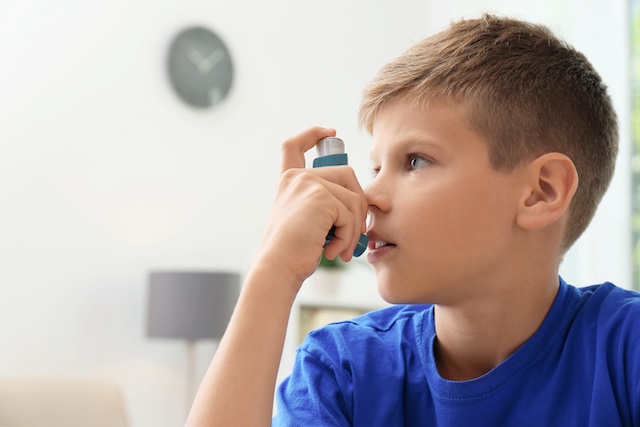
Machine Learning Tool Helps Paediatricians Identify Children at Risk of Persistent Asthma
Key Takeaways:
- A machine learning tool that reads data already held in a child’s electronic health record helped paediatricians more accurately judge which young children are at risk of persistent asthma.
- In a pilot randomised trial using standardised clinical cases, clinicians using the tool reached an average accuracy of 83%, compared with 61% for standard assessment alone.
- The tool is designed to support clinical judgement rather than replace it, and requires no additional tests or questionnaires.
Support for a difficult clinical judgement
A machine learning tool that analyses information already captured in a child’s electronic health record (EHR) has helped paediatricians assess asthma risk more accurately in standardised clinical case scenarios, according to a pilot randomised clinical trial led by a researcher at the Regenstrief Institute. The study was published in the journal Scientific Reports.
The trial evaluated a machine learning-enabled clinical decision support tool known as the Passive Digital Marker. The tool draws on routinely collected EHR data to classify young children as having either a high or a low risk of going on to develop persistent asthma.
Why early asthma risk is hard to predict
Asthma is one of the most common long-term conditions of childhood, yet predicting which young children who have wheezing or other respiratory symptoms will later develop persistent asthma remains difficult. Some children outgrow their early symptoms, while others need ongoing treatment. That uncertainty makes early risk assessment an important, but genuinely challenging, part of paediatric care.
“This tool doesn’t replace a pediatrician’s clinical judgment,” said Arthur H. Owora, PhD, Regenstrief Institute research scientist and lead author of the study. “It helps bring together years of clinical information that’s already in the electronic health record, giving clinicians another source of information when making decisions about a child’s asthma risk.”
How the Passive Digital Marker works
Unlike many prediction tools, the Passive Digital Marker requires no extra testing and asks families to complete no additional questionnaires. Instead, it analyses information that has already been documented in the child’s EHR, including respiratory symptoms, allergies, medication history, respiratory infections and family history. It then presents clinicians with a straightforward high-risk or low-risk assessment.
This approach is intended to save clinicians’ time and reduce the burden on families, since it relies on data that has been gathered over the course of a child’s routine care rather than requiring anything new at the point of decision.
What the trial found
Paediatricians using the tool correctly predicted future asthma more often than those relying on standard assessment alone, achieving an average accuracy of 83% compared with 61%. The improvement was largely driven by better identification of children who went on to develop persistent asthma – the group that is most important to recognise early and hardest to spot.
The researchers stress that the tool is meant to support clinical decision-making, not to supplant it. Its value lies in helping clinicians quickly synthesise years of patient information into a single, easy-to-interpret risk assessment that sits alongside their own expertise. That distinction – between having an AI tool to hand and knowing how to weigh what it tells you – is becoming central to how clinicians are expected to work with these systems.
Limitations and next steps
Because the study used standardised patient cases rather than real-world clinical encounters, further research is needed to establish whether the tool improves outcomes for children in everyday paediatric practice. The pilot demonstrates promise in a controlled setting, but real-world validation is the necessary next stage before wider adoption.
CCH insight
Tools like the Passive Digital Marker are only ever as good as a clinician’s ability to judge when to lean on them and when to look again. That skill – evaluating an AI tool, recognising where it can mislead, and putting sensible governance around its use – is exactly what our short course AI Essentials for GPs: Tools, Ethics and Everyday Applications is designed to build. It’s a 3.5-hour, fully online CPD course led by Prof. Mike Bewick and Dr Dipesh Naik. [Explore the course →]
Funding and authorship
The study was supported in part by the National Institutes of Health under grant K01HL166436. In addition to Owora, it was co-authored by Bowen Jiang, M.S., and Yash Shah, M.S., of the Division of Pediatric Pulmonology, Allergy/Immunology and Sleep Medicine, Department of Pediatrics, Riley Hospital for Children, Indiana University School of Medicine.
Source: Regenstrief Institute
Read More
Precision Medicine Poised to Redefine Obesity Prevention and Treatment
Key Takeaways:
- Researchers at the Pennington Biomedical Research Center highlight how precision medicine could revolutionise the prevention, diagnosis, and treatment of obesity by tailoring interventions to an individual’s biology and environment.
- Significant barriers remain, including limited large-scale clinical trials, underrepresentation of diverse populations, and challenges in integrating personalised tools into clinical practice.
- Experts call for robust biomarkers, inclusive research, and policy support to make precision obesity care accessible and evidence-based.
A blueprint for personalised obesity care
A new report led by researchers at the Pennington Biomedical Research Center underscores the rapidly growing potential of precision medicine to transform how obesity is prevented, diagnosed, and treated. Published in Obesity in September, the paper titled “Precision Prevention, Diagnostics and Treatment of Obesity” brings together insights from the recent Pennington–Louisiana Nutrition Obesity Research Center (NORC) scientific workshop.
The workshop, held in April 2024, convened experts to review evidence on tailoring obesity interventions to a person’s unique biological, behavioural, environmental, and social characteristics. The resulting report presents both the opportunities and obstacles in implementing precision-based strategies in obesity care.
Understanding the multifactorial nature of obesity
The authors emphasise that obesity is not a one-size-fits-all condition. Instead, it is shaped by a complex interplay of factors including genetics, epigenetics, metabolic phenotypes, microbiome composition, and environmental exposures. These elements influence why individuals gain or lose weight differently and why some respond better to certain interventions than others.
The review highlights how understanding these factors could enable clinicians to identify subgroups of people with obesity who would benefit from specific preventive or therapeutic strategies. This approach marks a shift from broad public health recommendations towards tailored, data-driven care.
Diagnostic innovation: Towards greater precision
The report calls for improved diagnostic tools—including the development of reliable biomarkers, imaging technologies, and phenotypic classifications—to better characterise the different subtypes of obesity and related risk profiles.
By accurately identifying an individual’s obesity phenotype, clinicians may be able to predict treatment response more effectively and target interventions that align with a person’s unique biology and lifestyle. Such advances could help move beyond the current trial-and-error approach in weight management.
Treatment personalisation and the path ahead
Emerging research indicates that personalising diet, physical activity, pharmacotherapy, and behavioural interventions according to an individual’s biological and psychosocial characteristics may improve both efficacy and long-term sustainability of outcomes.
However, the authors caution that while enthusiasm for precision-based treatment is growing, more robust clinical evidence is essential before these approaches can be fully integrated into standard care.
“Despite tremendous interest in precision-based treatment, the field is still relatively young,” said Dr Corby Martin, Co-Chair of the symposium and Director of the NORC Human Phenotyping Core. “We need rigorous clinical trials to empirically determine if precision treatment is indeed better than current practices. Unfortunately, few such trials exist, and those that do are not always supportive.”
Persistent gaps and barriers
The report identifies several key challenges hindering progress in precision obesity medicine:
- Limited large-scale clinical trials validating precision approaches.
- Insufficient diversity in study populations, leading to reduced generalisability of findings.
- Inadequate cost-effectiveness data, making implementation difficult within healthcare systems.
- Integration challenges when introducing precision tools into routine clinical settings.
Addressing these barriers will be essential for translating the promise of precision medicine into meaningful clinical and public health outcomes.
Recommendations for future research and policy
To advance the field, the authors recommend:
- Conducting diverse and inclusive research to ensure results are representative across ethnicities, genders, and socioeconomic groups.
- Developing and validating robust biomarkers and imaging tools for more accurate diagnosis and monitoring.
- Running comparative effectiveness trials to determine whether precision interventions outperform current standard treatments.
- Implementing programmes and policies that make precision obesity care both accessible and affordable.
The report suggests that precision-based approaches could enhance obesity prevention by identifying people at risk earlier and tailoring lifestyle or environmental interventions to reduce progression. Moreover, by customising treatment to a person’s biological and behavioural profile, clinicians could minimise side effects, avoid ineffective treatments, and improve outcomes.
A continuing commitment to obesity research
For more than 25 years, the Pennington–Louisiana Nutrition Obesity Research Center (NORC) has convened over 100 scientists annually to explore emerging topics in obesity and nutrition science.
“Supporting 1.5-day workshops such as the ‘Precision Prevention, Diagnostics, and Treatment of Obesity’ brings top scientists and clinicians from around the world to Pennington Biomedical,” said Dr Leanne Redman, NORC Director, LPFA Endowed Chair in Nutrition, and Associate Executive Director for Scientific Education. “These reports provide a blueprint for the current state of the science and avenues for future research.”
Building a collaborative future
Dr John Kirwan, Executive Director of Pennington Biomedical, commended the team’s contribution:
“This team’s efforts in advancing precision medicine to diagnose, prevent, and treat obesity are truly commendable. At Pennington Biomedical, our work is built on strong partnerships across Louisiana and throughout the United States, strengthened through centres and institutes like the Pennington–Louisiana NORC. We are proud to collaborate with leading research institutions, universities, and healthcare systems nationwide to advance obesity research.”
As the science of precision medicine matures, the report provides a clear framework for how personalised approaches may one day redefine obesity prevention and treatment, improving outcomes for individuals and populations alike.
CCH insight:
Precision approaches to obesity prevention and treatments could massively improve outcomes for people with, or at risk of, obesity. The complex nature of the condition, with its broad range of biological, behavioural, psychological, social and environmental determinants and risk factors, means every patient is unique and requires a personalised intervention. However, this complexity of obesity also makes it difficult to characterise an individual’s obesity phenotype and predict responses to interventions – so there is still a long way to go, a lot more research is needed.
Read More