
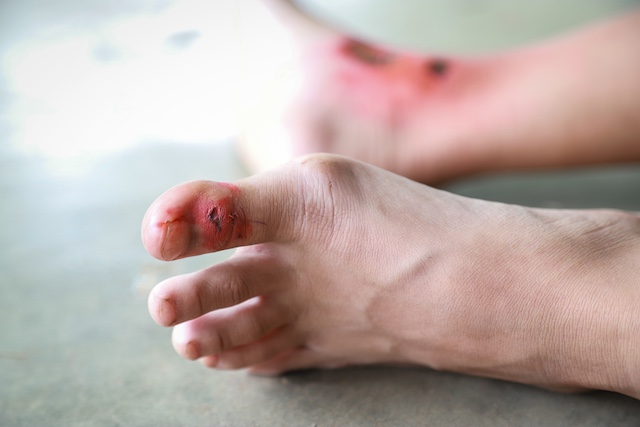
New AI Tool Predicts 12-Week Healing Outcomes for Diabetes-Related Foot Ulcers
Key Takeaways:
- THERMUL is a smartphone-based thermal imaging AI tool designed to predict whether a diabetes-related foot ulcer will heal within 12 weeks.
- The tool was developed and tested in a 110-participant clinical study across two Melbourne hospitals, with images captured at presentation and again at two and four weeks.
- Researchers have secured $490,539 through Australia’s Economic Accelerator and $50,000 from a University of Melbourne fund to validate the technology across metropolitan, regional and remote services.
Turning heat patterns into an early warning signal
A collaboration between the University of Melbourne and RMIT University has produced an artificial intelligence (AI) tool that uses thermal imaging to flag diabetes-related foot ulcers at risk of poor healing, with the aim of reducing hospitalisations and lower limb amputations through earlier intervention.
The tool, named THERMUL, runs on a smartphone and analyses patterns within thermal images of wounds. Those patterns may indicate whether an ulcer is progressing as expected or is at risk of delayed healing. The central output is a prediction of whether a given ulcer is likely to heal within 12 weeks – a window that matters clinically, because ulcers that stall in the early weeks are the ones most likely to progress to serious complications.
Why foot ulceration is such a persistent problem
Diabetes affects over 500 million people globally, and up to 34 per cent of people living with the condition will develop a foot ulcer at some point in their lifetime. Where these wounds are not managed appropriately, the consequences can escalate quickly, running through infection and hospitalisation to lower limb amputation and early death.
The economic picture is equally stark. RMIT University Professor Dinesh Kumar noted that “Diabetes-related foot disease places a significant burden on individuals and the Australian health system, costing an estimated $875 million every year,” positioning the tool as having potential to improve health equity as well as deliver economic benefits for Australia’s healthcare system.
For clinicians working across obesity, type 2 diabetes and cardiometabolic care, complications of this kind sit squarely within the territory covered by the College of Contemporary Health’s CPD-accredited short courses on diabetes and obesity, which examine how metabolic disease drives long-term complications and what earlier, better-coordinated care can achieve.
How the study was carried out
Researchers at the University of Melbourne, RMIT University and Bolton Clarke ran a clinical study at Austin Health and St Vincent’s Hospital Melbourne, involving 110 patients with diabetes-related foot ulcers.
Using a light-weight thermal camera, the team captured images of each ulcer when the person first presented to the clinic, with further images taken two weeks and four weeks later. At the twelve-week mark, clinicians assessed whether each ulcer had healed. That assessment gave the research team a healing outcome to set against the thermal image data collected weeks earlier – effectively a labelled dataset from which an algorithm could learn.
What the algorithm was trained to recognise
Endocrinologist Professor Elif Ekinci, Head of the University of Melbourne’s Department of Medicine and Director of the Australian Centre for Accelerating Diabetes Innovations (ACADI), explained the modelling step directly: “Using this data, we trained an AI algorithm to recognise heat patterns within the initial thermal images that were associated with ulcers that went on to heal, compared with those that did not.”
She was careful to frame the clinical implication as potential rather than proven: “These patterns may provide an early indication of a wound’s likely healing trajectory, potentially allowing clinicians to identify people who might benefit from earlier intervention or escalation of care.”
The distinction matters. Current clinical guidelines often assess healing progress over the first four weeks of treatment to determine whether a diabetes-related foot ulcer is healing as expected. A tool that reads risk from the initial presentation would move that judgement earlier in the pathway, rather than replacing it.
Bringing specialist-level judgement closer to home
One of the clearest arguments for a portable tool is geographic. Regular access to specialist support can be difficult for many people living in regional, rural and remote communities, where the round trip to a specialist diabetes foot service may be measured in hours.
Dr Rajna Ogrin, senior research fellow at Bolton Clarke, set out the gap: “People in regional areas who are living with diabetes and receive care at home, or through outreach services, may not have timely access to specialist diabetes foot services.”
The proposed remedy is a device that travels rather than a person who must: “A portable, non-contact tool like THERMUL has the potential to bring specialist-level decision support closer to where people live and receive care.” The non-contact element is significant in wound care, where minimising physical contact with a compromised wound bed reduces both discomfort and infection risk.
Funding, validation and what comes next
The project initially received seed funding from ACADI, which allowed the research team to take the concept through to prototype stage.
More recently, the team secured $490,539 in grant funding through Australia’s Economic Accelerator programme, alongside $50,000 from the University of Melbourne’s Proof of Concept Fund. That money is earmarked for two purposes: expanding validation of the technology across a wider range of healthcare settings – metropolitan, regional and remote services – and further improving the predictive model using data from more diverse population groups.
THERMUL is currently progressing through the additional validation and development activities required to support future translation into clinical practice. In other words, it is not yet a product in routine use, and the reporting is careful to describe capability in conditional terms.
The partnership behind the tool
Partner organisations include the Australian Centre for Accelerating Diabetes Innovations, Austin Health, Bolton Clarke, St Vincent’s Hospital Melbourne, Royal Flying Doctor Service Victoria and Software Medical Devices Pty Ltd – a mix of academic, acute hospital, community nursing, outreach and commercial partners that reflects the breadth of settings in which diabetes-related foot disease is actually managed.
CCH insight
THERMUL is one of a growing number of AI tools arriving at the point of care, and the practical questions it raises – how a prediction should influence a decision, what validation gaps mean in practice, how to explain an algorithmic result to the person in front of you – are now everyday concerns rather than future ones.
AI Essentials for Primary Care: Tools, Ethics and Everyday Applications is a CPD-accredited short course covering the tools, the ethics and the everyday applications of AI in clinical practice. 3.5 CPD points, 3.5 hours, fully online, start immediately.
Find out more about AI Essentials for Primary Care →
Source: The University of Melbourne
Read More