Digital heart twins have potential to deliver safer faster heart rhythm treatments
Advances in medical technology are paving the way for safer and more effective treatments for individuals living with life-threatening heart rhythm disorders. A recent study published in the American Heart Association journal Circulation highlights the groundbreaking potential of using computer-generated digital heart twins to identify problematic areas deep within the heart muscle. This innovative approach offers a non-invasive alternative for addressing scar-related heart rhythm abnormalities, often linked to previous heart attacks or genetic conditions.
The research team demonstrated that digital heart twins could effectively pinpoint scarred regions in the heart responsible for abnormal rhythms, potentially enabling cardiologists to deliver faster, more targeted treatments. “People are now living with the consequences of heart attacks for many years, so the number of people who need procedures to treat these life-threatening abnormal heart rhythms is rising,” explained Dr Michael Waight, the lead author of the study and a cardiology registrar at St George’s University of London. “If digital twins were to become a reality, it could offer a safer and potentially more effective means of treatment.”
Scar-dependent ventricular tachycardia (VT) is a severe and sporadic heart rhythm condition caused by scar tissue on the heart muscle. It is treated either by implanting a defibrillator to restore normal rhythm during episodes or by performing catheter ablation, a procedure that involves burning scar tissue to prevent further abnormal rhythms. However, these treatments have notable limitations. Defibrillators, while life-saving, do not prevent rhythm recurrences and may cause discomfort from repeated shocks. Ablation procedures, on the other hand, face challenges in locating and treating deeply embedded scarred areas, particularly when scarring occurs at multiple sites.
To identify scarred regions, clinicians typically map the heart’s interior by inserting a catheter to detect abnormal electrical signals. In some cases, they induce irregular rhythms to locate the source of the problem before ablating the affected areas. This process can be time-intensive, carries risks, and may lead to surgical complications or incomplete treatment if all problem sites are not identified.
“It is quite a time-consuming process that isn’t without risk,” said Dr Waight. “These patients can be quite unwell, with poor heart function, and this is a long and arduous procedure. We’re looking at ways we can improve that by hopefully trying to shorten the procedure, make it more accurate and more targeted to where the problem is.”
The study explored whether digital heart twins could address these challenges. By using enhanced cardiac imaging and other clinical data, researchers created computer models replicating the structure and function of the hearts of 18 individuals undergoing catheter ablation for scar-related VT. These models were then tested for electrical rhythm abnormalities similar to those observed in the patients.
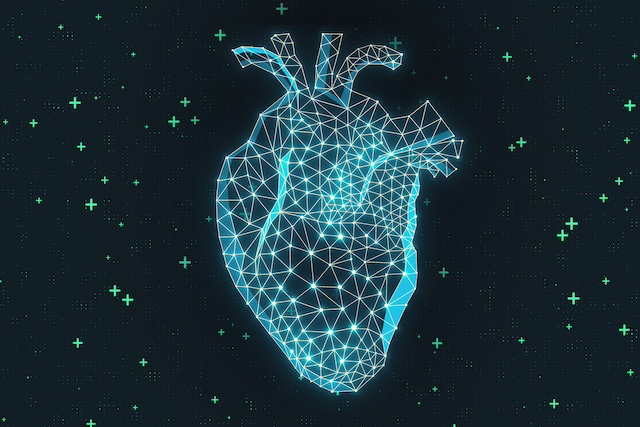
The findings were promising. Areas flagged by the digital twins as problematic showed a 41% higher frequency of electrical abnormalities compared to unflagged regions. Moreover, the models successfully predicted approximately 80% of sites with slowed electrical signals, typically found near scarred heart tissue. “Digital twins can render the heart in 3D and see exactly where the faulty circuit is,” explained Dr Waight. “That means we can have an idea of the area to target before the patient even comes to the catheter lab facility. We already know where we need to go and don’t need to spend hours making a map of the heart.”
This predictive capability could significantly reduce procedure times and recurrence rates, minimising the need for additional treatments. “The nature of the digital twin is that it doesn’t just predict VTs the patient is having now, but also all possible VTs that might occur in the future,” Dr Waight added.
However, the researchers emphasised that the technology’s clinical application is still in its early stages. “The first step was to prove these places in the heart are important, compared to other places not picked up by the digital heart. The next step would be a clinical trial where we compare the current standard of care of VT ablation to a strategy where we are guided by the digital twin from the outset,” said Dr Waight.
Experts unaffiliated with the study expressed optimism about the technology’s potential. Dr Dhanunjaya Lakkireddy, executive medical director of the Kansas City Heart Rhythm Institute, noted that using digital twins could improve patient outcomes by enhancing procedural precision. “If you are able to successfully eliminate these areas that are potentially sites of ventricular tachycardias, you can reduce the time of the procedure and go precisely to the areas that are important with minimal unnecessary ablation,” he said. “This could potentially improve overall morbidity and mortality with a higher success rate and result in dramatically improved patient outcomes.”
Dr Lakkireddy also highlighted the innovative nature of the approach: “The digital heart twin gives you a road map of areas to focus on. It’s an incredibly powerful advancement. It’s really moving the field forward, making these procedures a lot more effective and more precise.”
Despite its promise, the technology faces challenges related to cost and accessibility. “Whether we can apply this on a large scale is an open question,” said Dr Lakkireddy. “Creating a digital twin is a very expensive process at this time.”
This pioneering research lays the foundation for transforming the treatment of scar-dependent VT. By combining advanced imaging with predictive modelling, digital heart twins could herald a new era of safer, more effective cardiac care, improving the lives of countless individuals managing serious heart rhythm disorders.