[email protected]

+44 (0)20 3773 4895

logologologo
  • About Us
    • The College
    • Advisory Board
    • Our Faculty and Team
    • Intelligence Hub
  • Topic Areas
    • Obesity Care
    • Digital Health
    • Behaviour Change
  • Courses
    • CPD Short Courses
    • PGCert in Obesity Care
    • PGCert in Digital Health
  • Apply
    • Postgraduate Qualification in Obesity Care
    • Postgraduate Qualification in Digital Health
    • FAQs
  • Resources
    • News
    • Our Publications
    • Monthly News Bulletins
    • Funding Options
  • Contact Us
    • Contact Us
  • Student Login

No products in the cart.

logologologo
  • About Us
    • The College
    • Advisory Board
    • Our Faculty and Team
    • Intelligence Hub
  • Topic Areas
    • Obesity Care
    • Digital Health
    • Behaviour Change
  • Courses
    • CPD Short Courses
    • PGCert in Obesity Care
    • PGCert in Digital Health
  • Apply
    • Postgraduate Qualification in Obesity Care
    • Postgraduate Qualification in Digital Health
    • FAQs
  • Resources
    • News
    • Our Publications
    • Monthly News Bulletins
    • Funding Options
  • Contact Us
    • Contact Us
  • Student Login

No products in the cart.

  • About Us
    • The College
    • Advisory Board
    • Our Faculty and Team
    • Intelligence Hub
  • Topic Areas
    • Obesity Care
    • Digital Health
    • Behaviour Change
  • Courses
    • CPD Short Courses
    • PGCert in Obesity Care
    • PGCert in Digital Health
  • Apply
    • Postgraduate Qualification in Obesity Care
    • Postgraduate Qualification in Digital Health
    • FAQs
  • Resources
    • News
    • Our Publications
    • Monthly News Bulletins
    • Funding Options
  • Contact Us
    • Contact Us
  • Student Login
July 27, 2023 by Nicholas Feenie Digital Health 0 comments

Innovative ear-mounted cameras: Revolutionising dietary monitoring and advice

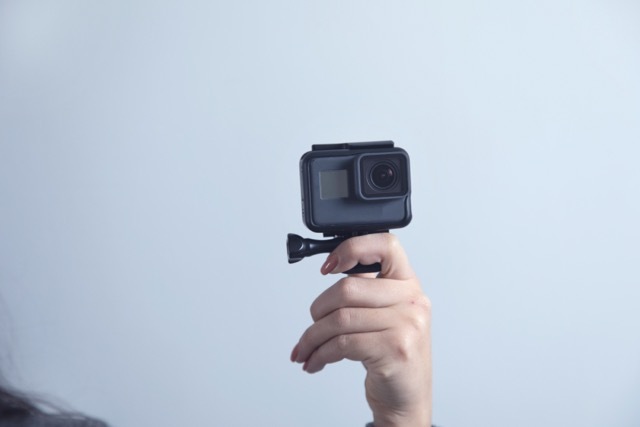
A group of scientists are working on an unprecedented approach to dietary tracking, drawing inspiration from the concept of constant surveillance. The researchers are creating minute cameras that can be attached to the ear, recording every food item consumed by the wearer.

The camera’s footage will be processed by an artificial intelligence (AI) system that can identify both the type of food and portion sizes. The ultimate objective is to provide customised advice on dietary habits, bridging the gap in dietary research that has often relied on participants’ unreliable self-reporting via surveys or diaries. The common issues include forgetfulness in recording meals, inaccuracies in estimating portion sizes, and intentional omissions due to feelings of guilt, particularly with regard to treats and alcohol.

The Health Survey of England 2021 stated that approximately 25.9% of adults had obesity, with an additional 37.9% classified as having overweight. Obesity is linked to a variety of health issues, including depression, infertility, hypertension, cancer, dementia, heart failure, and type 2 diabetes. The latter condition significantly raises the risk of blindness, peripheral neuropathy, and limb amputation.

Predictions for 2035 suggest that the NHS will likely spend more on treating diet-related type 2 diabetes than on all types of cancer. However, despite nearly 700 policy interventions implemented between 1996 and 2020 to curb national weight gain, as cited by former government food tsar Henry Dimbleby, obesity rates continue to rise.

According to Professor Gary Frost, the Head of Nutrition Research at Imperial College London, “There is a glaring gap in our understanding of people’s daily dietary habits. The current tools for dietary tracking are inaccurate, making it challenging to discern the connection between diet and disease.”

The innovative project, named CoDiet, also plans to evaluate urine and blood samples to study the correlations between dietary habits, bodily changes, and the onset of diseases such as type 2 diabetes. A primary goal is to develop a tool using AI that can dispense diet advice specific to an individual’s needs.

“We anticipate the ability to formulate new individual-focused policies to counteract common diseases related to lifestyle,” Frost said.

Scheduled to commence in September (of 2023), the project will initially use the ear-mounted cameras to record the dietary practices of 50 British volunteers and an additional 150 participants from Cork in the Republic of Ireland, Spain, and Greece.

PREV
NEXT

Related Posts

Doctor looking at tablet computer with an image of a body scan on it.
May 27, 2026
AI-Powered Whole-Body Mapping Reveals Obesity’s Hidden Impact on Facial Nerves
Read More
Hand holding medical testing tube.
September 17, 2025
New AI Tool Pinpoints Genes and Drug Combinations That Restore Health in Diseased Cells
Read More
Blood glucose monitor and smartphone.
August 6, 2025
AI detects unseen diabetes risk in people with normal blood sugar levels
Read More
Person using a mobile phone to text message.
August 27, 2025
Text message–based support shows promise in preventing childhood obesity
Read More

CCH LINKS

FAQ
HOW TO APPLY
ACADEMIC ADVISORY BOARD
FACULTY AND STAFF
TERMS & CONDITIONS
CCH EDUCATION SERVICES

OUR PARTNERS

NOF
Haringey Obesity Alliance
Skills Active
CPD UK
ASO
REPS
Southwark
DIT
Healthcare Uk
OAC

ABOUT CCH

CONTACT US
[email protected]
+44 (0)20 3773 4895
Technopark, 90 London Road, LONDON, SE1 6LN
 

© The College of Contemporary Health