[email protected]

+44 (0)20 3773 4895

logologologo
  • About Us
    • The College
    • Advisory Board
    • Our Faculty and Team
    • Intelligence Hub
  • Topic Areas
    • Obesity Care
    • Digital Health
    • Behaviour Change
  • Courses
    • CPD Short Courses
    • Academic Courses
      • Digital Health Courses
        • Postgraduate Certificate
        • Postgraduate Diploma
        • MSc in Digital Health
      • Obesity Courses
        • Postgraduate Certificate
        • Postgraduate Diploma
        • MSc in Obesity Care
  • Apply
    • Postgraduate Qualification in Obesity Care
    • Postgraduate Qualification in Digital Health
    • FAQs
  • Resources
    • News
    • Our Publications
    • Subscribe
    • Funding Options
  • Contact Us
    • Contact Us
  • Student Login

No products in the cart.

logologologo
  • About Us
    • The College
    • Advisory Board
    • Our Faculty and Team
    • Intelligence Hub
  • Topic Areas
    • Obesity Care
    • Digital Health
    • Behaviour Change
  • Courses
    • CPD Short Courses
    • Academic Courses
      • Digital Health Courses
        • Postgraduate Certificate
        • Postgraduate Diploma
        • MSc in Digital Health
      • Obesity Courses
        • Postgraduate Certificate
        • Postgraduate Diploma
        • MSc in Obesity Care
  • Apply
    • Postgraduate Qualification in Obesity Care
    • Postgraduate Qualification in Digital Health
    • FAQs
  • Resources
    • News
    • Our Publications
    • Subscribe
    • Funding Options
  • Contact Us
    • Contact Us
  • Student Login

No products in the cart.

  • About Us
    • The College
    • Advisory Board
    • Our Faculty and Team
    • Intelligence Hub
  • Topic Areas
    • Obesity Care
    • Digital Health
    • Behaviour Change
  • Courses
    • CPD Short Courses
    • Academic Courses
      • Digital Health Courses
        • Postgraduate Certificate
        • Postgraduate Diploma
        • MSc in Digital Health
      • Obesity Courses
        • Postgraduate Certificate
        • Postgraduate Diploma
        • MSc in Obesity Care
  • Apply
    • Postgraduate Qualification in Obesity Care
    • Postgraduate Qualification in Digital Health
    • FAQs
  • Resources
    • News
    • Our Publications
    • Subscribe
    • Funding Options
  • Contact Us
    • Contact Us
  • Student Login
June 25, 2026 by Nicholas Feenie Digital Health 0 comments

AI-Supported Digital Care Improves Rheumatoid Arthritis Outcomes After Hospital Discharge

Key Takeaways: 

  • A nurse-led, AI-assisted digital platform reduced disease activity and improved physical function more than routine care over six months.
  • People using the platform showed higher medication adherence and markedly greater satisfaction with their care.
  • Real-time monitoring enabled earlier detection of problems and more personalised support between clinic visits.


The challenge of care after discharge

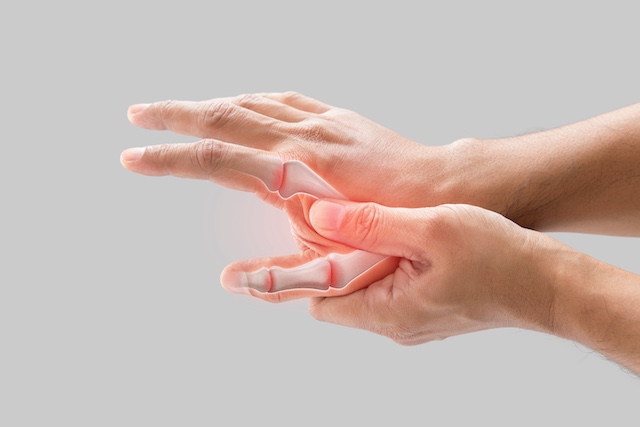
Rheumatoid arthritis is a long-term autoimmune condition that causes joint pain, swelling and a progressive loss of function. Managing it well once people leave hospital is often difficult, because symptoms can fluctuate and regular follow-up is not always easy to arrange. A recent real-world study set out to test whether an artificial intelligence (AI)-assisted digital care platform could improve outcomes for people living with the condition after discharge.


How the study was designed

The study, published in JMIR Medical Informatics and conducted by Ziyun Zhang, PhD, and colleagues at Tongji Hospital, followed 341 people with rheumatoid arthritis over a six-month period in a real clinical setting.

Participants were divided into two groups. One group received standard post-discharge care, while the other used a nurse-led digital management platform supported by AI. The platform allowed people to report symptoms, fatigue, medication use, laboratory results and emotional wellbeing through a smartphone app. This information was stored securely and analysed in real time. When the system detected concerning changes, healthcare staff were alerted so that they could respond quickly. Nurses and health coaches also provided ongoing education and personalised support.

The researchers focused on how disease activity, physical function, medication adherence and satisfaction changed over time, using standard clinical tools to measure disease severity and disability.


What the platform achieved

After six months, both groups showed some improvement, but the differences between them were notable. People using the AI-supported platform experienced a greater reduction in disease activity scores, meaning their arthritis was better controlled. They also showed significant improvements in physical function compared with those receiving routine care alone.

Medication adherence was higher in the digital care group, with more people taking their medicines as prescribed. Satisfaction levels were significantly higher too, with a large majority of those using the platform reporting that they were very satisfied with their care experience, compared with the standard care group.


What it means for long-term management

The authors conclude that the combination of AI monitoring, nurse-led support and continuous digital engagement helped to improve both clinical outcomes and the experience of care. The system made it easier to detect problems early, encourage medication use and provide more personalised care between clinic visits.

Overall, the study suggests that digital health platforms could play an important role in improving the long-term management of rheumatoid arthritis, particularly by keeping people more closely connected to their care teams after they leave hospital.

AI Arthritis Artificial Intelligence Digital Care Digital Health Digital Medicine Rheumatoid Arthritis
PREV
NEXT

Related Posts

Apple watch in black and white.
February 23, 2026
Apple Watch Use in Older Adults Linked to Fourfold Increase in Atrial Fibrillation Detection, Study Finds
Read More
NFTs for patient records
May 2, 2023
Using non-fungible tokens for secure health data management
Read More
Elder woman using video call for telemedicine.
October 23, 2024
Telemedicine and low-carbohydrate diet drive diabetes remission and medication reduction in long-term study
Read More
Stethoscope and a medical report.
August 9, 2024
AI tool simplifies cardiology reports making them ‘more understandable’ for patients
Read More

Leave a Comment! Cancel reply

Your email address will not be published. Required fields are marked *

CCH LINKS

FAQ
HOW TO APPLY
ACADEMIC ADVISORY BOARD
FACULTY AND STAFF
TERMS & CONDITIONS
CCH EDUCATION SERVICES

OUR PARTNERS

NOF
Haringey Obesity Alliance
Skills Active
CPD UK
ASO
REPS
Southwark
DIT
Healthcare Uk
OAC

ABOUT CCH

CONTACT US
[email protected]
+44 (0)20 3773 4895
Technopark, 90 London Road, LONDON, SE1 6LN
 

© The College of Contemporary Health