
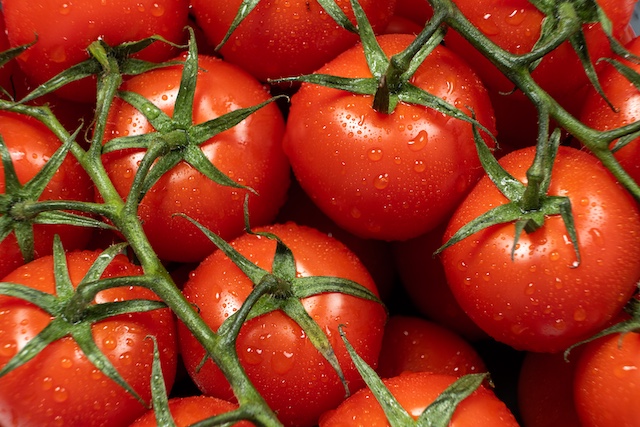
Daily Tomato Intake May Lower Liver Fat in People With MASLD, New Study Suggests
Key Takeaways:
- In a six-week randomised study of 79 adults with metabolic dysfunction-associated liver disease (MASLD), people who ate 200 grams of raw tomatoes and 50 grams of tomato sauce each day showed a greater reduction in hepatic steatosis than people following a tomato-free control diet.
- Liver fat fell in both groups, and researchers found no meaningful differences between the groups in liver stiffness, liver enzymes, lipids or body mass index after the intervention period.
- Independent specialists described the findings as exploratory rather than practice-changing, noting the short duration, the narrow participant profile and the absence of improvement in clinically relevant markers.
What the research set out to examine
Metabolic dysfunction-associated liver disease (MASLD) covers a spectrum of liver problems, but its defining feature is hepatic steatosis – the accumulation of fat within the liver. A diagnosis also requires the presence of at least one cardiometabolic risk factor, such as obesity or high blood pressure.
Diet and lifestyle changes are a mainstay of support for people living with MASLD, and researchers are increasingly interested in whether particular foods offer measurable advantages over others. A study published in Nutrients set out to test one such food: the tomato, a staple of the Mediterranean diet.
The research team wanted to establish whether regular tomato consumption would influence liver steatosis in people who already had a MASLD diagnosis.
How the study was designed
The study enrolled 79 adults with MASLD. Researchers applied a number of exclusion criteria, ruling out people who consumed above a set threshold of alcohol and those with a body mass index above 30, the point at which obesity is classified.
Participants were divided into two groups. One group followed a tomato-free control diet. The other consumed 200 grams of raw tomatoes and 50 grams of tomato sauce daily. All tomato products were supplied by the same producer to keep the intervention consistent, and participants were asked to carry on with their usual lifestyle in every other respect.
The intervention ran for six weeks. Across that period, researchers tracked a range of health indicators, including body composition, hepatic steatosis, liver stiffness and cholesterol levels.
What the researchers found
Hepatic steatosis declined in both groups over the six weeks. The decrease was greater, however, among people in the tomato group.
Further analysis showed that hepatic steatosis had been broadly similar between the two groups at baseline, which strengthens the comparison. Other measures told a quieter story. Researchers identified no major changes in liver stiffness, and no significant differences between the groups in lipids, liver enzymes or body mass index at the end of the six-week period.
Summarising the result, the authors suggested that “tomato consumption may reduce hepatic fat accumulation independently of major changes in body weight, total and abdominal adiposity.”
Because liver fat shifted while weight and body composition did not, the study raises a familiar practical question for clinicians: how far can dietary composition alone move metabolic outcomes when overall energy intake stays broadly the same? It is the kind of question CCH explores in its CPD short course Nutrition & Weight Management Essentials, which examines the relationship between modern nutrition and weight, and how evidence-based dietary advice translates into everyday clinical conversations.
Study limitations and continued research
The six-week window is short, so the study cannot speak to whether any benefit persists over the longer term. The research also recruited only adults aged 65 and under, leaving it unclear how the findings might apply to older adults.
Most participants were men, so more balanced recruitment would strengthen future work. The decision to exclude people with a body mass index above 30 also narrows how widely the results can be applied.
Endocrinologist and obesity specialist Randa Abdelmasih MD, DipABOM, from the University of Texas Medical Branch (UTMB), who was not involved in this study, told Medical News Today:
“The study demonstrates a modest reduction in hepatic steatosis over only six weeks in a highly selected population of adults with MASLD and BMI [body mass index] of 30 kg/m² [kilograms per square meter] or more. Most patients we see in clinical practice have obesity (BMI over 30 kg/m²), type 2 diabetes, or more advanced metabolic disease, so the generalizability of these findings is limited.”
Jonathan Jennings, MS, MD, a board-certified internist with Medical Offices of Manhattan, who was likewise not involved in the research, raised a related concern about how participants were selected.
“The inclusion criteria required only one cardiometabolic risk factor, and it could be any risk factor. I am concerned that not all risks are equal, and people with multiple factors are at higher risk than those with a single risk factor,” Jennings said.
“Type 2 diabetes is more likely to lead to MASLD than high blood pressure but the study evaluates them as equal risk factors,” he pointed out.
The researchers themselves note that the reduction in liver fat may have been influenced by other factors, including the effect that taking part in a dietary intervention study can have on participants’ behaviour. The team was also reliant on dietary counselling and on participants’ own reports of how closely they followed the intervention.
Abdelmasih added that because the intervention combined raw tomatoes with tomato sauce, it is “difficult to determine which component or combination was responsible for the observed effect.”
A further gap is that researchers did not measure circulating levels of lycopene and carotenoids, the compounds most often proposed as the mechanism behind any effect tomatoes might have on liver health.
Limited clinical application at this stage
The authors describe their study as exploratory, intended primarily to inform future research. They call for confirmation through larger and longer studies, and encourage readers to treat the findings as hypothesis-generating rather than conclusive.
The clinical value is also uncertain because so much else stayed the same. As Abdelmasih put it:
“The study showed improvement in liver fat but no significant improvements in liver stiffness, fibrosis scores, liver enzymes, insulin resistance, inflammatory markers, lipid profile, or body composition. Therefore, while the imaging findings are interesting, we cannot conclude that tomato consumption meaningfully alters disease progression or improves clinically relevant outcomes.”
What this means for people living with MASLD
Within its limits, the study does point to a possible benefit of tomato consumption for people with MASLD, and to a low-cost dietary strategy that may help with fat accumulation in the liver.
Tomatoes may carry other advantages too, with existing research pointing towards cardiovascular benefits and potential anti-cancer properties.
Even so, the sensible route is for people to work with their doctor and wider healthcare team on a dietary plan that addresses their overall health, rather than concentrating on any single food.
Jennings underlined that point, and flagged two practical cautions:
“The study’s conclusions are hopeful but careful discussion with a healthcare provider is still needed before engaging in any radical dietary adjustments. Tomatoes and tomato-based products may be problematic for individuals with gastroesophageal reflux disease (GERD). Many tomato-based foods are also calorically dense and may worsen insulin resistance in certain individuals.”
The broader treatment context matters as well. According to Abdelmasih: “Dietary interventions should be viewed within the broader context of treating the underlying metabolic disease. For patients with obesity, sustained weight loss of approximately 10% or more remains the intervention with the strongest evidence for improving steatohepatitis and fibrosis.”
“While tomatoes can certainly be part of a healthy Mediterranean diet, they should not distract from therapies that have demonstrated meaningful improvements in liver and cardiometabolic outcomes,” she concluded.
CCH insight
Conversations about diet sit at the centre of metabolic and liver care, and single-food headlines can make those conversations harder rather than easier. CCH’s CPD short course Nutrition & Weight Management Essentials gives healthcare professionals a grounding in the fundamentals of nutrition, the factors driving weight gain, and what effective weight management looks like in practice – so you can place findings like these in proportion for the people you support.
Explore Nutrition & Weight Management Essentials →
Expert commentary in this article was provided to Medical News Today. Read the original report here.
Read More