
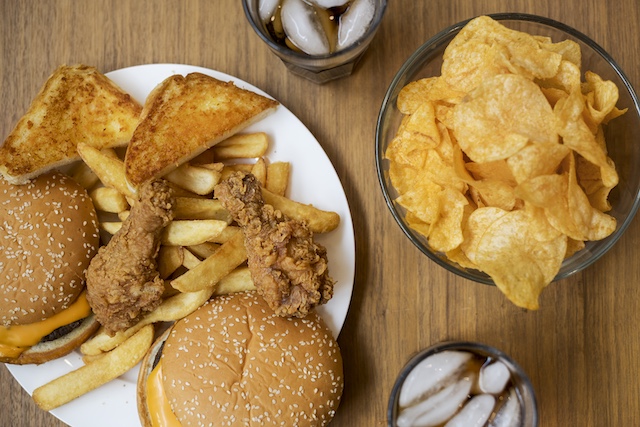
Ultra-Processed Food Intake Tied to Poorer Diets and Higher Body Weight in Adults
Key Takeaways:
- A higher share of ultra-processed food in the diet was generally associated with poorer dietary quality and a somewhat higher prevalence of overweight and obesity among adults in Sweden.
- Estimates of intake depended heavily on the definition used – around 45 to 52 per cent of daily energy under a broader definition, falling to between 23 and 29 per cent under a narrower one.
- The link with body weight was seen only in adults, and young children with high intakes had higher iron and vitamin E intakes because fortified gruel and porridge count as ultra-processed.
A national picture of ultra-processed food intake
A higher proportion of ultra-processed food in the daily diet is generally associated with poorer dietary quality and a somewhat higher prevalence of overweight and obesity among adults, according to a cross-sectional study conducted at the University of Gothenburg in collaboration with the Swedish Food Agency.
The peer-reviewed research, published in Nutrition Journal, examines the nutritional patterns of the Swedish population while critically evaluating the conceptual definitions and classification criteria that govern how foods are categorised as ultra-processed.
The investigation used data collected from three national dietary surveys conducted by the Swedish Food Agency. The sampled population covered three distinct age groups:
- young children aged 1.5 to 4 years
- adolescents aged 11 to 17 years
- adults aged 18 to 80 years
By drawing on these nationwide samples, the researchers aimed to calculate what share of total daily energy intake comes from ultra-processed products at different stages of life, while also assessing the structural ambiguities present in contemporary nutritional classification frameworks.
Why the definition matters
The study used the NOVA system to classify foods. Under this framework, foodstuffs containing specific additives, along with various industrially manufactured preparations, are classified as ultra-processed regardless of their nutrient density or nutritional composition.
As a result, the ultra-processed label groups together highly diverse items. Sugar-sweetened soft drinks, confectionery and cured meats sit alongside everyday staple foods such as ready-to-eat breakfast cereals and industrially manufactured whole-grain bread.
The results showed that population-level estimates of ultra-processed food consumption fluctuate substantially depending on the exact interpretive boundaries applied within the NOVA system. When the researchers used a broader definition, ultra-processed items accounted for an average of:
- 45 per cent of total daily energy intake among adults
- 52 per cent among adolescents
- 46 per cent among young children
When the team applied a stricter, narrower standard that excluded ambiguous food items from the category, the estimated proportion of total energy intake dropped markedly, to between 23 per cent and 29 per cent across the groups studied.
These variations underline why the classification system remains an active subject of debate within nutritional science. Linnea Bärebring, a dietitian and associate professor of clinical nutrition at the University of Gothenburg, noted that while ultra-processed foods have captured widespread public and scientific interest in recent years, ongoing professional discussions continue to question the conceptual boundaries of the category and whether it accurately reflects meaningful aspects of an individual’s overall nutritional intake.
Diet quality and body weight in adults
Despite the debate over definitions, the findings consistently showed that adult participants who obtained a relatively high share of their energy from ultra-processed foods consumed diets that were measurably less nutritionally adequate.
Higher consumption of ultra-processed products was also associated with a slightly elevated body mass index and higher rates of overweight and obesity among adults. This association with body weight was observed only in the adult group and did not emerge among children or adolescents.
When the researchers examined specific nutritional components, they identified clear differences linked to processing levels. Torsten Sällström, a dietitian and doctoral student at the University of Gothenburg, observed that individuals who derived a larger share of dietary energy from ultra-processed items consumed significantly higher amounts of added sugar while eating significantly less dietary fibre and whole grains – a dietary pattern established in medical research as a contributor to heightened risks of conditions such as cardiovascular disease.
A different pattern in children and adolescents
A similar nutritional vulnerability appeared among adolescents, where high energy intake from ultra-processed foods correlated with poorer overall dietary content.
For young children, the picture was different. Intake of iron and vitamin E was higher among those with a high consumption of ultra-processed foods, because iron-fortified products such as cereal-based gruel and porridge are classified as ultra-processed.
Emma Patterson, a nutritionist at the Swedish Food Agency and an associate professor of public health nutrition at Karolinska Institutet, noted that it would be unfortunate if parents were to avoid fortified porridge or gruel simply because they are labelled as ultra-processed.
What this means for dietary advice
The findings sit alongside existing guidance. Dietary guidance in Sweden has long recommended limiting energy-dense, nutrient-poor choices such as sugar-sweetened beverages, sweets, commercial pastries, salty snack chips and processed meat items.
Telling those foods apart from nutritionally useful products that carry the same ultra-processed label draws on a solid grounding in nutrition – the focus of professional training such as the College of Contemporary Health’s Nutrition & Weight Management Essentials, a CPD-accredited online short course.
CCH insight
This study is a reminder that “ultra-processed” covers a wide range of foods, from sugar-sweetened drinks to whole-grain bread and fortified porridge, and that the label alone says little about nutritional value. CCH’s Nutrition & Weight Management Essentials CPD short course (10 CPD hours, fully online, CPD-accredited) gives healthcare professionals a solid grounding in the fundamentals of nutrition and the practical methods that help patients achieve and sustain a healthier weight.
Explore Nutrition & Weight Management Essentials →
Source: Nutrition Journal