
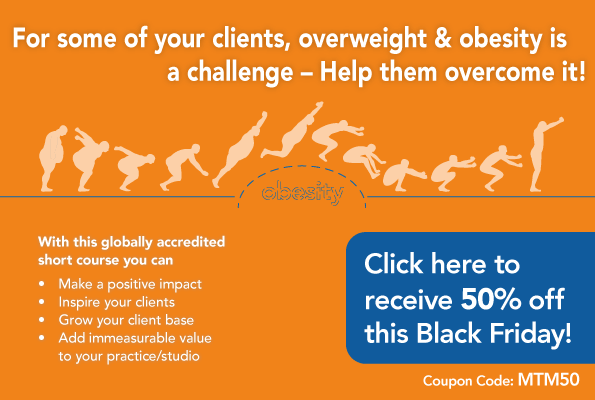
Use the code MTM50 at check out to save 50% this Black Friday ONLY!
Please Note: Offer ends Saturday 26 November 2016.
Smoking. Everyone knows the risks involved and the impacts it can have on your overall health. The links between smoking and emphysema, coronary heart disease, and in particular, cancer, have been long established and well publicised for decades. It is the biggest cause of preventable cancer cases in the UK, but perhaps what isn’t as widely known, and in this case, accepted, is what comes as a close second to smoking, and that is obesity. According to Cancer Research UK, “it’s thought that more than 1 in 20 cancers in the UK are linked to being overweight or obese,” and what is even more alarming is how little the public is aware of this fact with the same charity also stating that “being obese or overweight is linked to 13 different types of cancer, but only 15% of people in the UK are aware of the connection.”
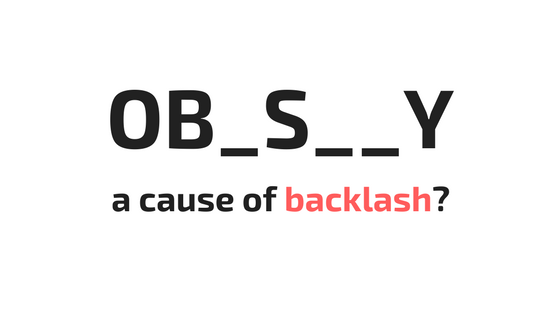
Cancer Research UK took it upon themselves last week to inform the public of this health epidemic with a hard-hitting campaign that has been published on billboards and advertising space all over London and the rest of the UK. The campaign, designed in a “hangman game” style format, had the word obesity written in large font with letters missing from the word in order to make the public think, and guess, for themselves as to what the full word might be. What made the campaign especially hard-hitting is that it was designed in the exact same format found on cigarette packets which plainly details the, often gruesome, health risks involved with smoking. Using this format was an excellent way to effectively demonstrate that smoking and obesity can be as potentially dangerous as each other in causing cancer, and in both cases, lifestyle changes can be an effective preventative measure for developing the disease.
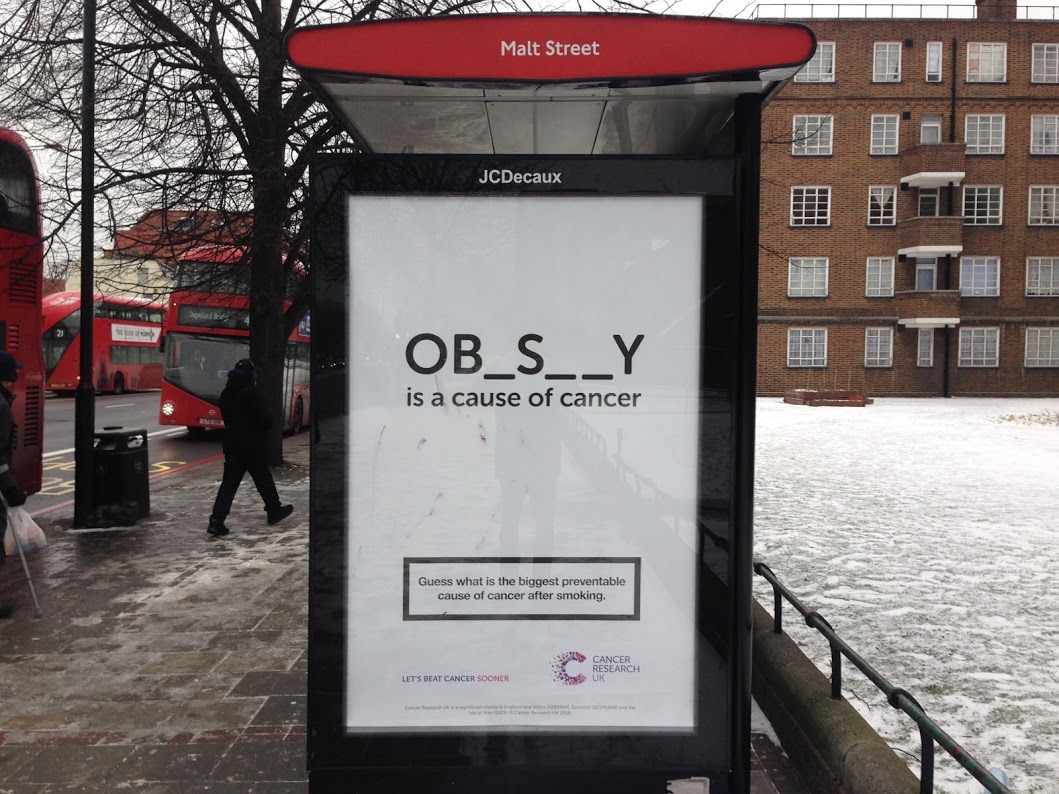
Cancer Research UK campaign advertisement seen in Peckham, London.
As the campaign made its physical presence felt, filling bus stops, tube stations, and various other advertising spaces around the UK, a quite unexpected backlash took hold on social media and discontent was soon voiced, and in many cases, sheer outrage emerged. Perhaps the loudest voice among the discontented was Danish comedian, Sofie Hagen, who, amongst other things, deemed this campaign as “hate.” Ms Hagen posted a series of tweets highlighting her outrage at the bold campaign from Cancer Research UK.
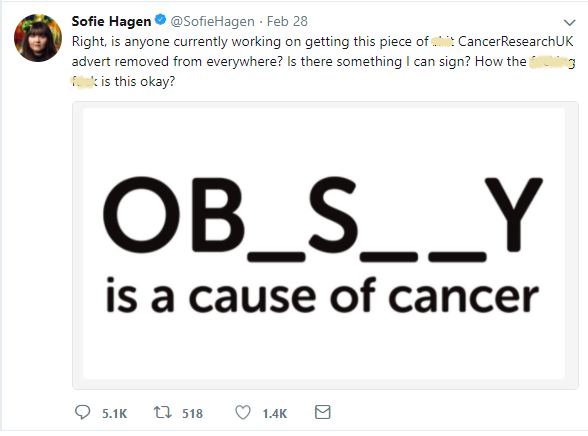
After imploring this campaign to be removed, even though it hadn’t even been present for a day, Ms. Hagen explained as to why she thought that it was so offensive and this was because, as she describes, “it uses shame, ridicule, abuse, and fear” in order to get individuals with overweight or obesity to “change their ways.” Many of Ms. Hagens followers agreed with her with one adding that “There is a difference between informing and shaming and THIS campaign shames.” Some were so enraged by Cancer Research UK’s campaign that they encouraged the public to never donate to the charity ever again and to only donate to charities that don’t body shame.
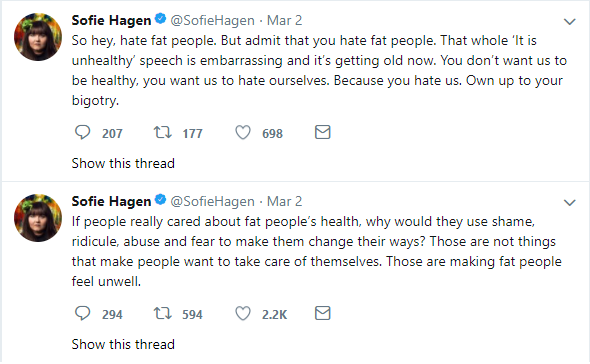
The outrage that this campaign attracted has drawn many questions, but one particularly pertinent question sticks out, and that is as to what exactly constitutes body shaming. Cancer Research UK’s campaign featured no people of any description in any of the variations of the advertisements. It only promoted the fact that after smoking, obesity is the biggest preventable cause of cancer, and was trying to make the public aware of this. So why was there such outrage? The outrage was probably due to the fact that obesity is an extremely sensitive topic and often the language used surrounding people with overweight or obesity is insensitive and counterproductive. There is no doubt that the way we talk about obesity needs improvement and should change, however attacking what is supposed to be an informing, and moving, campaign by a reputable national charity is not the way to do it.
The way to achieve a real change in the way we talk about obesity is to start using tools like People First language that the College of Contemporary Health was recently recognised for. People-First language is not something new; however, it is new to the obesity community. It separates the individual from their disease rather than labelling someone as their disease. For example, instead of using “the obese man was elderly” use, “the man with obesity was elderly.” People-First language, healthcare professionals trained in obesity care, and an awareness of obesity brought to the public by campaigns like this one by Cancer Research UK, is what will prompt real change in the way we perceive obesity in society and treat individuals with the disease.
To learn more about obesity, its prevention, and its treatment please look at CCH’s Postgraduate Academic Courses in Obesity Care, and CPD Short Courses in topics such as childhood obesity and behaviour change, designed to up-skill health professionals in this vitally important, and often overlooked, area of care.
London, UK: The College of Contemporary Health, an online college specialising in innovative e-Learning for health professionals in weight management and obesity care, are excited to announce that we have secured the opportunity to partner with the London Borough of Southwark and develop online courses for health professionals and community members in the Borough.
Southwark has some of the highest rates of obesity in the country with 47% of all adults and 43% of children in year 6 classified as overweight and obese. Overweight and obesity not only impacts the quality of life of Southwark residents but also on their productivity and health.
Southwark Council is committed to delivering its vision to make Southwark a safer and healthier place and CCH is delighted to be collaborating with Southwark to improve the health of the local population and to help them achieve that goal. CCH will do this by providing a bespoke e-learning offering for the Borough.
CCH are experienced providers of continuing professional development (CPD) accredited e- Learning and will be developing 2 unique courses for health professionals and community members across the London Borough of Southwark.
I am delighted that CCH has secured the tender for this exciting and innovative project within the Borough of Southwark. With fewer than 0.1% of health professionals in the UK having any training in the critical public health area of obesity, it is great to be partnering with an organisation who is keen to make a difference. We are excited to be offered the opportunity to deliver courses that will better equip health and community members in Southwark.
Daniel Pothecary-Smith, Business Development Executive, CCH.
About College of Contemporary Health (CCH): College of Contemporary Health is an e-Learning college providing accessible online training for health professionals in weight management and obesity care. All CCH courses are evidence-based, use a learner centred approach and are overseen by an esteemed Academic Advisory Board. CCH have trained health professionals across the UK and globe and provide the only completely online Masters in Obesity Care and Management.
Read More

Studying at master's level does require a higher level of commitment. To get the most out of your studies, it is important that you set time aside to read and study the materials. CCH's MSc in Obesity Care and Management is made up of presentations, videos, podcasts and reading materials to complement, and suit, all learning styles.

You will be studying with fellow health professionals from across the UK and the globe including: GPs, doctors, nurses, physicians, surgeons, physiotherapists, dieticians, nutritionists, psychologists and professionals working in weight management. Our international student base means that you have the unique opportunity to share best practice with health professionals from across the globe!

CCH student support is second to none. From online tutors and module leaders, assisting you to achieve your best academic potential, to an in-house tech and admissions team to help you with any query you have – no matter how big or small! You will be completely supported throughout your time at CCH.

Absolutely! Studying the Masters in Obesity Care and Management prepares you for the challenges that patients with obesity can present. The course gives you the tools, skills and confidence to provide your patients with the best evidence-based obesity care and weight management.

The MSc Obesity Care and Management prepares health professionals for a leadership role within weight and obesity management. This includes: GPs, doctors, nurses, physicians, surgeons, physiotherapists, dieticians, psychologists, and counsellors running weight management clinics. On completing the MSc you will have the knowledge and skills to further improve patient care which could enhance your future career progression.
Click here to apply
for the MSc in Obesity Care and Management and take that first step to becoming an Obesity Specialist today.

A group of MPs have urged the government that more must be done to reduce the number of multi-buy offers on unhealthy foods to help curb childhood obesity. Further to this, they say that rules on junk food advertising must get more stringent and clear, claiming that the current obesity plan set forth by the government is too vague. The British government announced a childhood obesity plan in 2016, one of the main points was the sugar tax, however many in the wider health community have criticised this plan saying that there must be more action.
In the latest Health Select Committee report, the MPs are calling for more to be done to stop big discounts on unhealthy food and therefore halt their promotion towards children. This comes after evidence from the food industry that responsible retailers are being undercut by those who continue to offer attractive discounts. Whilst some supermarket chains have reduced the number of deals that they promote, many others are still pushing theirs forward. The British Retail Consortium has stated that there will have to be industry-wide agreement if junk food promotions were to be reduced, and this is an incredibly difficult thing to implement.
The MPs also suggested that more must be done to stop junk food advertisements to children. Currently, these types of adverts are banned during programmes that are aimed at children, the MPs suggest that they should be banned during all programmes that children might watch as well. They go on to propose that the sugar tax should extend to milk-based products that are currently excluded but still contain added sugar. Whilst they are aware that many of these plans are ambitious, they are keen to point out that more must be done to stop the development of childhood obesity, and only by implementing new plans and strategies can this be achieved.
Read More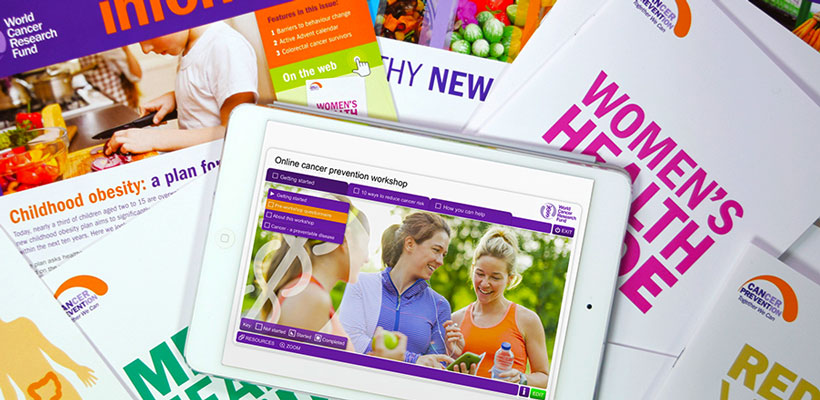
Did you know that being overweight or obese increases the risk of developing 11 different types of cancer? In fact, after not smoking, being a healthy weight is the most important thing people can do to reduce your cancer risk.
As part of the CCH network, you can take advantage of World Cancer Research Fund’s cancer prevention package! – This FREE package will help you to raise awareness of cancer prevention and support people who want to reduce their cancer risk.
The free package includes:
Click here! – to get your free resources and training.
Please note that the package is only available to health professionals based in the UK.
If you have any questions about World Cancer Research Fund’s cancer prevention package please contact them on 020 7343 4200 or [email protected]

On Monday the 5th of December, the Obesity APPG and guests, including CCH, were invited to meet at the Houses of Parliament in Westminster to discuss the government’s proposed sugar levy. Before opening the floor to questions and comments from the audience, 2 speakers from their respective institutions, described their stance on the levy, what their institutions had previously implemented in regards to public health, and what else needed to happen in order to make this particular public health initiative a success.
The first of the speakers was from Coca-Cola. He described Coca-Cola’s history with reformulation and how the creation of new beverages, such as Diet Coke and Coke Zero, have removed sugar from their ingredients entirely. He also described that without being asked, Coca -Cola had slowly been reducing the sugar content of their regular drinks for the last couple of decades, eliminating tons worth of sugar from the UK’s national diet. He also described how the Diet and Zero versions of their brands now outsell their “regular” counterparts by a ratio of 60 to 40, a concerted effort by Coca-Cola to reduce national sugar consumption. While not entirely opposed to the ban, he thought it was unfair to specifically target soft drinks and not other consumer goods like flavoured milk or juices that contain as much sugar, if not more, than soft drinks, or even food with excessive quantities of added sugar. He stated sugary drinks account for less than 4% of the daily calorie intake in the teenage age group, who are the biggest group of consumers of soft drinks. The point was also made that during the time in which Coca-Cola were reducing their sugar content, without government pressure, obesity in fact rose between 3-4%.
The next speaker was a member of British Retail Consortium (BRC), a representative body for the retail sector in the UK, which encompasses major supermarkets, food-to-go and also clothing retailers. He said that the BRC have a distinct position on many of the elements of the obesity plan, but the main element they were focusing on that day was the voluntary targets around sugar reduction. The BRC representative stated that there needs to be a focus on sugar, but agreed with the Coca-Cola representative that there’s a risk with focusing too much on sugar because it negates the responsibility to potentially focus on other unhealthy nutrients like salt and saturated fats, but recognised the core element of this plan was going to be sugar. Not only did the BRC have concerns about focusing too much on sugar, they also had concerns with the voluntary nature of the sugar reduction targets based on their experience with the public health field. Having a voluntary target means that there was no major reduction in sugar consumption, and from a retailer’s perspective there was a competitive disadvantage as some retailers discovered that they were seeing a fall in sales. The BRC was not totally in favour of mandatory targets, but if the government are going to implement targets, they should be mandatory and not voluntary as they are most effective that way. If you want to have a reduction across the board, you have to have a level playing field and draw a line in the sand. You have to state what the target is, and everyone has got to work towards it or it presents an unfair challenge with those willing to oblige and those who aren’t.
The question was then proposed, how do you think the government could provide better support for teachers and to schools to reduce the childhood obesity rate, and should more focus be placed upon physical activity? The Coca Cola representative suggested that schools provide a mostly healthy balanced diet, and the quality of dietary advice at schools has improved, and it’s when the child is at home or on holidays where they lose their fitness, and they begin to struggle with staying healthy and fit and perhaps more emphasis should be placed on habits at home.
Elaine Wyllie, the founder of the child’s activity initiative The Daily Mile Foundation, spoke about how there was too much emphasis on diet, which she acknowledged was very important, but still not enough emphasis on physical activity. She described how the idea for The Daily Mile was conceived while working as a head teacher in Edinburgh. Elaine noticed that many of the children at the school were unfit and were becoming more overweight as they progressed through primary school. She took a class of students out to the school’s field and many of them were almost instantly out of breath. After a few weeks of physical activity, just running around the school’s yard for 15 minutes, there was a distinct and very noticeable difference in the fitness and performance of students.
The main conclusion that was drawn from the event was that there is no one single way in which to tackle the obesity crisis. The obesity crisis is a problem that has multiple factors and facets that need to be approached in all manner of different ways, but it was mostly a consensus that sugar was certainly a contributor to the crisis, and that the sugar taxes’ implementation, while not perfect, was mostly a good thing.
Read More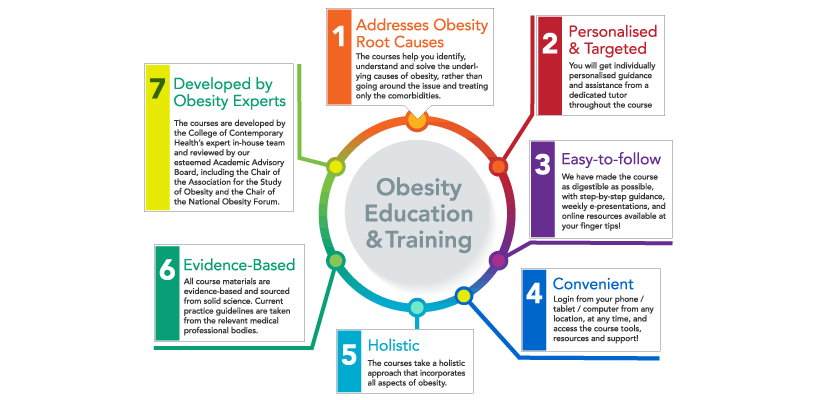
We have spoken quite a bit about the need for Obesity Education and Training.
Today, I would like to share with you the top 7 reasons some of our students chose to study Obesity Care and Management with CCH online.
Read More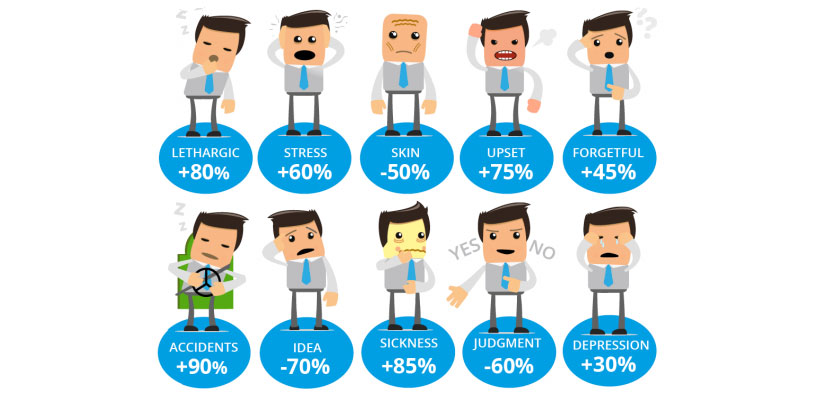
Did you know that an important consideration when treating a patient with overweight and obesity is, sleep apnoea?
Obesity is a major risk factor for the increased incidence of sleep apnoea. Sleep apnoea is a sleep disorder characterised by pauses in breathing or periods of shallow breathing during sleep.
As a person gains weight, especially in the trunk and neck area, the risk of sleep-disordered breathing increases due to compromised respiratory function. As it disrupts normal sleep, those affected are often sleepy or tired during the day.
Read More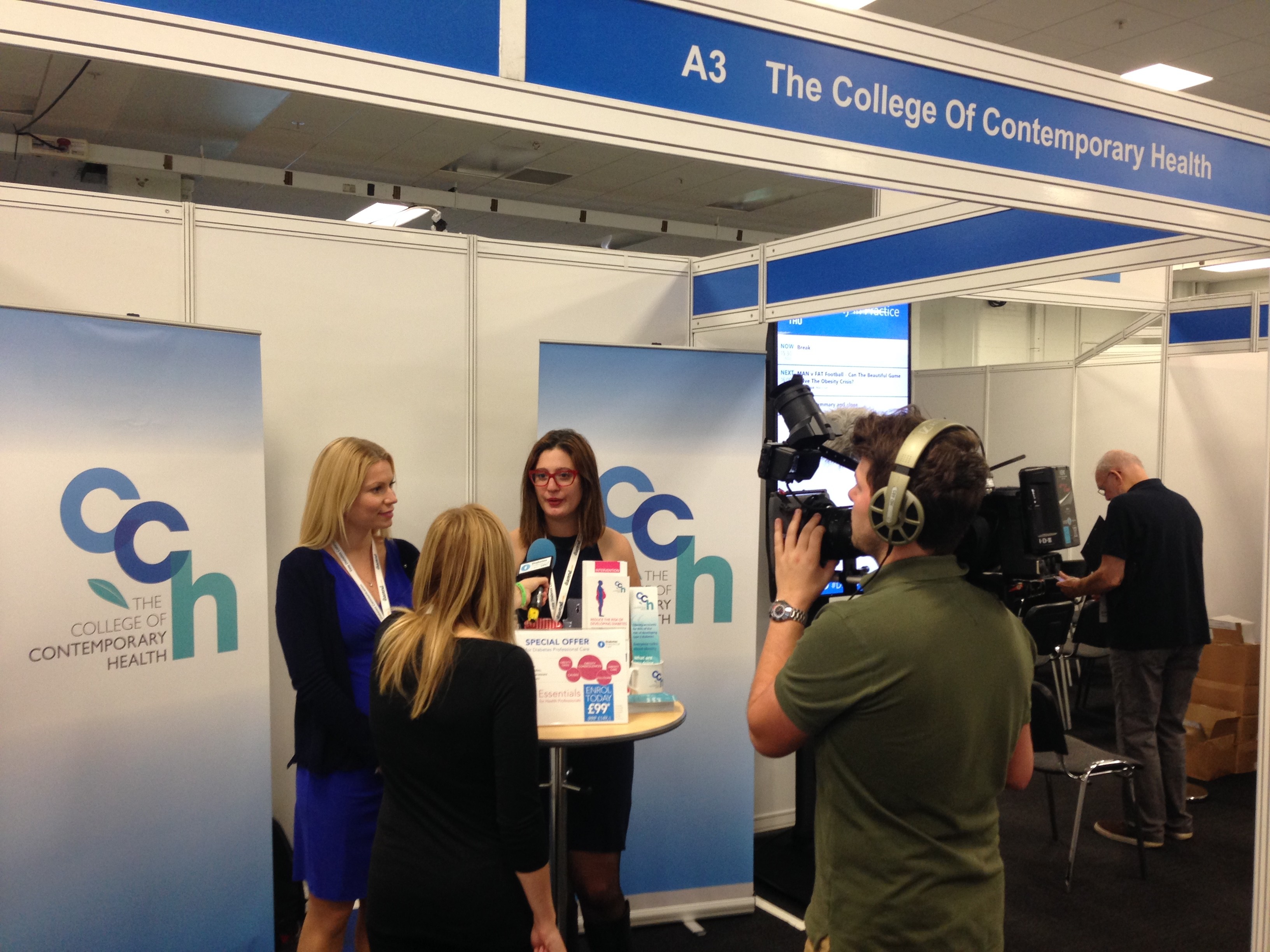

This year’s 2016 Diabetes Professional Care conference was a hugely successful event. Held in London’s Kensington Olympia, many of the diabetic care industry innovators, specialists and thought leaders converged to share their knowledge and spread awareness of this increasingly prevalent and life-changing disease. The second ever instalment of this free-to-attend, CPD accredited exhibition included keynote presentations from NHS England and The Diabetes Think Tank, both of which were thoroughly engaging and informative, as well as many other presenters who demonstrated their passion and vision for the future of diabetes care.
When not attending one of the many talks or discussions over the course of the two days, attendees were given the opportunity to expose themselves to companies, their products, and representatives to get a feel for the field as a whole, covering the full diabetes spectrum from technologies, commissioning, diagnostics and prevention, to paediatrics, primary and secondary care. As well as being a great place for healthcare professionals to learn, the 2016 DPC provided a great chance to build invaluable relationships and network with those who share the same expertise and passion for diabetes care.
![IMG_4534[1]](https://www.contemporaryhealth.co.uk/wp-content/uploads/2015/03/IMG_45341.jpg)
![IMG_4519[1]](https://www.contemporaryhealth.co.uk/wp-content/uploads/2015/03/IMG_45191.jpg)
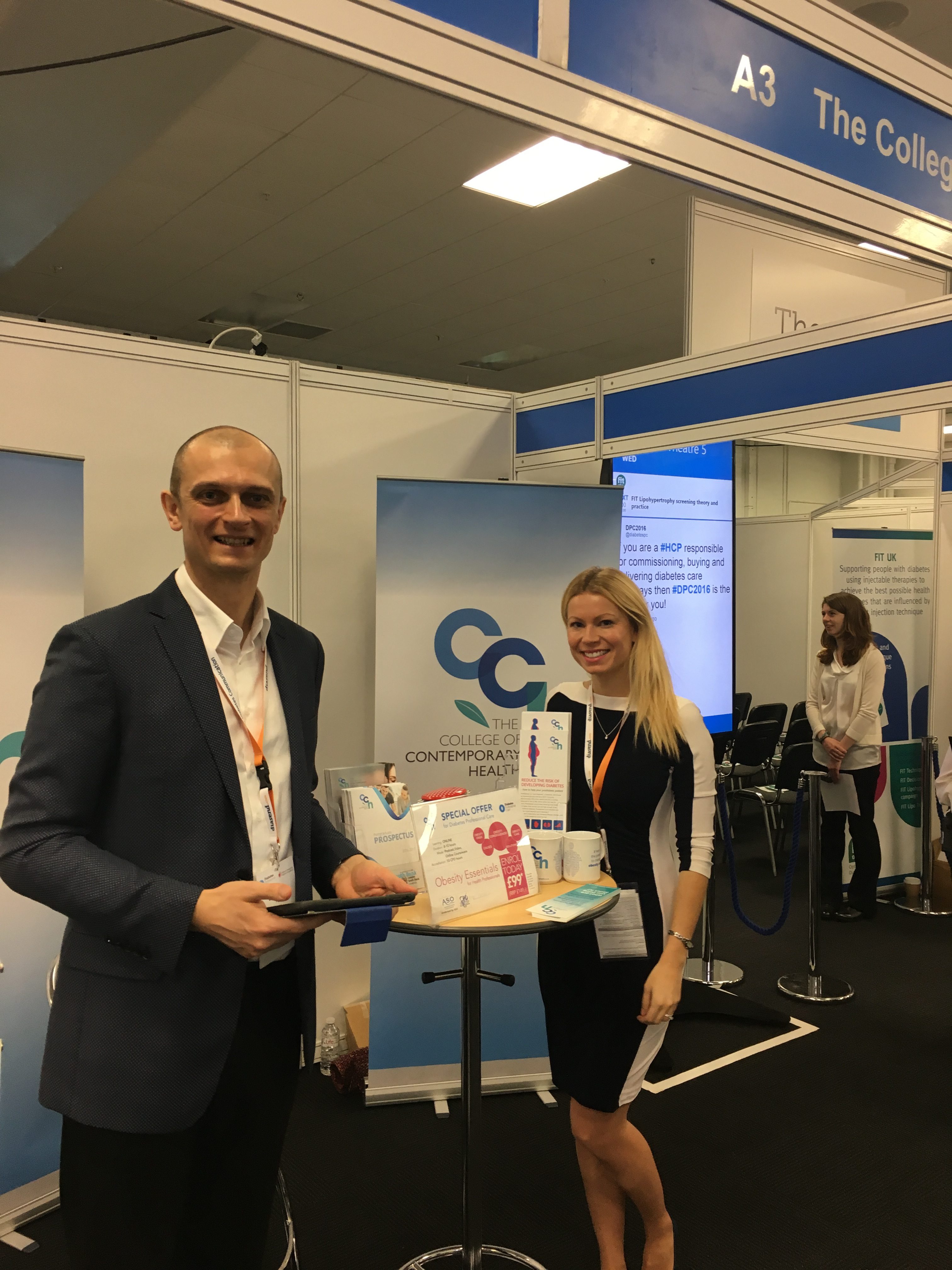
CCH made a great showing at the DPC and provided information to the attendees about the importance of education in the fight against diabetes and the best, and most compassionate, ways in which to care for patients. Although CCH is a fully online educational institute, it doesn’t mean we don’t relish the opportunity to meet so![IMG_4502[1]](https://www.contemporaryhealth.co.uk/wp-content/uploads/2015/03/IMG_45021.jpg) me of our students. Conferences like the 2016 DPC always attract the best and brightest in their field, so it’s no surprise to meet CCH students at an excellent event like this, and this year’s DPC provided us with the opportunity to meet CCH student, Dr. Sandhu. Dr. Sandhu is a GP based in Southall involved with many local charities, but what is most inspiring about her is her commitment to her continued pursuit of knowledge, and her ambition of achieving what’s best for her patients. She demonstrates how learning is something that continues throughout life, especially in today’s rapidly changing world.
me of our students. Conferences like the 2016 DPC always attract the best and brightest in their field, so it’s no surprise to meet CCH students at an excellent event like this, and this year’s DPC provided us with the opportunity to meet CCH student, Dr. Sandhu. Dr. Sandhu is a GP based in Southall involved with many local charities, but what is most inspiring about her is her commitment to her continued pursuit of knowledge, and her ambition of achieving what’s best for her patients. She demonstrates how learning is something that continues throughout life, especially in today’s rapidly changing world.
The great atmosphere and experience of the 2016 DPC will ensure that CCH will eagerly anticipate, and make a strong presence, at next year’s 2017 DPC! We hope to see you there!
Read More
Working with an overweight or obese client can be a daunting challenge. Most fitness professionals are ill-equipped to face the challenge head on because they’ve never been given the proper tools or understanding of their client’s situation. One of the biggest frustrations for your overweight and obese clients is not just losing the weight, but keeping it off once they’ve achieved that goal.
This globally accredited, 8-10 hour online course, prepares fitness professionals for the challenge of working with overweight and obese clients. It provides the tools and comprehensive knowledge required for fitness professionals to assist clients to successful weight-loss and weight-loss maintenance.
Fitness professionals can play a key role in the weight management of their clients; this course gives fitness professionals the confidence to workout and train with overweight and obese clients and significantly grow their client base.
All Making the Move: Working with Overweight Clientsstudents gain access to an extensive ‘fitness prescription toolkit’ that can be used immediately in client sessions.
Become certified in weight management with CCH
Please Note: Offer ends Saturday 26 November 2016.

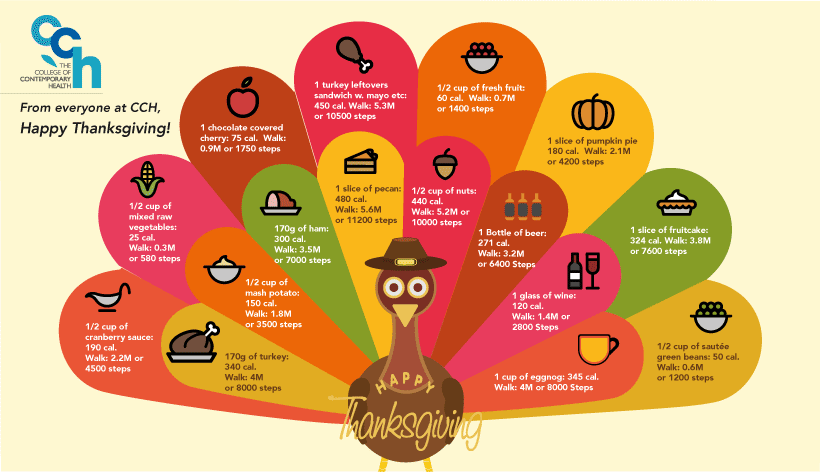
According to ABC news, the average calorie intake at a Thanksgiving dinner is 4500 calories!
And, if you add your leftover turkey sandwich to the equation, that’s another 450 calories!
In order to burn off 85 calories you have to walk one mile at a brisk pace, so to burn off that incredible Thanksgiving feast, the drinks, and that left over turkey sandwich, you’ll have to walk 60 miles!
Don’t let that discourage you however, as Thanksgiving is a time to enjoy yourself and the company of your friends and family, and reflect on all you are thankful for.
From everyone at CCH, Happy Thanksgiving!
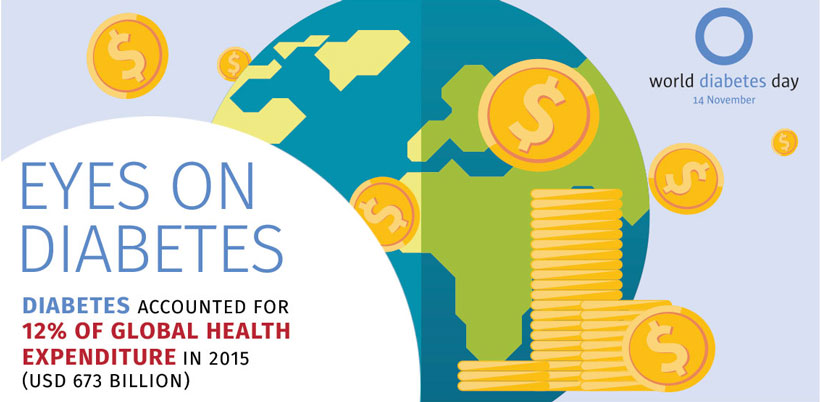
One in two adults currently living with diabetes is undiagnosed. This World Diabetes Day, the International Diabetes Federation are asking: individuals who may be at risk of type 2 diabetes, people living with diabetes, diabetes associations and health professionals to take action to help identify people with undiagnosed type 2 diabetes and those at risk of developing it in the future. The aim of identifying those at risk is to ensure early diagnosis, and therefore early treatment, of diabetes associated complications, such as blindness.
Read More