
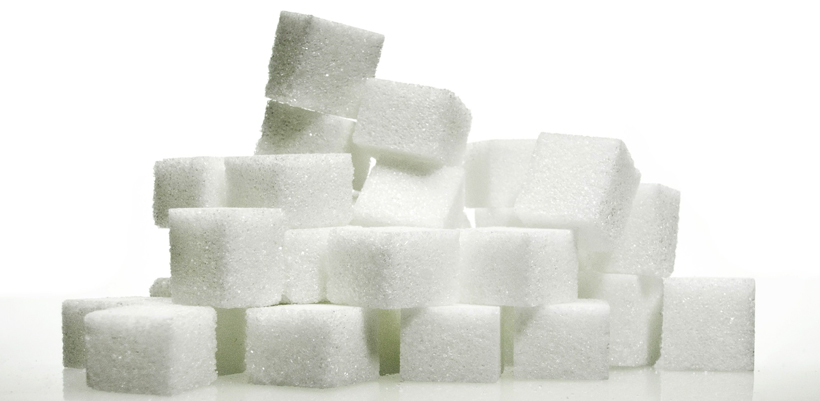
UK levy on soft drinks predicted to have significant health benefits
The UK is preparing to introduce a soft drinks levy in April 2018; one of the first studies to assess its possible impact has recently been published in The Lancet. The tax is different across categories of soft drinks, with no tax on diet and low-sugar drinks, a low tax on mid-sugar drinks (5-8g of sugar per 100ml); and a high tax on high-sugar drinks (over 8g of sugar per 100ml). The study claimed that there would be three main ways in which the soft drinks industry would react. They would reformulate drinks to reduce sugar content, raise the price of soft drinks to cover the levy, and market lower sugar drinks to consumers more. The researchers then assessed each reaction in terms of its likely effect on rates of obesity, diabetes and tooth decay.
The study found that the response of lowering sugar content would have the greatest effect on health. The authors estimated that a 30% reduction in sugar content of high sugar drinks – a step many manufacturers have already taken, accompanied with a 15% reduction of medium sugar drinks could lead to 144,000 fewer people with obesity, and 19,000 fewer cases of T2DM. Adjusting prices would result in reducing the number of people with obesity by 81,600. Children are likely to benefit most from these changes. Fortunately, the study found that all the most likely industry responses to the levy will result in lowering obesity, T2DM and tooth decay rates, however one must remember that these numbers are purely estimates, it may be a while before we see tangible benefits from next year’s tax.
Read More
US sugar intake guidelines based on weak evidence
A new systematic review led by McMaster University has found that the recommendations for limiting sugar intake are based on low quality evidence, has been published in the Annals of Internal Medicine. Some of these recommendations have come from organisations such as the World Health Organization and the US Dietary Guidelines for Americans. The researchers are quick to point out that these findings do not justify increased consumption of nutrient poor and energy dense foods. Official caps on daily sugar intake vary widely between organisations and this has led to confusion over what the actual recommendations should be, and also raises concerns about the quality of each guideline.
This team of researchers were hoping to assess the robustness of research that underpins these guidelines; they found many problems such as the inclusion of imprecise studies, and uncontrolled studies which are prone to bias. They also found a discrepancy amongst the types of outcomes that each study was measuring – such as tooth decay, and nutrient displacement – which are of less importance to the general public; obesity and diabetes may have been better outcomes to measure. Dr Behnam Sadeghirad, co-first author, stated that there does not appear to be any reliable evidence at this time that indicated the recommendations for sugar intake are associated with negative health effects. Hopefully, the results of this study will highlight the need for improved robustness and validity when developing guidelines.
Read More
Life expectancy in the USA drops
Recently released statistics have shown that the life expectancy within the USA is 78.8. This is a drop on last year’s figure of 78.9, although the drop is small, it is the first time that life expectancy has actually decreased in the USA since 1993, when HIV/AIDS and influenza combined knocked the trend for one year. Many experts believe that one of the major contributing factors for the plateau and now small decrease in life expectancy has been the obesity epidemic. Over a decade ago, scientists were warning of the long term effects of overweight and obesity, and the USA has a large proportion of its population above what is considered a ‘normal BMI’.
Professor Stephen Jay Olshansky, of the University of Illinois, even produced a controversial paper in 2005 explaining that if the rise in obesity wasn’t curbed soon, then an effect on life expectancy would be seen, not many believed him at the time, however now it seems as though he may not have been wrong at all. Obesity itself is not a disease that kills, it is the multiple co-morbidities that are associated with it, such as heart disease, cancers, T2DM, and kidney disease, to name a few. It is these conditions that people are falling prey to, and it is these conditions that must be stopped, one way of doing this would be to focus on obesity. Unfortunately, it will take another year to see if this is becoming a trend, either way, it is clear that the obesity epidemic is having an effect and must be addressed.
Read More
Overweight and obesity linked to high compensation costs
A study published in the Journal of Occupational and Environmental Medicine has found that obese and overweight workers in the USA are more likely to incur higher compensation costs for major injuries. The study looked at data from 2,300 injured workers from Louisiana and it was shown that for major injuries high BMI was closely related to high compensation rates. On average the overweight individual was claiming almost double that of a normal weight person, whilst an obese individual was claiming almost 3 times.
Previous studies have linked obesity to a higher rate of workplace injuries and more time spent off work, however until now the effects on costs have been less clear. The team that carried out the study are keen to determine whether the costs are due to medical expenditure or are for indemnity costs for lost work time.
Read More
Report warns that being obese or overweight could cause 7.6 million cases of disease by 2030
According to a report by the Obesity Health Alliance in the UK, over the next 20 years there may be more than 7.6 million new cases of disease linked to overweight or obesity.
To tackle the obesity epidemic, the Obesity Health Alliance (which includes Cancer Research UK, the British Medical Association, six Royal Colleges and the Royal Society of Public Health) is calling on the Government to introduce a strong childhood obesity strategy without delay. The suggested strategy must include restricting junk food advertising on TV before the 9pm watershed, tightening online marketing to align with broadcast regulations, as well as setting targets for industry to reduce the amount of sugar and fat in food.
Cancer Research UK’s director of prevention, Alison Cox, said “these numbers are shocking. And it’s difficult to think of the impact this will have on public health and an already strained NHS. Without bold action, the next generation will face more disease and live shorter lives”.
Read More
Obesity rates in US women and teens climbing
According to two new studies from the US Centers for Disease Control and Prevention published in JAMA the obesity rates for US women and teens is unfortunately on the rise. Survey data that was collected in 2014 and reported in one of the studies found that 41% of women are obese compared to 38% from a decade earlier.
In the second study, CDC researchers found that during the same time period, obesity in teens rose from 17% to 21%.
The data did however also show that during the same time period, the obesity rates in children ages 2 to 5, dropped from 14% to 9%.
Read More
Why some population interventions for dieting and obesity are better than others
Public health interventions that require individuals to invest fewer personal and psychological resources are more likely to be most effective. Researchers from the University of Cambridge identified two main approaches for improving diets from governmental perspectives, the first looks at the population and aims to elicit modest reductions in risk to everyone, whilst the other tries to focus on individual agency and personal will to benefit from interventions.
The researchers found that many population interventions do not all have the same effect and these are the interventions that are currently favoured by governments around the world. For example, encouraging people to cook at home may be difficult when many can’t afford to, they don’t have the correct facilities, or enough time. However, population interventions that require little to no individual agency are the most likely to be beneficial, this could be something as simple as reducing salt in diet or even processed food. Therefore, the researchers are promoting the development, evaluation and implementation of population interventions that require low levels of agency for individuals to benefit more.
Read More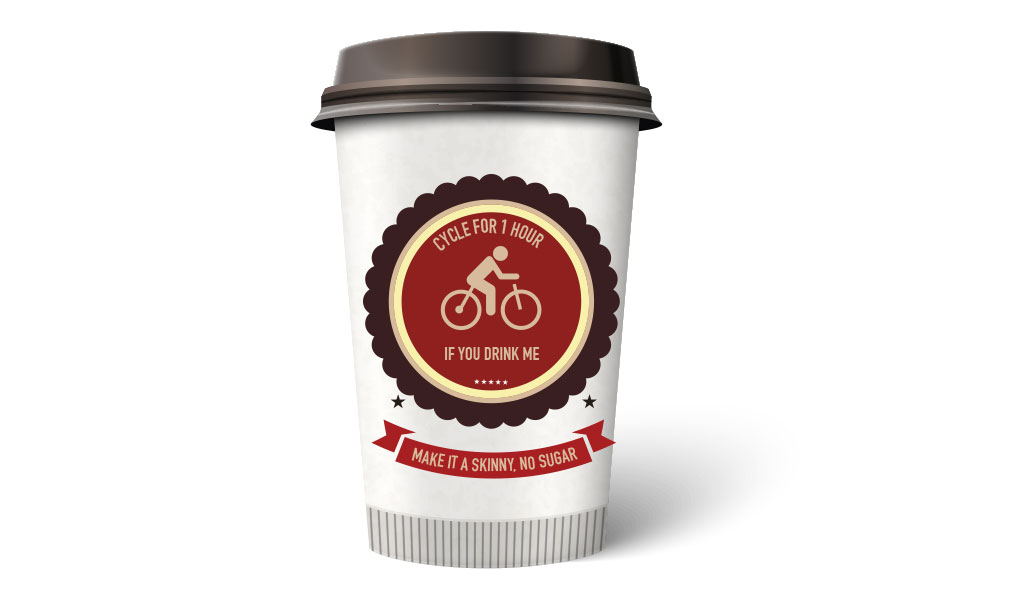
Should food be labelled with activity equivalent information?
Food should be labelled with the equivalent exercise required to expend the number of calories it contains. This is the suggestion from Shirley Cramer, Chief Executive at the Royal Society of Public Health, in an article published in the BMJ. She explains that with more than two-thirds of the UK population overweight or obese, more innovative changes are required in order to adequately address the issue. One of the suggested changes would be to introduce ‘activity equivalent’ calorie labelling, with the objective being that people would be more mindful of the energy they consume, whilst also encouraging them to be more active.
Cramer further explained that 44% of people found current calorie information confusing on food packaging, and 53% said that they would positively change their behaviour if they could see the activity equivalent of the food, this would include changing portion sizes, choosing healthier products and doing more physical exercise. Placing this type of information on food packaging could play an integral part as one of the solutions to such a multifaceted problem like obesity. However, food packaging is governed by the European Union, therefore widespread changes would need to be made in order to push through these suggestions. Therefore, to encourage this idea, Cramer has called for detailed research into its use as a potential intervention to change the behaviour of the general public.
Read More
More obese people in the world than underweight
Researchers from Imperial College London have conducted a large study that has found that there are now more obese people in the world than underweight people. The study compared the BMI of almost 20 million men and women from 1975 to 2014, it found that obesity rates have tripled in men and doubled in women in this time. The study covered 186 countries and showed that in 1975 global obesity rates were 3.2% and 6.4% in men and women respectively, now they are 10.8% and 14.9%. Professor Majid Ezzati, lead author, explained that whilst it was good to see that the rates of underweight in the world had reduced in the time period the rates of obesity had risen to a ‘crisis point’.
The study compared many other aspects of weight distribution around the world, for example China now has the largest amount of obese people in the world, whilst the UK is projected to have the highest rates of obese women in Europe by 2025. Obesity is a complex disease that will not have 1 solution, therefore the authors of this study are hoping that there will be a shift of responsibility from individuals to governments so that new policies will be developed and implemented in order to address this global epidemic.
Read More
The UK Sugar Tax
The chancellor has announced that a new sugar tax will be imposed on the soft drinks industry. In his new Budget, George Osbourne has unveiled new plans to fight childhood obesity by targeting the soft drinks industry. By increasing the prices of high-sugar drinks it is hoped that people, particularly children, will be more reluctant to buy them. Pure fruit juices and milk-based drinks will be exempt, as will drinks from small producers. There are two bands, one for total sugar content above 5g per 100ml and a second for drinks with more than 8g per 100ml, with taxes at 18p and 24p respectively.
In recent years many have been calling for this levy to be imposed, and not long ago Cancer Research UK suggested that a sugar tax could result in 3.7 million fewer cases of obesity by 2025. There are many reasons why drinks are being targeted and not other high-sugar foods, one is that people who drink these drinks tend to consume them every day, and some of them contain such high proportions of sugar that a person can consume over the recommended sugar intake in one sitting. It is thought that the money raised from the tax, approximately £520 million, will be spent on funding for sport in primary schools, furthering the fight against childhood obesity.
Read More
Do school assessments really help?
Classifying children as overweight or obese in school reports does not precede any short term changes in BMI. This is the conclusion of a collaborative study from New York University and Columbia University. In the USA, public health officials have called for early identification of weight and therefore subsequent prevention of obesity, the suggestion is that children should be told, through reports sent to their parents, whether they are becoming overweight or obese. However, by doing this, many argue that children’s self-esteem will be negatively affected. In 2007-08 public schools in New York City adopted fitness assessments that did just this, if students were deemed to be ‘unhealthy’ they were informed and advised to see a healthcare provider for more information.
This study specifically looked at girls in high school who were near the ‘healthy weight – overweight’ threshold. The researchers found that when students were told that they were overweight, it lead to a small rise in BMI for the following year. This was particularly noticeable in newly overweight students and high school seniors. The authors are quick to point out that the results only reflect the trend in overweight female students, and shouldn’t be extrapolated onto other students, however they do also emphasise that informing students of their weight status in such a way may not actually result in the desired effect, and may even have a negative impact. They are looking to work closely with the school agencies in order to develop the assessments and make them more useful.
Read More
Air pollution exposure increases risk of obesity
Researchers from Duke University have found that rats who breathed polluted air not only gained weight but also had an increased chance of metabolic dysfunction. The study was conducted by separating two groups of pregnant rats. One group, was exposed to Beijing’s highly polluted air, and the other group filtered air. After 19 days the rats that were breathing the polluted air were heavier and had higher risks of developing cardio-respiratory symptoms. Interestingly, similar results were found in the offspring of both groups of rats.
Overall the effects were seen to be less severe after 3 weeks than after 8, suggesting that continued long-term exposure will more likely to cause negative effects. The results of the study are also consistent with other similar studies that relate increased air pollution to insulin resistance and increased fat tissue. The authors of the study hope that the conclusions drawn will help inform policy makers so that more attention is paid to the less well known effects of air pollution and to slow the growth of the obesity epidemic, particularly in countries like China.
Read More