
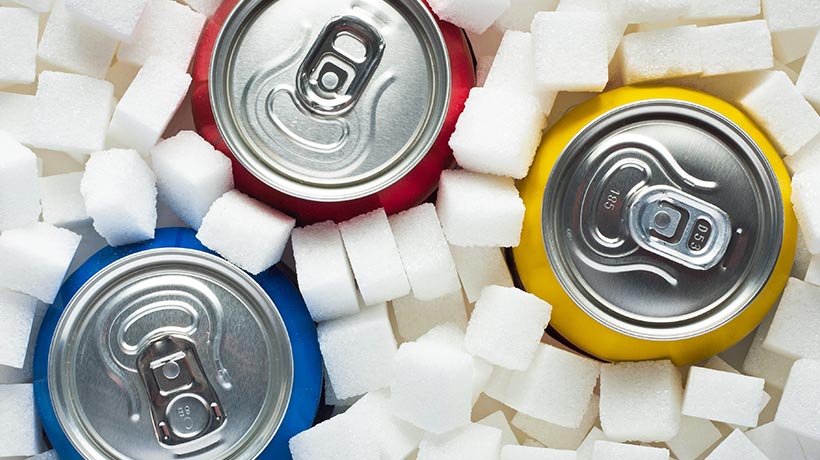
3.7 million cases of obesity could be prevented by taxing sugar-sweetened drinks
Recently there have been calls for a tax on sugar-sweetened beverages in the UK. A recent report conducted by Cancer Research UK has predicted that by 2025, a 20% tax on sugar-sweetened beverages could reduce obesity by 3.7 million cases. The same report claims that the NHS would save £10 million in direct health and social care costs. It is widely known and publicised that junk food, high in fats and sugars, are large contributors to the obesity crisis. It is therefore thought that by introducing a tax on sugary drinks, people would be less inclined to buy and consume them, and subsequently switch to a healthier choice.
It is estimated that in the UK, adolescents from 11-18 years of age are consuming three times the recommended limit of sugar, with their main source being sugary drinks. This report hopes to highlight this problem to the government. A 20% taxation on sugary drinks could be implemented as part of a society wide response to the obesity epidemic so that it can be tackled effectively.
Read More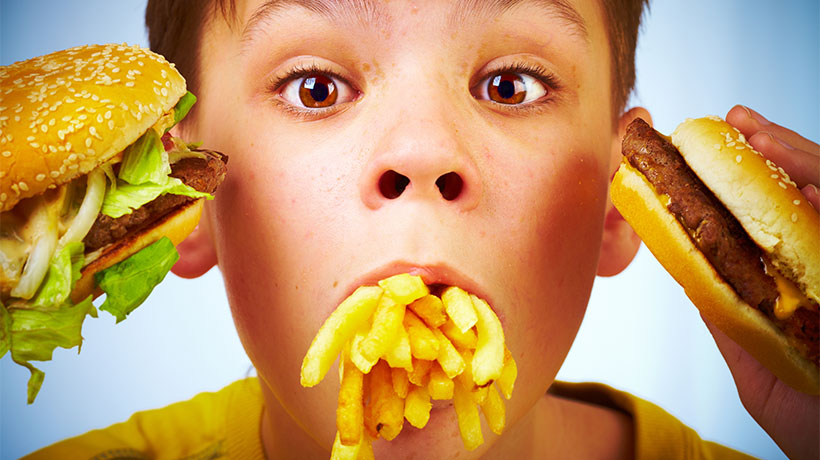
Public are backing a ban on junk food advertising
A recent YouGov survey has shown that 75% of the public in the UK back a ban on junk food advertising before 9pm. This is to curb the childhood obesity crisis. The survey, which was conducted in conjunction with Cancer Research UK, found that half of all people surveyed would also back a tax on sugary drinks. Overall, 82% of respondents supported government action on childhood obesity and admitted that is was a clear and current problem for the UK.
In the UK, more than one in five children is already overweight or obese when they begin primary school, and this increases to one in three by Year 6. Cancer Research UK are aiming to show that the advertisement of junk food is having a large and deleterious effect on the childhood obesity epidemic due to its behaviour influencing nature. Alison Cox, director of cancer prevention at Cancer Research UK, said that not only will banning and taxing junk food help, but it will also save the NHS billions of pounds, which could be reinvested in other parts of the health service. Clearly the public are beginning to support the idea of increasing bans and taxes in order to protect the health of the nation.
Read More
The media’s influence on the perception of obesity
A new study has examined how obesity is portrayed in the media and its subsequent effect on people’s support for different obesity related issues. Researchers at UCLA and Stanford exposed participants to different news articles that portrayed obesity in different lights, and then explored any subsequent changes in people’s attitudes to obesity. The different viewpoints on obesity in the news articles were categorised into four frames. The first was ‘Fat Rights’, which emphasised the idea of body positivity and discrimination against fatter people was unjust. The second was ‘Health at Every Size’, describing the fact that a person could be both fit and fat, and that factors other than diet and physical activity impacted more on an individual’s weight. The third was the ‘Public Health Crisis’ frame, which described obesity as a crisis that needed government intervention. The last frame, ‘Personal Responsibility’ stated that being fat was entirely due to life choices made by individuals.
The authors then showed the participants images of obese people and found that exposure to the different types of frame greatly impacted people’s views of obesity. It was even possible that some media coverage can worsen anti-fat prejudice. This, coupled with the idea that weight-based stigma can negatively affect healthcare, is particularly worrisome. The authors emphasised that anti-fat stigma leads to poorer treatment efficacy, and communities around the world should focus on creating a culture of empathy and social justice, rather than one of discrimination, calling on media outlets to lead this.
To learn more about obesity, its prevention, and its treatment please look at CCH’s Postgraduate Academic Courses in Obesity Care, and CPD Short Courses in topics such as childhood obesity and behaviour change, designed to up-skill health professionals in this vitally important, and often overlooked, area of care.
Read More
Does urban living influence our weight?
The location of where you live in a city could have an effect on your weight. Researchers in Switzerland have suggested that living in a lower income neighbourhood will mean that you are more likely to have a higher BMI than your counterparts in a higher income neighbourhood, in the same city. Researchers were aiming to discover the cause of BMI ‘clusters’ in spaces and whether it is dependent on location or individuals. They measured the weights of 6,481 Swiss adults in one city over 5 years. They found that BMI is not randomly distributed across the city, in fact there were clusters of different BMI and these correlated with the average neighbourhood level of income.
The most interesting thing about this study is that individual factors such as education, age, health, ethnicity, gender, and alcohol consumption did not account for the participants’ weight and was not a cause of the clustering. The study highlights the fact that urban planning has a major impact on the health of a population, specifically the level of obesity. If there were more green spaces near the low-income neighbourhoods, would they still be as obese? The study hopes to highlight this fact and show that inspiration for improvements to disadvantaged neighbourhoods could come from those who are more affluent.
Read More
Female obesity as big a threat as terrorism
Dame Sally Davies, the Chief Medical Officer for the United Kingdom, has warned that obesity endangers the lives of women and children to such an extent that it is as dangerous a threat as that of terrorism. Read her recently released report that deals with a variety of issues facing the health of women today including the threat of obesity.
Read More
Obesity rates to soar if no action is taken
New figures suggest that 2.7 billion adults will be obese by 2025. In a press release the World Obesity Federation has estimated that the global prevalence of obesity will be as high as this if current trend continue. The figures were released on the first World Obesity Day on the 11/10/2015. In the release it explains that in 2012 governments around the world committed to bringing levels of obesity back down to those that existed in 2010, by 2025. This was part of an idea developed by the WHO called the Global Action Plan for the Prevention and Control of Noncommunicable Diseases. The report suggests that the governments in question have not been doing enough to control the rise in obesity rates.
The president for the World Obesity Federation, Professor Walmir Coutinho, urged these governments to act immediately in order to halt the rise in the obesity epidemic using measures such as market controls, taxes and subsidies, whilst also setting standards for catering services and investment in healthy schools. Whilst the current prevalence of obesity is 13% worldwide, with this estimated increase it will become 17% by 2025, evidently more action needs to be taken to stop this.
Read More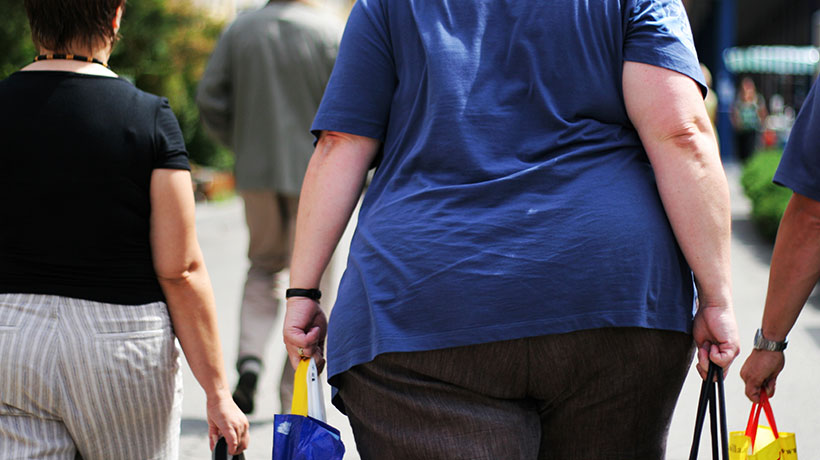
The economic scale of obesity
In America, concern about the health risks, medical care costs, and other consequences of obesity has led to a host of policies and programmes implemented by companies, school districts, and governments to prevent and reduce obesity. It has also resulted in a large body of economic research on the causes and consequences of obesity, and on approaches to prevent and reduce obesity.
Economic solutions, taxes, incentives, and information, do not offer any single strategy that is likely to have more than a modest effect. Strategies like junk food taxes are promoted with projections that sound great, the hard economic truth is that these estimates are subject to many limitations. None are backed by solid evidence that they will have more than a modest effect and they may well have unintended consequences.
From this review the evidence suggests that there is no single dominant economic cause of obesity; a wide variety of factors may contribute a modest amount to the risk. In different groups and different circumstances, the effects may be large or insignificant. Studies of economic approaches to preventing obesity, such as menu labelling, taxes on energy-dense foods, and financial rewards for weight loss, see only modest effects on weight and thus a range of policies may be necessary to have a substantial effect on the prevalence of obesity.
Read More
Americans are finally eating less
After rising for decades, calorie consumption has declined in recent years as public attitudes have shifted. Calories consumed daily by the typical American adult, which peaked around 2003, are in the midst of their first sustained decline since federal statistics began to track the subject, more than 40 years ago. The number of calories that the average American child takes in daily has fallen by at least 9 percent. In the most striking shift, the amount of full-calorie soda drunk by the average American has dropped 25 percent since the late 1990s. As calorie consumption has declined, obesity rates appear to have stopped rising for adults and school-aged children and have come down for the youngest children, suggesting the calorie reductions are making a difference. The encouraging data does not mean an end to the obesity epidemic as more than a third of American adults are still considered obese, but the changes in eating habits suggest that what once seemed an inexorable decline in health may finally be changing course. The eating changes have been the most substantial in households with children, with the anti-obesity public health campaigns focussing on one subject more than any other: beverages. Beverage companies have reacted by marketing diet drinks and investing heavily in new products, including iced teas and flavoured water.
“This was like a freight train going downhill without brakes,” Kelly Brownell, dean of the Sanford School of Public Policy at Duke University, said. “Anything slowing it down is good.”
Read More
FDA approves temporary balloon device to treat obesity – but is it needed in the UK?
The U.S. Food and Drug Administration approved a new balloon device to treat obesity without the need for invasive surgery. The ReShape Integrated Dual Balloon System is intended to facilitate weight loss in obese adult patients. The ReShape Dual Balloon device is delivered into the stomach via the mouth through a minimally invasive endoscopic procedure while a patient is under mild sedation. It should be removed six months after it is inserted. The ReShape Dual Balloon is indicated for weight reduction in obese adult patients with a body mass index (BMI) of 30 to 40 kg/m2.
But is it needed in the UK?
A very similar balloon was made available publicly in Europe and privately in the UK early last year. Obalon is a gastric balloon in pill form that can be swallowed to help overweight people achieve rapid weight loss without invasive surgery. It is intended to be used for a maximum period of three months. The balloon is designed to be used by people with a body mass index (BMI) of 27 or above. No sedation or anaesthetic is needed and you have to swallow the capsule with a very small tube attached. Once the capsule reaches the stomach, it opens up and releases the balloon. The main difference between the balloons is the amount and expense, Obalon uses three balloons placed in the stomach over a period of 12 weeks and costs £4500 whereas the ReShape dual balloon uses only one and costs £5500.
Read More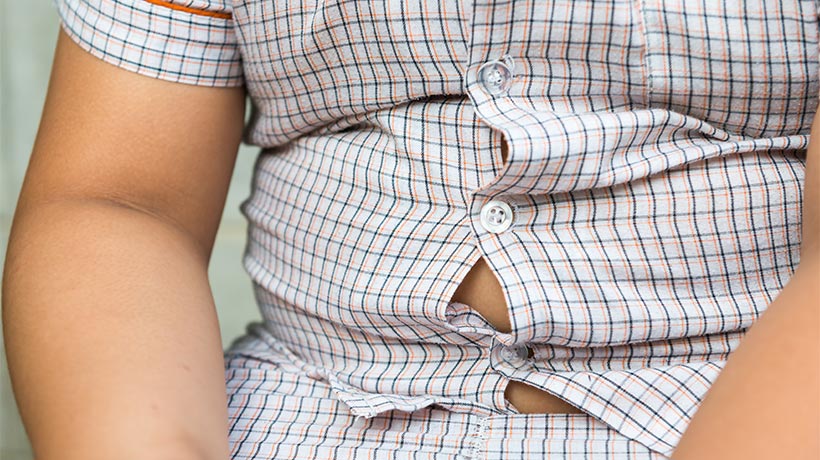
Call for Child Obesity Act
A weight loss campaigner has called for the government to consider sending the parents of obese children to jail.
Steve Miller, health expert and host of TV show Fat Families, has suggested the move, arguing that overfeeding children should be deemed ‘child cruelty’. Miller proposed the Child Obesity Act, a piece of legislation which would see parents of morbidly obese children receive three warnings, followed by formal prosecution. The Act would also involve children being sent to a bootcamp to help them shed weight. The weight loss advocate believes that when children are overweight, it is “almost always” the fault of their parents, and not their own.
The controversial weight loss campaigner continued: “Childhood obesity is spiraling out of control and like it or lump it we need to address the issue head on to protect our future generations”
However, the proposal has been greeted with much controversy. A spokesperson for the Department of Health told The Huffington Post: “We have no plans to jail parents of obese children. We want to help families and support them to lead happier and healthier lives. The Child Obesity Act isn’t what we want to develop. We’re looking at compiling a strategy which will look at different aspects of obesity – there’s lots of things we’re looking at and we’ll be announcing our steps later on in the year.”
Read More
Children’s cartoons – adding to the obesity crisis?
A recent report conducted at Colorado State University investigated whether cartoon characters are causing children to consume more food. The study analysed the effect of stereotype exposure on around 300 students split into 3 groups of 8, 12 and 13 year-olds. Researchers found that children consumed twice as much high-calorie food, like cookies and sweets after observing certain larger cartoon characters such as Peppa Pig or Homer Simpson. The effect of the overweight stereotype remained when overweight and healthy weight characters appeared simultaneously. Furthermore, the researchers found that children view ovoid shaped characters as obese, even though these characters are imaginary, and are therefore more likely to consume unhealthy foods afterwards.
Whilst this has shown that marketers need to be careful how they use characters in selling food to children, another idea that the study has brought to attention is that reinforcing healthy thinking and information in children’s cartoon characters may be an effective way to curb obesity.
Read More