

Taxing sugary drinks may not cut obesity as much as headlines claim
An article published in New Scientist titled “Taxing sugary drinks may not cut obesity as much as headlines claim” examines the impact of taxing sugary drinks on obesity rates. The article cites studies that have shown that taxing sugary drinks has had limited success in reducing obesity rates, as consumers often turn to other sources of added sugar, such as snacks and desserts. The article notes that while taxing sugary drinks may be a step in the right direction, it is not a silver bullet solution to the obesity epidemic, suggesting instead that a comprehensive approach to reducing obesity is needed, including changes in government policies, increased access to healthy food, and increased physical activity. It concludes by stating that while taxing sugary drinks may have some impact on reducing obesity, it is not a complete solution, and additional efforts are needed to address the issue.
Read More
Picture warnings on fizzy drinks? A promising tool to fight childhood obesity
A study published in the journal PLOS Medicine is the first to examine whether pictorial health warnings on sugary drinks, like juice and fizzy drinks, influence whether or not parents purchase these types of beverages for their children.
The study’s results found that these warnings reduced parental purchases of sugary drinks for their children by 17%.
Researchers at the University of North Carolina at Chapel Hill’s Gillings School of Global Public Health ran the study in a unique laboratory by creating the “UNC Mini Mart”. This space was set up to mimic a convenience store and simulate a realistic setting for a shopping experience.
“We created this store because we saw a major need for research that tests the impact of policies in a food store setting that is much more realistic,” said senior author Lindsey Smith Taillie, PhD, assistant professor in the Department of Nutrition at the Gillings School and a member of UNC’s Carolina Population Center (CPC). “When people make choices about what food to buy, they are juggling dozens of factors like taste, cost, and advertising and are looking at many products at once. Showing that warnings can cut through the noise of everything else that’s happening in a food store is powerful evidence that they would help reduce sugary drink purchases in the real world.”
Taillie’s and her co-authors’ positive findings about the effects of image-based warning labels highlight a recent approach to combating the global struggle with obesity. Children in the United States and many other countries, including the UK, consume more than the recommended amount of sugary drinks, which increases their risk for obesity and other diet-related chronic diseases, including Type 2 diabetes.
Taillie has conducted research on warning labels and taxes on sugar-sweetened beverages and junk food in Chile, Mexico and South Africa. Marissa G. Hall, PhD, one of the study’s co-authors, researches the impact of warnings on tobacco and food as well as effectiveness of obesity prevention policies.
In their study, 326 parents of children between the ages of 2 to 12 years old participated in a randomised trial with 1) a pictorial warning arm (in which drink labels had images representing heart damage and Type 2 diabetes), and 2) a control arm (in which drinks labels displayed a barcode).
Participants were instructed to choose one drink and one snack for their child, along with one household good, the latter being added to the shopping list to potentially mask the purpose of the study. After shopping, participants completed a survey about their selections and left with their drink of choice and a cash incentive.
The picture warnings led to a 17% reduction in purchases of sugary drinks, with 45% of parents in the control arm buying a sugary drink for their child compared to 28% in the pictorial warning arm.
The warnings also reduced calories purchased from sugary drinks and led to parents feeling more in control of healthy eating decisions and thinking more about the harms of sugary drinks.
“We think the paper could be useful for policymakers in the U.S. and globally,” Hall says. “This evidence supports strong, front-of-package warnings to reduce sugary drink consumption in children.”
Read More
Irish government steps up plans to tackle nation’s growing obesity crisis
The Irish government has stepped up its plans to tackle the nation’s growing obesity crisis through the establishment of a task force that will look at the ways saturated fat, salt, sugar and calories can be reduced in processed food that is prevalent in Ireland.
Along with the task force a ‘Roadmap for Food and Product Reformation in Ireland’ was also published by the Minister for Health Stephen Donnelly and the Minister of State for Public Health Frank Feighan.
Mr Donnelly highlighted the links between diet and non-communicable diseases and noted that it was “particularly evident in economically disadvantaged areas, where people tend to eat more processed food”. He also suggested that the new task force would work with the food industry “to combat inequality by improving the quality of the food available”.
Mr Feighan suggested that modern lifestyles were having a negative impact of people’s health and said that people were “living very busy lives and it’s not always easy, even with the best of intentions, to eat or buy the healthiest option”. He then suggested that the task force and road map were “important and positive steps forward for all of our health and wellbeing and will help to improve the nutritional quality of the processed food available to consumers and will have tangible benefits for public health”.
The Food Reformulation Task Force will sit within the Food Safety Authority of Ireland (FSAI) and will provide “a dedicated resource to work with all levels of industry to ensure progress and to address the difficulties that may arise in the highly technical process of reformulation”. FSAI chief executive Dr Pamela Byrne said the reformulation of foods has been proven to have a “positive impact on the quality of the diet and reducing salt, sugar and saturated fats in food products will positively contribute to a healthier population”. She said the FSAI would be engaging “with the food industry and other stakeholder” over the next four years.
The move comes as more retailers and producers move to make their products less harmful.
Read More
Experts warn of obesity “pandemic” in Spain
On November 17, 2021, the Spanish Obesity Society (Seedo) launched a campaign asking for a new national multidisciplinary and transversal plan aimed at addressing Spain’s growing obesity epidemic.
According to recent data, more than 60 percent of Spanish adults are considered overweight, 24% of which have obesity and 40 percent of children between 6 and 9 years old are considered overweight, and this is unlikely to have improved during the pandemic. These figures have led specialists to predict what’s been described as a “tsunami of cases” in the coming decades.
“Obesity is a problem that will accompany us in the coming years if strong measures are not taken now,” warned the president of Seedo, Francisco Tinahones. “Strategies must be proposed to prevent and fight obesity because it is not an aesthetic problem but one of the most important diseases facing our health systems.” Tinahones clarified the need for a global plan to tackle obesity, and that the small specific actions taken so far had been merely “drops in the ocean of obesity,” and not useful.
Tinahones proposes that this new strategy include financing from the health system for obesity medication, a tax policy that penalises unhealthy food products and encourages healthy ones, food labelling that clearly reflects how healthy or unhealthy a product is, regulations that prohibit certain advertisements, urban planning that creates spaces for exercise, and the promotion of physical activity.
Read More
Childhood Obesity: A Growing Pandemic
Reported in The Lancet, childhood obesity rates have increased substantially over the past year in the UK, according to a new report from the UK Government’s National Child Measurement Programme. The report details that this rise in prevalence is the largest single-year increase since the programme began 15 years ago and highlights a trend in obesity among children and adolescents not just in the UK, but worldwide. The trend now extends to both low-income and middle-income countries despite obesity once being seen as a problem mainly for high-income countries. Childhood obesity has long been a cause for concern, but the effects of the pandemic and national lockdowns has added to the issue, making childhood obesity an undeniable public health crisis and one that should be addressed imminently.
A different lifestyle brought about because of lockdown measures including school closures, restrictions on leaving the house, and limitations on meeting new people has meant children have seen a huge jump in screen time and have become more sedentary than they were previously. The CDC Morbidity and Mortality Weekly Report measured the effects of these lifestyle changes and it notes that the rate of BMI increase almost doubled in US children and adolescents aged 2–19 years during the pandemic compared to pre-pandemic. Children with overweight and obesity are more likely to become adults with obesity and to develop a host of non-communicable diseases including type 2 diabetes and cardiovascular disease, and have an increased risk of cancer, premature death, and disability later in life.
Read More
Obesogenic factors and environments contributing to rising rates of obesity in Mexican children
Mexico has one of the highest youth obesity rates worldwide currently at 34% of all children and adolescents. This problem is rapidly worsening in Mexico with drastic consequences. There is limited understanding of the factors driving the rapidly increasing rates in Mexico. An understanding of determinants is critical to developing interventions, health programs and policies to effectively take on the crisis.
A recent review in Global Health Action set out to compile, describe, and analyse dietary conditions, physical activity, socioeconomic status, and cultural factors that create and exacerbate an obesogenic environment among Mexican youth. The authors approached this through a narrative review conducted across scientific databases and governmental reports.
The findings revealed a multitude of contributing factors including reduced healthy meal options at public schools, high rates of sedentary lifestyles among adolescents, lack of open spaces and playgrounds, socioeconomic deprivation, false or misunderstood sociocultural traditional beliefs, misconceptions about health, a high percentage of overweight or obese adults, and low rates of maternal breastfeeding. The factors identified are exacerbating the obesity problem in this population. From this evidence it is apparent that the average Mexican child is surrounded by a multitude of obesogenic factors driving rising rates of obesity. Measures to control these factors is drastically needed to stop continuation of the escalating rates.
Read More
Impact of overweight, obesity and severe obesity on life expectancy of Australian adults
Obesity is known to significantly elevate the risk of many health problems, however its impact on life expectancy (LE) has not been quantified in Australia. This paper, published in the International Journal of Obesity, uses a microsimulation model of obesity progression to predict the changes in LE and years of life lost (YLL). It uses data on annual change in BMI based on age and sex, with Australian life-table data and published relative risk of all cause-mortality for different BMI categories. A nationally representative sample of 12,091 adults aged 20-69 were used.
The study predicted that the loss in LE for obese people to be 5.6-7.6 years and for severely obese people to be 8.1-10.3 years for men and women aged 20-29 years. If the baseline BMI was higher, so at age 20-29 BMI was above 25, years lost was greater. It also found that men lost 27.7% more years compared to women. In total, overweight and obesity was predicted to be responsible for 36.3 million YLL over the life course, with the severely obese contributing almost one-third of the life years lost despite comprising only 11% of the population.
This study does not take into account the impact that increased BMI has on quality-of-life, however evidence has shown there are significant impairments to health related quality-of-life for individuals at more severe levels of obesity as a result of co-morbidity and disability. This paper highlights the huge burden of disease in Australia, particularly in men, that needs to be addressed. The implication on the economy and the individual of 36.3 million YLL are too huge to ignore.
Read More
Analysis of the impact of rising food prices on obesity in women across 31 low and middle-income countries
In this longitudinal study, published in the International Journal of Obesity, the authors examine whether changes in food prices are associated with changes in obesity prevalence among women in developing countries, and assess the effect of individual socioeconomic status (SES). Anthropometric data, including BMI, and country-level food price inflation from low and middle income countries (LMIC) was used from 296,000 non-pregnant adult women, over the period 2000 to 2014.
The researchers found a strong link between food price inflation and obesity in adult women in LMICs, and the relationship is consistently modified by individual SES. Regardless of indicator used, higher food price inflation was positively associated with obesity among women in top SES categories, but was flat or negative among women in low SES categories, averaging over time. In lower SES groups it’s hypothesized that this is a result of a relative lack of exposure to food pricing, due to them growing their own food. Educational differences appeared the strongest of all SES measures which is consistent with the literature on social determinants of obesity.
This response to food budget constraints is recognised by other comparisons of LMICs, showing that individuals greatly reduce fruit and vegetable intakes as the relative cost increases [2], and that only those in the highest socioeconomic groups increase caloric intake in response to rising food prices. As the international burden of obesity grows, it’s important to understand how economic fluctuations translate into behavioural changes
Read More
Should we tax unhealthy food and drink?
According to the Proceedings of the Nutrition Society, after tobacco, unhealthy diets are the leading behavioural risk factor for all-cause morbidity and mortality in the UK. A poor diet can cause disease both directly via mediating factors such as weight-gain and hypertension, as well as potentially leading to CVD and T2DM through consumption of high-levels of saturated fat and highly refined sugar products.
Among children, 20% of 4-5 years and 33% of 10-11 year olds are either overweight or obese, with poorer children more than twice as likely to suffer obesity compared with children from affluent areas. It is clear, a new strategy is desperately needed if we want to protect the next generation from a whole variety of complex preventable diseases. Obesity is estimated to cost £6 billion per year in direct healthcare costs and a further £27 billion per year when losses in productivity are included. A key strategy for reducing the burden of disease involves trying to reduce overall consumption of unhealthy food, with taxation a primary component of the government’s plan.
There is a growing body of evidence from simulation studies, and other countries’ natural experiments, that sugar taxes can be effective at driving recipe modulation by industry, as well as behaviour changes amongst consumers. The indication is that fiscal measures are able to bring about desired price and purchasing changes to sugary drinks, while the weight of published data on sugary drinks taxes suggests that they will improve population health. However, the evidence is less clear on what the unforeseen outcomes of these taxes are; such as unhealthy recipe substitutions, or price equalisation between taxed unhealthy and untaxed healthy products by the manufacturers.
What is clear from the taxation strategies of other countries around the world is that the taxes need to be broad, intelligently designed, constantly evaluated to minimise unintended consequences, and overseen as to ensure that any loopholes for industry are discovered and managed. The economic costs of obesity are growing year on year and funding strategies must be developed in order to fund the treatment and care of overweight and obese individuals. In April 2018 the UK introduced an SDIL (Soft drinks industry levy). It involves taxing industry based on the concentration of sugar in their drinks using a 3 -tier system. The explicit aim of the tax is to change industry behaviour with regards to manufacture and reformulation, as opposed to trying to change individual behaviours.
Read More

The Socio-economic Impact of Bariatric Surgery
This study, published in Obesity Surgery, aimed to generate real-world evidence of the socio-economic impact of bariatric surgery through evaluation of both its indirect and direct costs. Most studies focus on the direct healthcare costs only. However, this study used data collected over a period of 7 years from national registries, social transfer payments and income data, for surgically treated individuals, and compared them to that of a non-surgically treated individual, 3 years before and after surgery. The non-surgical group was defined as being eligible for bariatric surgery but not undertaking it.
The study found that there was a marginal increase in health-care costs in patients who underwent surgery, primarily because of the increased usage of in-patient services. It also found that there was a significant decrease in the costs of drugs, particularly anti-diabetic medication. Furthermore the study found that there a was notable positive effect of the surgery on social transfer payments; the costs of unemployment benefits were reduced and there were significantly higher social security payments.
Although this study was not able to identify net savings, it does not mean that bariatric surgery should be considered ineffective. The increase in health care-costs, mainly due to to complications and adverse effects of the surgery, should be weighted against the positive clinical effects that the patient will receive, namely reductions in prevalence of T2D and circulatory disease and medication to treat these, as well as considerable and sustained weight-loss which will enhance their quality of life and can also lead to a small decrease in total social transfer payments. Increased hospital care is a small price to pay for the sizeable benefits to the individual and society in the medium to long-term.
Read More

The Effectiveness of a School Intervention Program. A Panacea against Obesity?
A large randomised controlled trial was conducted in the West Midlands, looking into the effectiveness of a school and family based healthy lifestyle programme, in comparison to usual practice. 1,467 year 1 pupils aged 5 to 6 years (control, 778 pupils), were randomised into the study, with follow-ups at 15 months and 30 months. The intervention consisted of encouraging healthy eating and physical activity, which included a daily additional 30-minute school time physical activity opportunity and a 6-week interactive skills programme in conjunction with Aston Villa football club. There was also signposting of family physical opportunities and termly workshops looking at healthy eating cooking skills.
The main outcome measured in the study was BMIz score at 15 and 30 months respectively. They also looked at other anthropometric, dietary, physical activity and psychological measurements. Unfortunately, at 15 and 30 months follow up, there was no statistically significant improvement in any of the outcomes measured. Despite this rigorous in-school intervention, the primary analysis suggests that it was in fact, ineffective. Although this study was inconclusive, the authors go on to point out that it highlights the difficulty of the task of reducing weight in children, and that schools alone may not be the answer. A holistic approach that incorporates school, home, environment and policy is one that is most likely to succeed, and the idea that school-based interventions will solve the problem is likely oversimplifying the issue.
Food adverts during family TV shows encourage junk food consumption
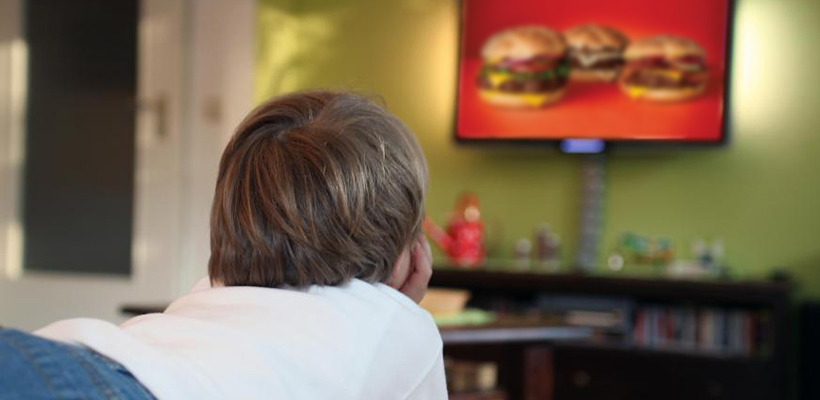
A new report that contains research conducted at the University of Liverpool has found that six in ten food adverts shown during family programmes push junk food, including fast food, takeaways and sweets. Normally, these adverts would be banned from children’s TV under UK regulations which prohibit the advertising of food high in fat, salt or sugar (HFSS) during programmes that are specifically aimed at children. However, due to a loophole in the legislation, adverts during ‘family’ TV programmes that are popular with children do not have the same safeguards in place. This is despite the fact that significantly more children are watching these programmes than some of the more popular children’s shows.
The researchers, based at the University of Liverpool, have previously published research that demonstrated that television food advertising alters children’s food preferences, towards high fat, salt and sugar foods. In this study they found that, at its worst, junk food advertising constituted nine adverts within a 30-minute period. In total 59% of food and drink adverts were for HFSS foods, whilst only 1% were for fruit and vegetables. The researchers hope that the regulations put in place over HFSS food advertising during children’s programmes will be extended to include more family focused programmes up to the watershed of 9pm.
Read More