New Study Tests Virtual Mindfulness Therapy to Ease Stress in Young People Living with Diabetes
Key Takeaways:
- A three-year, $941,418 NIH-funded study will assess whether virtual reality–enhanced mindfulness can reduce stress in young people living with type 1 diabetes.
- Researchers from Wayne State University and Johns Hopkins University aim to improve coping and mental health outcomes through immersive, accessible virtual sessions.
- If effective, the intervention could be scaled to benefit other young adults with chronic conditions and high stress levels.
Exploring virtual reality for stress reduction
Researchers from Wayne State University and Johns Hopkins University are investigating how virtual reality (VR) might help young adults living with type 1 diabetes better manage stress. The study, titled “Feasibility of MBSR-VR to Reduce Stress among Emerging Adults with T1D,” is supported by a three-year grant of $941,418 from the National Institute of Diabetes and Digestive and Kidney Diseases (NIDDK), part of the National Institutes of Health (NIH).
April Idalski Carcone, Ph.D., Professor of Family Medicine and Public Health Sciences at Wayne State University’s School of Medicine, serves as co-principal investigator on the project alongside Dr Erica Sibinga, M.D., M.H.S., Associate Professor of Paediatrics at the Johns Hopkins University School of Medicine.
The impact of stress on young people with diabetes
Dr Carcone explained the importance of the research:
“We’ve been collaborating with Johns Hopkins University on this line of research for more than 10 years. Diabetes is a chronic illness that creates additional stress in young people who are already going through a lot of anxiety figuring out their lives and deciding what to do after high school and so forth.”
She noted that stress can significantly worsen physical health:
“Stress can exacerbate health issues, particularly for those already going through physical challenges. Cortisol increases as a result of stress, and stress can essentially wear out the body. So if your body is already going through difficulties, it can make your health even worse.”
Young people living with type 1 diabetes must manage demanding self-care routines and fluctuating glucose levels, often while navigating major life transitions. These pressures contribute to a higher risk of anxiety, depression, and burnout.
Mindfulness meets virtual reality
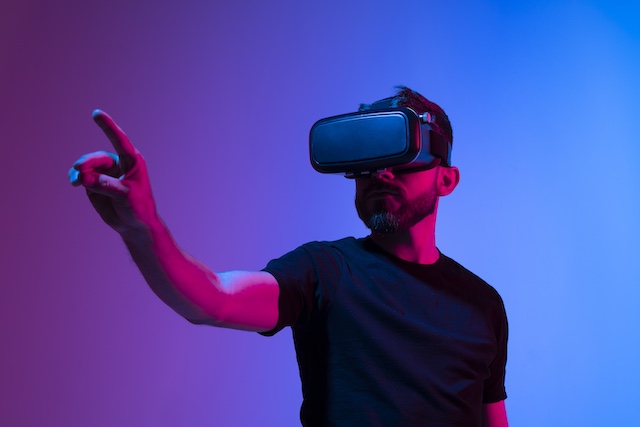
The research team aims to evaluate the feasibility and acceptability of delivering Mindfulness-Based Stress Reduction (MBSR) through virtual reality, referred to as MBSR-VR. The approach integrates traditional mindfulness practices with immersive VR environments designed to foster relaxation and focus.
Dr Carcone said:
“One of the challenges we had with an earlier version of this research was that we were gathering people onto campus for group intervention sessions, but it was logistically difficult to bring everyone to campus at the same time in the same place. Instead, we decided to try this in a virtual format.”
She added that the virtual environment offers greater engagement and flexibility:
“People coming together in a VR space sounded very exciting and provided us with a format that was a little more engaging. We can utilise different virtual environments as opposed to the split-screen Zoom-style call that we are all so familiar with. You can virtually gather people around a campfire, in a pool where you can toss a virtual beachball around, and so forth.”
Research collaboration and goals
Alongside Dr Carcone and Dr Sibinga, the project includes Dr Deborah Ellis, Associate Department Chair of Research for the Department of Family Medicine and Public Health Sciences at Wayne State University, and Dr Angulique Outlaw, Associate Professor of Behavioural Sciences within the same department.
The study will explore whether MBSR-VR can:
- Improve coping mechanisms for stress among individuals aged 16–20 with type 1 diabetes and high stress reactivity.
- Enhance mindfulness and emotional well-being.
- Positively influence glycaemic control and reduce psychological distress, including symptoms of depression and anxiety.
If successful, the intervention could be adapted for broader use across other chronic conditions where stress significantly impacts health outcomes.
Reaching young adults where they are
Dr Carcone highlighted how the virtual approach could make mindfulness training more accessible and socially engaging:
“Youths between ages 16 and 20 are very motivated by their social life, peers and significant others. These techniques allow us to bring people together who might not otherwise be able to come together.”
She emphasised that the programme could reach those living in rural or remote areas:
“In Detroit, you can gather patients at a hospital, but this method will also allow us to help those living in more rural communities. There’s often not another person who has type 1 diabetes if you live in a small Upper Peninsula community, for instance. This will let them touch base with others their own age who are going through something similar and share experiences that they might not be comfortable talking about with a friend who isn’t going through the same thing.”
Supporting research innovation
Ezemenari M. Obasi, Ph.D., Vice President for Research & Innovation at Wayne State University, praised the project:
“This award from the National Institutes of Health is an excellent example of the important research that our faculty are engaged in that are seeking solutions for complex challenges. The work of Dr Carcone and her collaborators could assist the lives of countless young people in Detroit, across Michigan and around the globe.”
Looking ahead
With stress recognised as a major barrier to effective diabetes management, this study may pave the way for new digital mental health interventions that combine accessibility, engagement, and clinical impact. Should MBSR-VR prove feasible and effective, it could form part of a new generation of evidence-based tools that empower young adults with chronic conditions to manage stress and improve their overall health and well-being.
Grant number: 1R01DK141816 (National Institute of Diabetes and Digestive and Kidney Diseases, NIH)