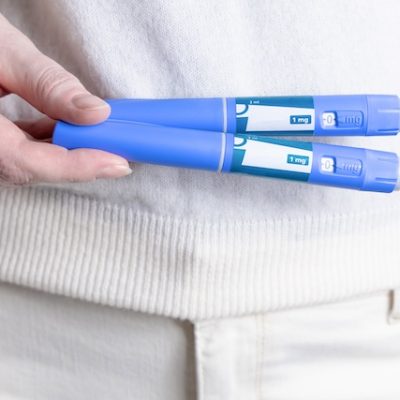
Novo Nordisk’s Amycretin Emerges as a Strong Next-Generation Obesity and Diabetes Candidate in Early and Mid-Stage Trials
Key Takeaways:
- Early and mid-stage studies indicate that amycretin delivers substantial, dose-dependent weight loss in people who are overweight or have obesity, as well as in people with type 2 diabetes.
- Safety findings remain broadly consistent with GLP-1-based agents, with mainly mild to moderate gastrointestinal effects and no weight-loss plateau observed within study periods.
- Novo Nordisk’s new data signal a potentially important successor to semaglutide, strengthening the company’s obesity and diabetes pipeline as it faces patent expirations and competitive pressure from Eli Lilly.
Introduction
A new body of evidence published in The Lancet and released by Novo Nordisk suggests that amycretin, an investigational once-weekly therapy targeting multiple metabolic pathways, may offer clinically meaningful weight reduction and glycaemic improvements in adults who are overweight or have obesity, as well as in adults with type 2 diabetes. The findings come as Novo Nordisk aims to consolidate its leadership in the weight-loss market following concerns about semaglutide’s recent performance in Alzheimer’s trials and increasing competition from Eli Lilly.
Amycretin combines actions on the glucagon-like peptide 1 (GLP-1), amylin, and calcitonin receptors. This multi-pathway design is intended to amplify appetite suppression, slow gastric emptying, and improve metabolic control. Amylin’s role is particularly relevant because it complements GLP-1 signalling, and combining these effects may provide more durable weight management than existing single-pathway therapies.
Background
Obesity affects more than one billion people worldwide and increases the risk of conditions such as cardiovascular disease, type 2 diabetes, non-alcoholic fatty liver disease, and sleep apnoea. Although GLP-1 or GIP receptor agonists have transformed obesity care, many individuals still struggle to meet health goals or encounter diminishing returns over time. Enhancing these therapies with additional hormonal pathways, such as amylin, has been of growing scientific interest.
Amylin, a pancreatic hormone, naturally suppresses appetite, slows digestive transit, and moderates post-meal glucose spikes. When combined with GLP-1 activation, amylin may strengthen satiety signals and support deeper and more sustained weight reduction. Amycretin, a single peptide simultaneously targeting GLP-1, amylin, and calcitonin receptors, represents an effort to leverage these combined mechanisms.
While animal studies have shown potent metabolic effects, the safety, tolerability, and human efficacy of this multi-pathway approach had not been fully established, prompting the recently reported Phase 1b/2a trial and Novo Nordisk’s parallel mid-stage diabetes study.
Phase 1b/2a trial overview (adults who are overweight or have obesity)
Study design
Investigators conducted a five-part, randomised, placebo-controlled Phase 1b/2a trial at a single clinical site in San Antonio, Texas. Eligible adults were aged 18–55 years, had a baseline BMI between 27.0 and 39.9 kg/m², and had no major illnesses such as diabetes. Participants received subcutaneous amycretin or placebo once weekly.
The trial included:
- Part A: Single ascending doses (0.3 mg, 0.6 mg, 1.0 mg).
- Part B: Dose escalation to 60 mg over 36 weeks.
- Part C: Dose escalation to a 20 mg maintenance dose for the final 12 weeks of a 36-week period.
- Part D: Dose escalation to a 5 mg maintenance dose for the final 12 weeks of 28 weeks.
- Part E: Dose escalation to a 1.25 mg maintenance dose for the final 12 weeks of 20 weeks.
Endpoints and monitoring
The primary endpoint was the incidence of treatment-emergent adverse events. Secondary endpoints included:
- Percentage change in body weight
- Pharmacokinetic parameters
- Exploratory metabolic biomarkers (fasting glucose and HbA1c)
Participants had regular laboratory testing, ECG monitoring, and safety assessments. Analyses were adjusted for baseline weight and missing data.
Phase 1b/2a results
Participant characteristics
Between September 2023 and April 2024, the study enrolled 125 adults. A total of 101 received amycretin and 24 received placebo. Baseline BMIs ranged from 30.0 to 33.1 kg/m² across treatment groups, with an overall mean of 33.4 kg/m². Baseline weights ranged from 83.6 kg to 99.1 kg.
Tolerability and discontinuations
Thirty-eight participants receiving amycretin (37%) and four receiving placebo (17%) discontinued the study. Most discontinuations were not related to safety, and investigators noted that placebo discontinuations appeared consistent with a likely nocebo effect.
Treatment-emergent adverse events occurred in 92% of amycretin recipients and 100% of placebo recipients in Parts B–E. Gastrointestinal effects were most common and included:
- Nausea: 82%
- Vomiting: 53%
- Diarrhoea: 41%
These symptoms generally peaked during dose escalation and diminished afterwards. Dysaesthesia rates varied by cohort, ranging from 6% to 29%, and resolved in all but one participant.
One case of mild gallstone pancreatitis occurred during dose escalation in Part C (2.5 mg), later progressing to a serious recurrent episode that ultimately resolved.
No clinically meaningful ECG abnormalities were detected. A transient early rise in heart rate of about 10 bpm resolved without intervention. Antidrug antibodies appeared in 29% of Part B participants and 21% in Part C.
Weight-loss effects
Weight reduction was rapid, dose-dependent, and sustained. Mean percentage weight losses at end of treatment were:
- 60 mg (week 36): 24.3%
- 20 mg (week 36): 22.0%
- 5 mg (week 28): 16.2%
- 1.25 mg (week 20): 9.7%
Placebo groups had much smaller changes: −1.1% (Part B), +1.9% (Part C), +2.3% (Part D), and +2.0% (Part E).
Superiority to placebo emerged by week 4 and continued to widen without evidence of plateau during the maintenance phases. Repeated-measures models produced nearly identical weight-loss estimates.
Metabolic effects
Exploratory findings indicated modest improvements:
- Fasting glucose reductions up to 0.8 mmol/L
- HbA1c reductions of 0.6 percentage points in the highest-dose cohort
Lipid levels and seated blood pressure remained neutral.
Novo Nordisk’s mid-stage trial in type 2 diabetes
In parallel with the early-stage obesity trial, Novo Nordisk announced promising results from a mid-stage study evaluating amycretin in adults with type 2 diabetes who had inadequate glycaemic control with metformin, with or without an SGLT2 inhibitor. The trial included 448 participants and assessed both once-weekly subcutaneous and oral formulations.
Context and competitive landscape
The announcement came one day after Novo Nordisk reported disappointing Alzheimer’s trial results for semaglutide. With patent expirations approaching and rising competition from Eli Lilly’s amylin-based agent eloralintide, analysts are closely watching amycretin’s performance.
Amycretin is widely viewed as a potential “best-in-class” therapeutic candidate. It follows CagriSema, a combination approach which had raised strong expectations but ultimately delivered less weight loss than anticipated in prior studies.
Key findings
- Weight loss:
- Up to 14.5% weight reduction with once-weekly injections over 36 weeks
- Up to 10.1% weight reduction with the oral formulation
- Both routes showed no weight-loss plateau, suggesting the potential for further reduction with longer treatment durations.
- Up to 14.5% weight reduction with once-weekly injections over 36 weeks
- Glycaemic control:
- Statistically significant HbA1c reductions
- Up to 89.1% of participants achieved HbA1c below 7%
- Side-effects were mostly mild gastrointestinal symptoms.
- Statistically significant HbA1c reductions
Novo Nordisk stated it intends to begin late-stage clinical trials in 2026.
Analyst commentary
BMO Capital analyst Evan Seigerman noted that the data represent progress for Novo Nordisk:
“The data, though not enough to completely change the narrative for Novo, marks a step in the right direction for the company.”
Kepler Cheuvreux analyst David Evans commented on amycretin’s broader potential:
“The level of weight-loss seen bodes well not only for its potential in diabetes but also in obesity.”
Morningstar analyst Karen Andersen projected substantial commercial potential, estimating peak annual sales of $8 billion by 2034, split approximately evenly between diabetes and obesity indications, assuming a 2029 launch.
Conclusion
The combined early- and mid-stage data suggest that amycretin may represent a significant development in obesity and diabetes treatment. Its multi-pathway design has shown robust weight-loss effects across populations and the possibility of improved metabolic outcomes. While long-term safety and efficacy need confirmation in Phase 3 trials, amycretin appears positioned as one of Novo Nordisk’s most important next-generation candidates at a time of high strategic importance for the company.