 Obesity Essentials for Nurses
  Behaviour Change Skills: Applying CBT in Practice
Adding Weekly GLP-1 to CBT Further Reduces Heavy Drinking
Key Takeaways:
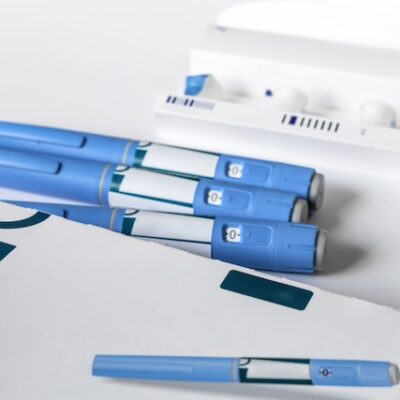
- A new randomised controlled trial found that weekly semaglutide injections combined with cognitive behavioural therapy significantly reduced heavy drinking days in people living with obesity and alcohol use disorder.
- Participants receiving semaglutide experienced a 41.1% reduction in heavy drinking days, which was notably greater than the reduction seen in the placebo group.
- Researchers say the findings add to growing evidence that GLP-1 receptor agonists may have therapeutic potential beyond weight management, including in the treatment of substance use disorders.
Study suggests GLP-1 therapy may help address alcohol use disorder
A team of researchers from the National Institutes of Health (NIH), Copenhagen University Hospital, and international collaborators has reported the first evidence from a randomised controlled clinical trial showing that a GLP-1 receptor agonist may help reduce heavy drinking in people living with both obesity and alcohol use disorder.
The findings, led by researchers at Copenhagen University Hospital, contribute to a growing body of research suggesting that GLP-1 receptor agonists such as semaglutide may have applications beyond obesity and type 2 diabetes treatment, including potential use in substance use disorders.
Alcohol use disorder remains significantly undertreated worldwide, despite its substantial impact on physical health, mental health, and mortality. Current pharmacological treatment options are limited and often underused in clinical practice.
“Very few medications are currently approved for alcohol use disorder, and these are vastly underutilized. A new option that is more accessible and more effective could be a gamechanger for closing the treatment gap,” said Director of NIH’s National Institute on Alcohol Abuse and Alcoholism (NIAAA) George Koob, Ph.D., a study co-author.
Increasing interest in GLP-1s for addiction and substance use disorders
In recent years, researchers have become increasingly interested in the possible role of GLP-1 receptor agonists in addiction medicine.
GLP-1 drugs were originally developed for type 2 diabetes and later became widely used for obesity management due to their effects on appetite regulation, satiety, and weight reduction. However, emerging research has suggested these medications may also influence the brain’s reward pathways and reduce cravings or compulsive behaviours associated with substance use disorders.
Previous studies examining GLP-1 therapies in alcohol use disorder have produced mixed findings. One recent clinical trial found that a GLP-1 receptor agonist did not significantly reduce heavy drinking across the entire study population. However, researchers observed that participants living with obesity appeared to respond particularly well.
The latest study was designed specifically to investigate this subgroup.
Trial focused on people living with both obesity and alcohol use disorder
The research team enrolled 108 treatment-seeking adults living with alcohol use disorder and comorbid obesity.
All participants received standard cognitive behavioural therapy (CBT), which is a commonly used psychological treatment for alcohol use disorder that aims to help people identify and modify harmful thought patterns and behaviours associated with drinking.
Participants were then randomly assigned to receive either:
- Weekly semaglutide injections
- A placebo injection
The intervention lasted for 26 weeks.
Throughout the study period, researchers collected self-reported alcohol consumption data and monitored several quantitative biomarkers associated with alcohol use. These biological measurements were used to support and validate the participants’ reported drinking behaviour.
Semaglutide group experienced larger reduction in heavy drinking
At the end of the study, the researchers found that participants receiving semaglutide experienced a substantial decline in heavy drinking days.
According to the findings:
- The semaglutide group showed a 41.1% reduction in heavy drinking days
- This represented a 13.7% greater reduction compared with the placebo group
Importantly, biomarker data measuring alcohol exposure supported the self-reported reductions in drinking behaviour, strengthening confidence in the results.
Researchers also observed improvements in several cardiometabolic measures among participants receiving semaglutide. As expected based on previous obesity trials, reductions in body weight and blood pressure were more pronounced in the GLP-1 treatment group.
Researchers note mild and temporary side effects
The study authors reported that semaglutide was generally well tolerated.
Some participants experienced adverse effects, primarily gastrointestinal symptoms, which are commonly associated with GLP-1 receptor agonists. However, the researchers noted that these symptoms were generally mild and transient.
No unexpected safety concerns were highlighted in the report.
Potential clinical impact compared with existing medications
The investigators also evaluated the treatment’s number needed to treat (NNT), a standard clinical metric used to estimate how many people need to receive a treatment for one person to benefit.
In this study, semaglutide achieved an NNT of 4.3.
The researchers noted that currently approved medications for alcohol use disorder typically have an NNT of 7 or higher, suggesting semaglutide may potentially produce clinically meaningful benefits more frequently than existing therapies.
While the authors stressed that further research is needed before definitive conclusions can be drawn, the findings are likely to increase interest in GLP-1 therapies as a possible future treatment option for alcohol use disorder.
“We’re beginning to see some of that potential for GLP-1s to treat drug addiction turn into reality. Questions remain but this is nonetheless very encouraging,” said Director of NIH’s National Institute on Drug Abuse (NIDA) and study co-author Nora Volkow, M.D.
Larger and longer studies still needed
Despite the encouraging findings, the researchers emphasised that additional studies will be necessary to confirm the results.
Future research will need to assess:
- Whether the effects persist over longer periods
- How GLP-1 therapies perform in larger and more diverse populations
- Which patient groups are most likely to benefit
- Whether similar effects are seen in people without obesity
The authors stated that they hope to examine the effects of GLP-1 receptor agonists over a longer duration and in larger study populations in future investigations.
The scientific team was led by first author Mette Kruse Klausen, M.D., and corresponding author Anders Fink-Jensen, D.M.Sc., at Copenhagen University Hospital.
CCH insights:
These results are very promising, suggesting GLP-1 medications offer an effective treatment option for some people with obesity and alcohol use disorder (AUD). However, these patients would need careful monitoring in terms of diet and nutrition. People with AUD are susceptible to nutrient deficiencies because they get most of their calories from alcoholic drinks. If they eat less than usual due to appetite suppression induced by GLP-1 therapy, there is a risk of exacerbating these deficiencies.