Carbohydrate-Rich Diets May Promote Weight Gain Even Without Higher Calorie Intake
Key Takeaways:
- A new mouse study found that carbohydrate-rich foods such as bread, wheat flour, and rice flour promoted weight gain and fat accumulation even when total calorie intake did not significantly increase.
- Researchers observed that the weight gain appeared to be linked more closely to reduced energy expenditure and metabolic changes than to overeating.
- Scientists say future human studies will explore how factors such as whole grains, fibre content, food processing, meal timing, and combinations with protein and fat influence metabolic responses to carbohydrates.
Bread and carbohydrates under renewed scrutiny
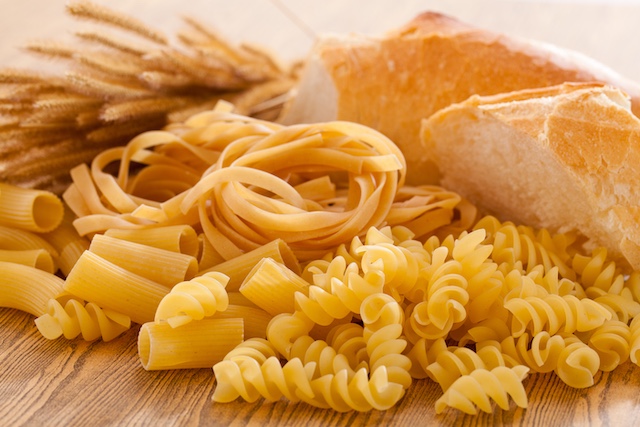
Bread has served as a central part of human diets for centuries and remains a staple food in many cultures around the world. Foods such as bread, rice, noodles, and other carbohydrate-rich staples continue to form the foundation of everyday meals for billions of people.
However, as rates of overweight and obesity continue to increase globally, researchers are re-examining how modern dietary patterns may influence body weight and metabolic health. While high-fat diets have traditionally received much of the attention in obesity research, scientists are now taking a closer look at the role carbohydrates may play in weight regulation.
A new study led by researchers at Osaka Metropolitan University suggests that certain carbohydrate-heavy eating patterns may contribute to weight gain in ways that are not solely explained by consuming more calories.
The findings were published in Molecular Nutrition & Food Research.
Obesity research has traditionally focused on fat intake
Obesity is associated with a broad range of chronic conditions and lifestyle-related diseases, including type 2 diabetes, cardiovascular disease, and metabolic dysfunction. Because of this, understanding the drivers of weight gain has become an increasingly important area of scientific research.
Historically, many obesity studies have focused primarily on dietary fat as the main contributor to excess weight gain. This is reflected in the widespread use of high-fat diets in animal research investigating obesity and metabolism.
At the same time, carbohydrate-rich foods remain deeply embedded in daily diets across the world. Despite their prominence, the metabolic effects of staple carbohydrates such as bread, rice, and noodles have not always been explored in the same depth.
Public perceptions around carbohydrates also remain widespread. Beliefs such as “bread makes you gain weight” or “carbohydrates should be restricted” are common, yet researchers say it has remained unclear whether such effects are driven by the foods themselves, overall dietary habits, eating behaviour, or broader metabolic responses.
Researchers investigated how carbohydrate-rich foods affect metabolism
To better understand the relationship between carbohydrates and weight gain, researchers led by Professor Shigenobu Matsumura at Osaka Metropolitan University’s Graduate School of Human Life and Ecology conducted a series of experiments in mice.
The study examined whether mice would preferentially select carbohydrate-rich foods over standard laboratory chow and how those dietary choices would affect body weight, metabolism, and energy expenditure.
The mice were separated into several dietary groups, including:
- Chow
- Chow + Bread
- Chow + Wheat Flour
- Chow + Rice Flour
- High-fat diet (HFD) + Chow
- High-fat diet (HFD) + Wheat Flour
Researchers monitored multiple metabolic indicators throughout the study, including:
- Body weight
- Fat mass
- Energy expenditure
- Blood metabolites
- Liver gene activity
Mice preferred carbohydrate-rich foods
The researchers found that mice consistently showed a strong preference for carbohydrate-rich foods. Animals given access to bread, wheat flour, or rice flour largely abandoned their standard chow diet in favour of these carbohydrate sources.
Importantly, the researchers reported that overall calorie intake did not increase substantially despite this dietary shift. Nevertheless, mice consuming the carbohydrate-rich diets still experienced increases in body weight and fat mass.
Rice flour produced similar effects to wheat flour, suggesting the observed metabolic changes were not specific to wheat itself.
Interestingly, mice in the High-fat diet (HFD) + Wheat flour group gained less weight than those in the High-fat diet (HFD) + Chow group, indicating that the interaction between fat and carbohydrate intake may be more complex than previously assumed.
“These findings suggest that weight gain may not be due to wheat-specific effects, but rather to a strong preference for carbohydrates and the associated metabolic changes,” said Professor Matsumura.
Reduced energy expenditure appeared to play a key role
To investigate why the mice gained weight without substantially increasing calorie intake, the researchers carried out further metabolic analysis using indirect calorimetry and respiratory gas measurements.
The findings suggested that the weight gain was not primarily caused by overeating. Instead, the animals appeared to experience reduced energy expenditure, meaning they were burning fewer calories.
Researchers also identified several metabolic changes in the mice consuming the carbohydrate-rich diets.
Blood analysis showed:
- Increased fatty acid levels
- Reduced levels of essential amino acids
Meanwhile, examination of the liver revealed:
- Greater fat accumulation
- Increased activity of genes involved in fatty acid synthesis
- Increased activity of genes associated with lipid transport
Together, these findings suggest that carbohydrate-heavy dietary patterns may alter how the body processes and stores energy.
Metabolic changes improved when carbohydrates were reduced
The researchers also observed that removing wheat flour from the diet rapidly improved both body weight and several metabolic abnormalities.
According to the authors, this finding suggests that moving away from a highly carbohydrate-focused dietary pattern and towards a more balanced eating pattern may help improve metabolic regulation.
However, the researchers emphasised that additional work is needed to determine how these findings translate to human diets and real-world eating behaviour.
Future studies will explore human dietary patterns
The research team says the next phase of investigation will focus on understanding whether similar metabolic effects occur in people.
“Going forward, we plan to shift our research focus to humans to verify the extent to which the metabolic changes identified in this study apply to actual dietary habits,” stated Professor Matsumura.
“We also intend to investigate how factors such as whole grains, unrefined grains, and foods rich in dietary fiber, as well as their combinations with proteins and fats, food processing methods, and timing of consumption, affect metabolic responses to carbohydrate intake. In the future, we hope this will serve as a scientific foundation for achieving a balance between ‘taste’ and ‘health’ in the fields of nutritional guidance, food education, and food development.”
The researchers noted that future studies examining food quality, fibre content, food combinations, and meal timing may help provide a more nuanced understanding of how carbohydrates influence metabolism and body weight.