[email protected]

+44 (0)20 3773 4895

logologologo
  • About Us
    • The College
    • Advisory Board
    • Our Faculty and Team
    • Intelligence Hub
  • Topic Areas
    • Obesity Care
    • Digital Health
    • Behaviour Change
  • Courses
    • CPD Short Courses
    • PGCert in Obesity Care
    • PGCert in Digital Health
  • Apply
    • Postgraduate Qualification in Obesity Care
    • Postgraduate Qualification in Digital Health
    • FAQs
  • Resources
    • News
    • Our Publications
    • Monthly News Bulletins
    • Funding Options
  • Contact Us
    • Contact Us
  • Student Login

No products in the cart.

logologologo
  • About Us
    • The College
    • Advisory Board
    • Our Faculty and Team
    • Intelligence Hub
  • Topic Areas
    • Obesity Care
    • Digital Health
    • Behaviour Change
  • Courses
    • CPD Short Courses
    • PGCert in Obesity Care
    • PGCert in Digital Health
  • Apply
    • Postgraduate Qualification in Obesity Care
    • Postgraduate Qualification in Digital Health
    • FAQs
  • Resources
    • News
    • Our Publications
    • Monthly News Bulletins
    • Funding Options
  • Contact Us
    • Contact Us
  • Student Login

No products in the cart.

  • About Us
    • The College
    • Advisory Board
    • Our Faculty and Team
    • Intelligence Hub
  • Topic Areas
    • Obesity Care
    • Digital Health
    • Behaviour Change
  • Courses
    • CPD Short Courses
    • PGCert in Obesity Care
    • PGCert in Digital Health
  • Apply
    • Postgraduate Qualification in Obesity Care
    • Postgraduate Qualification in Digital Health
    • FAQs
  • Resources
    • News
    • Our Publications
    • Monthly News Bulletins
    • Funding Options
  • Contact Us
    • Contact Us
  • Student Login
February 4, 2016 by Nigel Hinchliffe Obesity Care 0 comments

Water jets fight childhood obesity

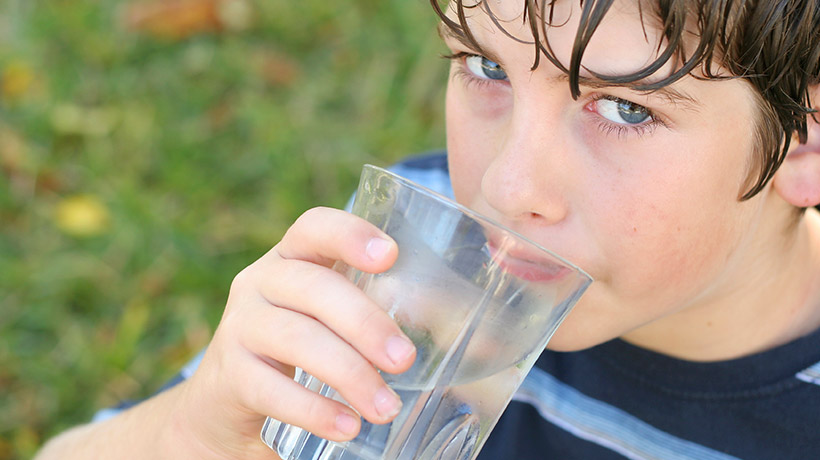
The installation of water dispensers in schools is associated with a decreased weight of students. A recent study conducted across 1,227 elementary and middle schools (ages 4-13), including 1,065,562 students in New York City, found that this relatively low-cost intervention has the potential to have great health effects on the children. In 2009, New York City’s Department of Health and Mental Hygiene and Department of Education collaborated to introduce ‘water jets’ into schools. The aim of which was to decrease the volume of high calorie beverages that the children consume and promote water consumption, thereby becoming an intervention against childhood obesity.

The researchers compared the BMI of students before and after the introduction of the water jets and found that, after a 3-month period, BMI in both boys and girls was slightly, but significantly, lowered. The authors hypothesised that the availability of water meant that fewer students would bring in high calorie beverages that may contribute to weight problems. Just under 40% of the children in New York City are classed as being overweight or obese so the city has adopted policies that aim to reduce this number. This intervention could offer a cheap and effective avenue for these policies. However, the researchers do admit that more research will need to be done in order to discover the mechanism behind the effect, although in their study they showed less milk was purchased.

Read more

Picture from Healthnewsline

PREV
NEXT

Related Posts

Rye in a field
February 23, 2022
Can rye help reduce weight and obesity?
Read More
November 9, 2016
GPs should not be afraid to recommend weight loss programmes
Read More
October 10, 2018
Eating faster is associated with general and abdominal obesity among Chinese children
Read More
Smoke in the air
May 31, 2023
Increased risk of obesity and high blood sugar in children linked to prenatal cannabis exposure
Read More

CCH LINKS

FAQ
HOW TO APPLY
ACADEMIC ADVISORY BOARD
FACULTY AND STAFF
TERMS & CONDITIONS
CCH EDUCATION SERVICES

OUR PARTNERS

NOF
Haringey Obesity Alliance
Skills Active
CPD UK
ASO
REPS
Southwark
DIT
Healthcare Uk
OAC

ABOUT CCH

CONTACT US
[email protected]
+44 (0)20 3773 4895
Technopark, 90 London Road, LONDON, SE1 6LN
 

© The College of Contemporary Health