Growing Use of Emojis in Electronic Health Records Raises Safety Questions
Key Takeaways:
- Emoji use in electronic health records has increased steadily between 2020 and 2025, appearing in thousands of clinical notes.
- While emojis may offer a quicker, more expressive way to communicate, they introduce risks of misinterpretation across clinicians and patients.
- Experts suggest that clearer governance and guidance may be needed to ensure safe and consistent use in clinical documentation.
Study reveals growing presence of emojis in clinical records
A recent study from Michigan Medicine, published on 14 January, examined 218.1 million clinical notes from the electronic health records of 1.6 million people receiving care. The findings revealed a notable rise in emoji usage by both healthcare professionals and patients between January 2020 and September 2025.
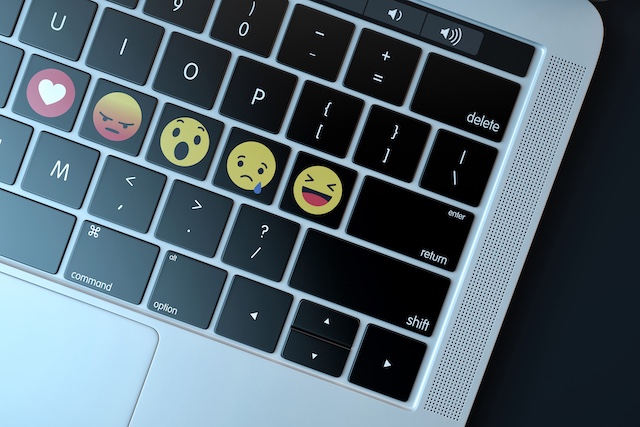
Across all records analysed, researchers identified 372 unique emojis appearing in 4,162 notes. While this represents a small proportion of total documentation, the upward trend signals a shift in how digital communication is entering clinical environments.
David Hanauer, clinical associate professor of paediatrics and learning health science at Michigan Medicine, explained that the study was initially driven by simple curiosity.
“It was mostly out of interest, just trying to explore if anything was there at all,” Hanauer said. “Our understanding had been that emojis and other symbols are actually not supposed to be used in a medical record, so we were wondering: Were there any there at all, and how often were they being used, and which ones?”
Concerns around clarity and misinterpretation
Despite their increasing use, emojis raise important concerns about clarity in clinical communication. Hanauer highlighted that the ambiguity of many emojis could lead to misunderstanding.
“Most of the concerns that people have is that it’s hard to understand from an emoji what is being conveyed,” Hanauer said. “Maybe a smiley face is pretty obvious to most people, but there’s a lot of different faces with nuances and other symbols. I think there can be a lot of miscommunication, misinterpretation.”
The issue becomes more complex when considering variation in interpretation across different groups of people receiving care and healthcare professionals.
Kim Ford, a health information business systems analyst lead at Michigan Medicine, emphasised how generational differences may influence understanding.
“If you have older patients who may not be familiar with emojis, it’s almost like a foreign language to them,” Ford said. “(For) our younger generation – or those people that have grown up with technology – it’s a second language for them that they understand very well. That’s my biggest concern.”
Accessibility challenges for some people receiving care
Beyond interpretation, accessibility presents another potential barrier. Hanauer noted that small visual symbols may be difficult for some individuals to distinguish clearly, particularly those with visual impairments.
“For older people, having small emojis might actually be hard for them to see and make out, so they might see its face but they can’t tell what the specific expression is,” Hanauer said. “I think we found over 300 different kinds of emojis being used. That’s a lot of different symbols that people would have to understand what they mean.”
This highlights a broader concern that even seemingly simple visual cues may not be universally interpretable or accessible.
Potential implications for patient care
A key concern raised by the study is whether emoji misinterpretation could affect clinical outcomes. While there is currently no direct evidence linking emoji use to adverse outcomes, the possibility remains.
“We hope that doesn’t happen, but I think because of that concern, there’s probably going to be a little bit more oversight,” Hanauer said. “I don’t think we would easily be able to find a circumstance in which there was actually some sort of better or negative outcome from an emoji being misinterpreted.”
The absence of clear evidence does not eliminate the risk, particularly in high-stakes environments where precise communication is essential.
Balancing efficiency with professionalism
Some healthcare professionals recognise potential benefits in using emojis, particularly in reducing communication burden within electronic systems. However, concerns remain about maintaining professionalism and objectivity.
Leah Beel, a medical assistant at American Family Care in Ann Arbor, expressed reservations about their place in formal documentation.
“From my experience, EHRs are used to get quick information and try to communicate with each other in a fast and reliable way,” Beel said. “The only thing I would use is an exclamation point, which, even then, is kind of out there. It’s a good thing that emojis can show enthusiasm or certain reactions, but I also think to a degree – it’s not unprofessional but just someone might take it the wrong way. My perspective on EHR is that you write very objectively.”
In contrast, Elizabeth Rossmann Beel, a paediatric anaesthesiologist at Texas Children’s Hospital, noted that emojis may offer a more efficient way to communicate in certain contexts.
“It’s a way to react to something without putting as much effort into it, or into making that person who’s reading it feel like they need to reply,” Rossmann Beel said. “I think it can cut down a little bit on the burden of replying to and responding to messages in the EHR, which is nice. However, it’s definitely more casual, and so sometimes that’s not the best tone to be setting in a medical record.”
The case for governance and standardisation
Given the growing use of emojis, there is increasing interest in whether formal guidance or regulation should be introduced.
Ford suggested that healthcare organisations may need to consider structured governance around emoji use.
“Maybe emojis are an acceptable means of communication,” Ford said. “The other piece is, should there be a governance process around what emojis can be used? And in what situations? I need to think a little bit about what their structure might look like – what department should be involved in reviewing and approving those, what should be the process to submit an emoji for consideration for use? There’s a lot of pieces to the governance process that need to be figured out there.”
A shift in digital communication within healthcare
The findings from this study reflect a broader evolution in digital communication, where informal elements are beginning to intersect with traditionally formal systems such as electronic health records.
While emojis may offer efficiency and emotional nuance, their integration into clinical documentation raises important questions about clarity, accessibility, professionalism, and patient safety. As their use continues to grow, healthcare systems may need to balance flexibility with standardisation to ensure communication remains precise, inclusive, and clinically appropriate.