Life After Cancer: New Digital System Aims to Support Young People Living With the Late Effects of Treatment
Key Takeaways:
- The late effects of cancer treatment can emerge months or even years later and may include cardiovascular disease, infertility, chronic fatigue, and psychological, cognitive and socioeconomic difficulties – often at a formative stage of a young person’s life.
- The Horizon Europe-funded LATE-AYA project (2025–2030) is developing an AI-based digital phenotyping system using smartphones and wearable devices to provide personalised follow-up support to young people who have survived cancer.
- People with lived experience of cancer are helping to design the technology from the outset, so that it reduces anxiety rather than adding to it and remains connected to real healthcare.
When treatment ends but the story continues
For a young person, completing cancer treatment can mark a long-awaited return to education, work, relationships and plans for a family. Medically, however, the story does not always end there, as the late effects of cancer treatment may emerge months or even years later.
This challenge was at the centre of the European webinar “Not the End of the Story: Understanding Late Effects of Cancer Treatment in AYA Cancer Survivors,” where researchers, healthcare professionals and patient advocates discussed life after cancer for adolescents and young adults (AYA). The moderator, cardiologist Dr Miha Bogdan of the Medical University of Gdańsk, highlighted that late effects may include not only cardiovascular disease and fertility problems, but also anxiety, depression, cognitive difficulties, and social and occupational challenges.
Professor Asta Pundzienė of Kaunas University of Technology (KTU) presented the international LATE-AYA project, which is exploring how artificial intelligence, smartphones and wearable devices could offer more personalised support to young people after cancer.
Surviving cancer is not the end of the story
Cure rates among children and adolescents can reach around 80 per cent, and as the number of people who have survived cancer grows, so does the question of what happens to their health five, ten or twenty years later. Late effects can include cardiovascular disease, metabolic and endocrine disorders, infertility, chronic fatigue, and psychological and cognitive difficulties – often emerging while young people are studying, starting careers, building relationships or planning a family.
“Alongside cardiovascular, endocrine and fertility problems or chronic fatigue, there can be nutritional, cognitive, psychological and socioeconomic consequences that affect a person’s everyday life. These are no less important than the physiological difficulties that may follow active cancer treatment,” Professor Pundzienė said.
The most difficult period may be between appointments
Paradoxically, one of the hardest stages may begin once active treatment ends. Regular tests and appointments give way to less frequent contact, leaving individuals to judge for themselves whether a new symptom is harmless or a sign of something more serious.
“After active treatment is completed, cancer survivors may feel left alone because their next appointment may be a month away. Every runny nose or pain can be experienced much more intensely by someone who has had cancer than by someone without that experience,” Professor Pundzienė explained.
Care also becomes fragmented, with people moving from a single oncologist to a general practitioner, cardiologist, psychologist and other specialists. Patient advocate and psychologist Katiana Maloli, herself a cancer survivor, described learning only many years after treatment that she needed regular cardiac check-ups because of the potential cardiotoxic effects of her therapy. People in her position, she argued, are often expected to manage their long-term health without enough information to do so confidently.
Can a smartwatch help doctors provide better follow-up care?
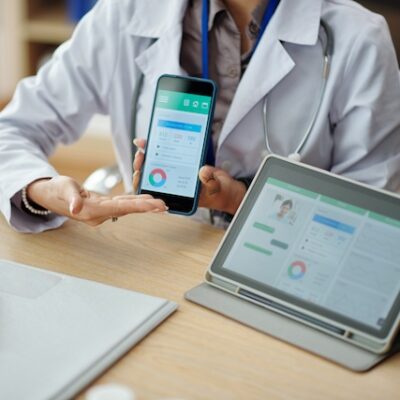
Running from 2025 to 2030, LATE-AYA aims to develop an AI-based digital phenotyping system that brings together everyday data from smartphones and wearable devices to understand changes in a person’s physical, psychological and social well-being. The project involves 19 organisations, including KTU and Lithuania’s National Cancer Institute, and is coordinated by the Technical University of Madrid.
“Our first goal is to empower cancer survivors through a personalized digital follow-up environment and to improve their quality of life by helping them manage the late effects of treatment,” said Professor Pundzienė.
The approach combines smart sensing, AI-driven risk prediction, a chatbot, coaching and education, and the platform will be tested using prospective data from smartwatches and smartphones. Crucially, researchers are not starting with the question “What can AI do?” but rather “What do survivors actually need?”
For healthcare professionals keen to understand how tools such as AI-driven risk prediction and chatbots are beginning to shape patient care, The College of Contemporary Health’s AI Essentials for Primary Care course offers a practical grounding in how artificial intelligence is being applied in clinical settings.
Health monitoring should not become another source of anxiety
For someone who has already experienced cancer, constant health alerts could increase anxiety rather than reduce it. LATE-AYA therefore began with focus groups across Europe, asking young people who had survived cancer what support they actually need. The findings revealed a clear need to bridge the information gap between appointments.
“Sometimes a person feels pain and immediately wants to know: could this be related to a recurrence, or is it simply a virus? Having an answer could make them feel more secure and reduce anxiety. We hope the LATE-AYA system will be able to help with these seemingly small but very important questions that arise when survivors are on their own and do not have structured support from the healthcare system,” Professor Pundzienė said.
The aim is not to turn people into constant self-monitors, but to provide reassurance, help them understand when a change matters and guide them towards professional support when needed.
People with lived experience are helping to design the technology
Cardiologist Dr Amelia Stepnowska, presenting the MAYA project, argued that effective digital follow-up should be understandable, actionable and connected to real healthcare, helping to identify when human support is needed rather than replacing clinicians. LATE-AYA follows the same principle, and its development began with living labs and focus groups in which people with lived experience of cancer shaped ideas for the system.
Katiana Maloli went further, arguing that involving patients should not be a “tick-box” exercise. People with lived experience, she said, should be involved from the earliest stages to help determine whether a solution is understandable, practical and genuinely relevant.
Lithuania’s role and the future of survivorship care
LATE-AYA is a Horizon Europe project with a budget of more than €6.2 million. Professor Pundzienė leads KTU’s contribution, while a National Cancer Institute team with experience in wearable device research – including Dr Edita Baltruškevičienė, Assoc. Prof. Dr Audrius Dulskas and Dr Jonas Venius – also takes part, meaning Lithuania is helping to develop and evaluate new digital health approaches, not simply use them.
As more young people survive cancer, success can no longer be measured by survival alone. It also depends on whether people can return to education and work, build relationships, understand their long-term health risks and know where to seek help. Digital medicine may help maintain the connection between patient and doctor between appointments – because cancer treatment may end, but life after cancer continues.
CCH insight
Projects such as LATE-AYA show how quickly AI, wearable technology and digital follow-up are moving from research into real-world care. As these tools develop, healthcare professionals will increasingly be asked to interpret AI-generated insights, recognise their limitations and help people use them safely alongside clinical support.
Build your confidence in this fast-moving area with AI Essentials for Primary Care from The College of Contemporary Health – a CPD course designed to help clinicians understand the role of artificial intelligence in everyday practice.
Explore AI Essentials for Primary Care today →
Source: Kaunas University of Technology (KTU)