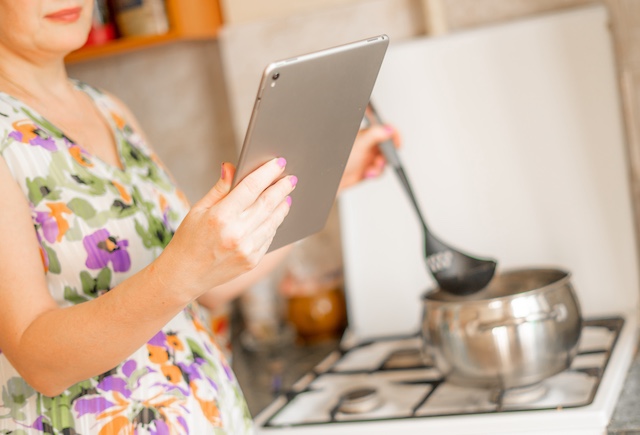
Remote Culinary Coaching Shows Sustained Weight Loss Benefits in Adults with Overweight and Obesity
Key Takeaways:
- A fully remote culinary medicine programme combining cooking and health coaching led to sustained weight loss over 12 months
- Participants experienced significant fat mass reduction without loss of lean body mass
- Improvements in diet quality, calorie intake, and cooking confidence were observed alongside weight changes
Study overview
A recent randomised controlled trial has found that a fully remote culinary medicine intervention can support meaningful and sustained weight loss in people living with overweight and stage I obesity. The programme combined practical cooking education with health coaching, offering a patient-centred approach to improving dietary behaviours and long-term health outcomes.
Conducted across two hospitals between May 2019 and September 2022, the study examined the one-year impact of this combined intervention on weight, body composition, and dietary habits.
Methodology
Participant characteristics
The study included 50 adults with overweight or stage I obesity. Participants had a mean age of 47.5 years, and 70% were female. The average body mass index was 30.7, with a mean total fat mass of 40.37%. All participants reported cooking fewer than five meals at home per week at baseline.
Intervention design
All participants initially received two nutrition education sessions focused on the Mediterranean diet. Following this, they were randomly assigned to one of two groups:
- Intervention group: Participants took part in a structured culinary coaching programme consisting of 12 weekly one-to-one tele-sessions, each lasting 30 minutes. These sessions integrated culinary skills training with health coaching principles and provided access to culinary medicine resources.
- Control group: Participants were given access to the same culinary medicine resources but did not receive coaching sessions
Outcome measures
Researchers assessed a range of clinical and behavioural outcomes at baseline, and again at 3, 6, and 12 months within a hospital clinical research setting:
- Body weight and height were measured by a registered dietitian
- Body composition was analysed using dual-energy X-ray absorptiometry (DEXA)
- Dietary intake was calculated using 4-day food records reviewed by a registered dietitian
- Diet quality was evaluated using a 14-item Mediterranean diet assessment tool
- Culinary attitudes and self-efficacy were measured using a validated questionnaire
The primary outcome was change in body weight at 6 months, with secondary outcomes including dietary intake, body composition, and behavioural measures.
Weight loss outcomes
Participants in the culinary coaching group achieved significantly greater weight loss compared with the control group at all measured time points:
- 3 months: -3.23% vs -0.71% (between-group difference -2.52; P = .016)
- 6 months: -4.2% vs -1.22% (between-group difference -2.98; P = .027)
- 12 months: -4.02% vs a weight gain of 0.28% (between-group difference -4.30; P = .021)
These findings indicate that the intervention not only supported early weight loss but also helped sustain these changes over a full year.
Changes in body composition
At 6 months, participants receiving culinary coaching demonstrated favourable changes in body composition:
- Average fat mass decreased by 1.86% in the intervention group
- In contrast, the control group experienced a slight increase in fat mass of 0.11%
- The between-group difference was 1.96 (P = .039)
Importantly, these reductions in fat mass occurred without any significant changes in lean body mass, suggesting that weight loss was primarily driven by fat reduction rather than muscle loss.
Dietary improvements
The intervention also led to measurable improvements in diet quality and energy intake:
- At 3 months, Mediterranean diet scores increased by 2 points in the intervention group compared with 0.38 points in the control group (net difference 1.62; P = .020)
- At 6 months, daily calorie intake decreased by 452 calories in the intervention group compared with 62.4 calories in the control group (net difference 390 calories; P = .015)
These findings suggest that the programme successfully influenced both food choices and overall energy consumption.
Behavioural and skill-based outcomes
Participants who received culinary coaching reported significant improvements in their confidence and ability to prepare meals:
- Self-efficacy in cooking techniques and meal preparation improved significantly at 12 months in the intervention group compared with the control group (P = .040)
No serious adverse events were reported during the study, indicating that the intervention was safe and well tolerated.
Interpretation and clinical relevance
The study authors highlighted the broader significance of these findings, stating:
“This study is an important step in considering CM [culinary medicine] interventions as an effective patient-centered nutrition strategy for weight loss.”
This suggests that combining practical cooking skills with behavioural coaching may offer a scalable and effective approach to supporting people living with overweight and obesity, particularly in remote or resource-limited settings.
Limitations
The study has several limitations, many of which were influenced by the COVID pandemic:
- High dropout rates after the first visit may have introduced attrition bias
- Some follow-up visits were conducted remotely, requiring participants to self-measure body weight
- Remote assessments limited the ability to collect body composition and other clinical data at certain time points
- Pandemic-related restrictions may have affected participants’ ability to cook at home
These factors should be considered when interpreting the findings.
Funding and disclosures
The study was led by Rani Polak at Harvard Medical School and Spaulding Rehabilitation Hospital in Boston and was published in Obesity.
Funding was provided by the US-Israel Binational Science Foundation and the National Institutes of Health Clinical Center. One author reported receiving royalties from a home cooking book and an honorarium from Wellcoaches.