[email protected]

+44 (0)20 3773 4895

logologologo
  • About Us
    • The College
    • Advisory Board
    • Our Faculty and Team
    • Intelligence Hub
  • Topic Areas
    • Obesity Care
    • Digital Health
    • Behaviour Change
  • Courses
    • CPD Short Courses
    • PGCert in Obesity Care
    • PGCert in Digital Health
  • Apply
    • Postgraduate Qualification in Obesity Care
    • Postgraduate Qualification in Digital Health
    • FAQs
  • Resources
    • News
    • Our Publications
    • Monthly News Bulletins
    • Funding Options
  • Contact Us
    • Contact Us
  • Student Login

No products in the cart.

logologologo
  • About Us
    • The College
    • Advisory Board
    • Our Faculty and Team
    • Intelligence Hub
  • Topic Areas
    • Obesity Care
    • Digital Health
    • Behaviour Change
  • Courses
    • CPD Short Courses
    • PGCert in Obesity Care
    • PGCert in Digital Health
  • Apply
    • Postgraduate Qualification in Obesity Care
    • Postgraduate Qualification in Digital Health
    • FAQs
  • Resources
    • News
    • Our Publications
    • Monthly News Bulletins
    • Funding Options
  • Contact Us
    • Contact Us
  • Student Login

No products in the cart.

  • About Us
    • The College
    • Advisory Board
    • Our Faculty and Team
    • Intelligence Hub
  • Topic Areas
    • Obesity Care
    • Digital Health
    • Behaviour Change
  • Courses
    • CPD Short Courses
    • PGCert in Obesity Care
    • PGCert in Digital Health
  • Apply
    • Postgraduate Qualification in Obesity Care
    • Postgraduate Qualification in Digital Health
    • FAQs
  • Resources
    • News
    • Our Publications
    • Monthly News Bulletins
    • Funding Options
  • Contact Us
    • Contact Us
  • Student Login
December 29, 2015 by Nigel Hinchliffe Obesity Care 0 comments

Father’s sperm influence children’s weight

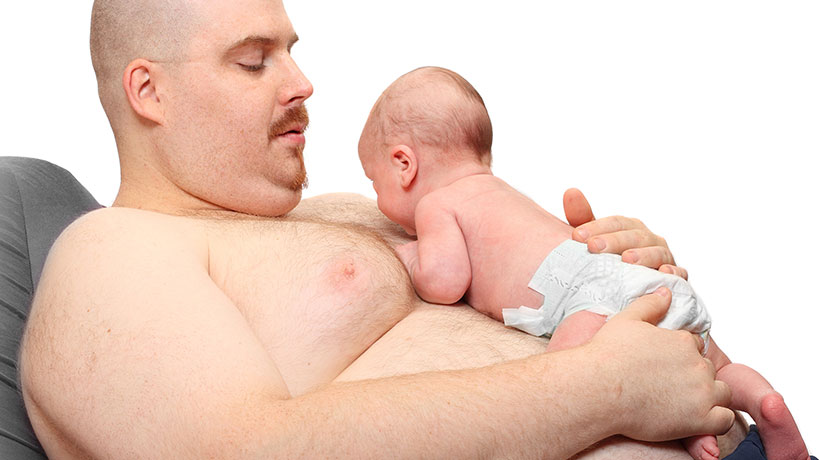
Information about the weight of a potential father that’s carried in sperm could influence his child’s health. Researchers from the Novo Nordisk Foundation Center for Basic Metabolic Research conducted a study that compared the epigenetic patterns in a group of lean men to a group of obese men. Epigenetics refers to heritable changes in gene expression caused by environmental factors without changing the underlying DNA sequence. They found that the two groups possessed different epigenetic patterns in their sperm with regards to genes involved in controlling appetite. The results are considered to offer an explanation as to why the children of obese fathers are likely to become obese themselves.

The discovery that weight loss in potential fathers could affect behaviour in their offspring is very exciting. It paves the way for new prevention strategies for childhood obesity. In the last bulletin we reported that the weight of mothers to be could also influence the health of a child so, coupled with this new information, it is clear that the behaviours of couples pre-conception could be very important in the future health of their children.

Read more

PREV
NEXT

Related Posts

Woman with obesity sitting on a bed.
June 27, 2023
Study reveals obesity as a precursor to mental disorders across all ages
Read More
January 12, 2016
Is there a need to redefine BMI cut offs for overweight and obesity?
Read More
November 30, 2015
Bariatric surgery has lasting health benefits for teens
Read More
Man sitting on the floor by himself looking lonely.
October 3, 2025
Many People with Severe Obesity Face Medical Discrimination, Study Finds
Read More

CCH LINKS

FAQ
HOW TO APPLY
ACADEMIC ADVISORY BOARD
FACULTY AND STAFF
TERMS & CONDITIONS
CCH EDUCATION SERVICES

OUR PARTNERS

NOF
Haringey Obesity Alliance
Skills Active
CPD UK
ASO
REPS
Southwark
DIT
Healthcare Uk
OAC

ABOUT CCH

CONTACT US
[email protected]
+44 (0)20 3773 4895
Technopark, 90 London Road, LONDON, SE1 6LN
 

© The College of Contemporary Health