[email protected]

+44 (0)20 3773 4895

logologologo
  • About Us
    • The College
    • Advisory Board
    • Our Faculty and Team
    • Intelligence Hub
  • Topic Areas
    • Obesity Care
    • Digital Health
    • Behaviour Change
  • Courses
    • CPD Short Courses
    • PGCert in Obesity Care
    • PGCert in Digital Health
  • Apply
    • Postgraduate Qualification in Obesity Care
    • Postgraduate Qualification in Digital Health
    • FAQs
  • Resources
    • News
    • Our Publications
    • Monthly News Bulletins
    • Funding Options
  • Contact Us
    • Contact Us
  • Student Login

No products in the cart.

logologologo
  • About Us
    • The College
    • Advisory Board
    • Our Faculty and Team
    • Intelligence Hub
  • Topic Areas
    • Obesity Care
    • Digital Health
    • Behaviour Change
  • Courses
    • CPD Short Courses
    • PGCert in Obesity Care
    • PGCert in Digital Health
  • Apply
    • Postgraduate Qualification in Obesity Care
    • Postgraduate Qualification in Digital Health
    • FAQs
  • Resources
    • News
    • Our Publications
    • Monthly News Bulletins
    • Funding Options
  • Contact Us
    • Contact Us
  • Student Login

No products in the cart.

  • About Us
    • The College
    • Advisory Board
    • Our Faculty and Team
    • Intelligence Hub
  • Topic Areas
    • Obesity Care
    • Digital Health
    • Behaviour Change
  • Courses
    • CPD Short Courses
    • PGCert in Obesity Care
    • PGCert in Digital Health
  • Apply
    • Postgraduate Qualification in Obesity Care
    • Postgraduate Qualification in Digital Health
    • FAQs
  • Resources
    • News
    • Our Publications
    • Monthly News Bulletins
    • Funding Options
  • Contact Us
    • Contact Us
  • Student Login
August 2, 2017 by Nigel Hinchliffe Obesity Care 0 comments

Immune cells in brain drive overeating

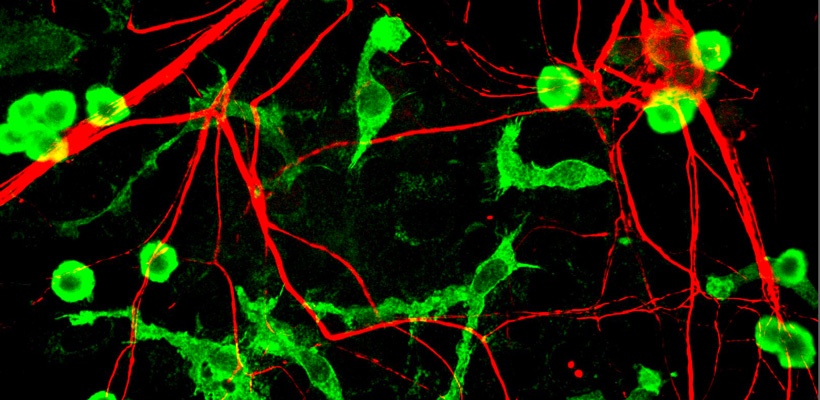
A study, from the University of California in San Francisco, has found that immune cells within the brain, known as microglia, could be responsible for weight gain caused by overeating. It has been known for some time that the hypothalamus contains neurons that regulate food intake and energy expenditure; in this study the researchers fed mice a high fat diet which is known to cause an increase in microglia. It was found that the high fat diet caused local inflammation within the hypothalamus, when compared to the control group of mice. They also found that the mice who had been fed high fat foods continued to consume more afterwards.

In order to prove that the increase in microglia was the cause of the overeating, some of the mice were given a drug that depleted their levels of the cell. They found that mice treated with the drug consumed 15% less and gained 20% less weight, compared to mice on the same diet. Mice were then engineered to form microglia that couldn’t mount an inflammatory response and they gained 40% less weight, suggesting that the effect of microglia could be crucial in our understanding of the development of obesity. The researchers are hoping to move their study on to humans in the near future to properly examine the effect of microglia on overeating and obesity and potentially help control them. In the immediate future they are going to investigate how the consumption of high-fat foods leads to the activation of microglia, and whether there is any way to stop these signals from being processed.


PREV
NEXT

Related Posts

A blue DNA helix.
January 15, 2026
Genetic Links Between Obesity and Autoimmune Diseases Identified in Large European Study
Read More
October 26, 2016
Preventing childhood obesity must start before conception
Read More
Man wrapping his hands before exercise.
May 15, 2024
Poor muscle health in Individuals with obesity increases risk of early death, study finds
Read More
childhood-obesity
October 27, 2016
Obesity linked conditions in children projected to rise
Read More

CCH LINKS

FAQ
HOW TO APPLY
ACADEMIC ADVISORY BOARD
FACULTY AND STAFF
TERMS & CONDITIONS
CCH EDUCATION SERVICES

OUR PARTNERS

NOF
Haringey Obesity Alliance
Skills Active
CPD UK
ASO
REPS
Southwark
DIT
Healthcare Uk
OAC

ABOUT CCH

CONTACT US
[email protected]
+44 (0)20 3773 4895
Technopark, 90 London Road, LONDON, SE1 6LN
 

© The College of Contemporary Health