

Reducing Parental Stress May Help Lower Childhood Obesity Risk, Yale Study Suggests
Key Takeaways:
- A Yale study suggests that reducing parental stress may play an important role in lowering obesity risk in young children.
- Parents who took part in a mindfulness-based stress management programme showed improvements in parenting behaviours and children’s eating habits.
- Children whose parents received the stress-focused intervention were less likely to gain excess weight during follow-up compared with those receiving standard nutrition advice alone.
Childhood obesity continues to rise
Childhood obesity has been increasing in recent years and remains a major public health concern. According to the U.S. Centers for Disease Control and Prevention, approximately one in five children and adolescents in the United States met the clinical definition of obesity in 2024.
Efforts to prevent obesity in children have traditionally focused on encouraging healthier diets and increasing levels of physical activity. However, new research from Yale University suggests that another factor may also be important in shaping children’s health outcomes – parental stress.
A research team led by psychologist Rajita Sinha has found evidence that helping parents manage stress more effectively may reduce obesity risk among young children. The findings were published in the journal Pediatrics.
“It’s the third leg of the stool,” said Sinha. “We already knew that stress can be a big contributor in the development of childhood obesity. The surprise was that when parents handled stress better, their parenting improved, and their young child’s obesity risk went down.”
How parent stress may influence children’s health
Previous research has shown that children are more likely to develop obesity if their parents are living with obesity. However, scientists have increasingly suspected that psychological and environmental factors within families may also influence early childhood weight gain.
Parental stress has emerged as one such potential contributor.
Studies suggest that parents experiencing high levels of stress may be more likely to rely on convenient or fast-food options and less nutritious dietary patterns. These habits can influence the types of foods available in the home and shape children’s developing eating behaviours.
Stress can also affect broader family routines. When parents feel overwhelmed, regular meal patterns may become disrupted, healthier foods may be replaced with more convenient alternatives, and positive parenting behaviours may decline. Reduced patience, decreased emotional responsiveness, and less consistent family structure may all affect children’s wellbeing.
Despite these insights, most childhood obesity prevention programmes continue to focus primarily on nutrition education and physical activity promotion.
According to Sinha, these approaches alone often fail to produce long-lasting behavioural change.
Equipping practitioners with the skills to support lasting change – rather than just deliver initial advice – is the focus of professional training such as the College of Contemporary Health’s Behaviour Change short course, which draws on techniques from psychology and behavioural science.
Sinha is the Foundations Fund Professor in Psychiatry and a professor in neuroscience and child study at Yale School of Medicine.
A randomised trial examining stress reduction
To better understand the potential role of parental stress, the research team conducted a 12-week randomised prevention trial involving 114 parents.
Participants represented diverse ethnic and socioeconomic backgrounds and all had children aged between two and five years old who were living with overweight or obesity.
Parents were randomly assigned to one of two groups:
- Parenting Mindfully for Health (PMH) – a stress-focused intervention programme
- Standard counselling focusing on nutrition and physical activity
The Parenting Mindfully for Health programme combined several elements. Parents were taught mindfulness techniques and behavioural self-regulation strategies designed to help them manage stress more effectively. The programme also included guidance on healthy eating and physical activity for families.
Both groups attended weekly sessions lasting up to two hours over the 12-week study period.
During the programme, researchers measured parental stress levels, parenting behaviours, and children’s weight. Parenting behaviours assessed included warmth, listening, patience, and positive emotional interactions with children.
Researchers also evaluated children’s dietary patterns, including both healthy and unhealthy food consumption.
Children’s weight was measured again three months after the programme ended in order to assess whether any benefits were sustained.
Stress reduction linked to improvements in parenting and eating habits
The results showed clear differences between the two groups.
Parents who participated in the Parenting Mindfully for Health programme experienced significant reductions in stress levels, alongside improvements in parenting behaviours.
Children in these families also showed reductions in unhealthy food intake.
Importantly, during the three-month follow-up period, children in the PMH group did not experience significant weight gain.
In contrast, the comparison group receiving only nutrition and physical activity counselling showed no meaningful improvements in parental stress or parenting behaviours.
Children in this group experienced greater weight gain during the follow-up period and were six times more likely to move into the overweight or obesity risk category.
Researchers also observed differences in the relationships between stress, parenting, and children’s diet.
Among families in the control group, higher parental stress remained associated with weaker parenting behaviours and lower intake of healthy foods among children.
However, this relationship was no longer statistically significant in families who had participated in the stress management intervention.
“The combination of mindfulness with behavioral self-regulation to manage stress, integrated with healthy nutrition and physical activity, seemed to protect the young children from some of the negative effects of stress on weight gain,” Sinha said.
Building on research into stress and chronic disease
The study builds on broader research conducted at the Yale Stress Center, an interdisciplinary consortium established through a 2007 National Institutes of Health Common Fund initiative.
The centre investigates the biological and behavioural effects of stress, including how stress influences health behaviours and contributes to chronic mental and physical illnesses.
Researchers involved in the current study emphasised that childhood obesity remains a pressing health concern.
“Childhood obesity is such a major issue right now, and the results of this study are highly relevant to the current administration’s priority of reducing childhood chronic diseases,” said Sinha. “When people start moving up the weight scale, their risk of obesity-related illnesses, even in children, is increased.”
The findings suggest that addressing parental stress may represent an additional strategy for preventing early childhood obesity.
Longer-term studies are now underway to better understand the sustained effects of the Parenting Mindfully for Health programme. According to Sinha, results from a larger group of families followed for two years are expected in future research.
Research team and funding
The study was co-led by Wendy Silverman, the Alfred A. Professor in the Child Study Center and professor of psychology, and Ania Jastreboff, the Harvey and Kate Cushing Professor of Medicine and professor of pediatrics.
Additional contributors came from several departments at Yale School of Medicine, including pediatrics, neuroscience, and the Yale Child Study Center.
Researchers from the Bethesda Group, the Chicago School of Professional Psychology, the University of New Mexico, and George Mason University also participated in the study.
The research was supported by funding from the U.S. National Institute of Diabetes and Digestive and Kidney Diseases (NIDDK).
CCH insight:
Childhood obesity is rising and is a major public health concern, so research like this, which improves our understanding of the determinants of childhood obesity, are very valuable. We know that stress causes overeating in many adults, and it is not surprising that it can impact their children too. People experiencing high levels of stress are usually time-poor and will find it very challenging to provide a healthy diet and lifestyle for their young children. The intervention described in the study appears to be effective, but the difficulty will be in scaling it up, at an affordable cost, so it can reach tens or hundreds of thousands of families. Developing an online version would be one way to approach this.
Developing an online version would be one way to approach this. For practitioners wanting to build these skills themselves, CCH’s Behaviour Change Skills CPD short courses (three 2-hour modules, fully online, CPD-accredited) teaches evidence-based techniques from psychology and behavioural science to help patients and families change diet, activity and other health behaviours for good.
Explore Behaviour Change Skills →

Almost a Quarter of UK GPs Report Obesity in Children Aged Four and Under
Key Takeaways:
- Nearly one in four UK GPs report seeing children aged four and under where obesity is a clinical concern, with cases identified even in infancy.
- Most GPs find conversations about weight with children and parents difficult, citing fear of distress, stigma and complaints.
- The survey also raises concerns about inappropriate private access to GLP-1 weight loss medicines among adults who do not meet eligibility criteria.
Growing concern among family doctors
Almost a quarter of UK general practitioners report seeing children aged four or under who are living with obesity, according to a new survey of family doctors. The findings point to what respondents described as an “alarming” escalation of childhood obesity presenting at ever younger ages.
The research found that almost half of GPs, 49 per cent, have seen boys and girls up to the age of seven with obesity, including a small number of children younger than one year old. These early presentations raise concerns about long-term health consequences and the pressures faced by primary care clinicians in addressing weight sensitively and effectively.
Survey scope and headline findings
The survey, conducted by MDDUS, asked 540 family doctors about their experiences of managing obesity, the rapid growth in the use of weight loss medications, and the implications of widespread overweight and obesity for the NHS.
Almost one in four respondents, 23 per cent, said they had seen children aged zero to four where obesity was a clinical concern. Across childhood more broadly, 81 per cent of doctors reported seeing obesity in children between the age of 12 months and 11 years.
Dr John Holden, chief medical officer at MDDUS, said:
“These findings are an alarming confirmation of the growing crisis of childhood obesity across the country and the very real difficulties this creates in everyday GP consultations.”
Challenges of discussing weight with families
Despite the scale of the issue, most GPs reported significant difficulty in raising concerns about weight with children and their families. Four in five doctors, 80 per cent, said they find it somewhat or very challenging to talk to the parents of a child under 16 living with obesity about their weight and health. Only 10 per cent said they found such conversations easy.
Nearly two thirds of respondents, 65 per cent, also reported difficulty speaking directly with young people themselves about weight, with just 20 per cent describing those discussions as easy.
Doctors cited multiple reasons for this hesitation. Conversations with parents are often constrained by concerns that parents may become upset, reported by 72 per cent, angry, reported by 47 per cent, or may make a complaint, reported by 24 per cent. A further 74 per cent worried that such discussions could cause shame or stigma. Similar concerns were reported when speaking with children, including fears that conversations about weight could contribute to disordered eating behaviours.
Building confidence in these delicate conversations is the focus of professional training such as the College of Contemporary Health’s Behaviour Change Skills: Person-Centred Communication, a CPD-accredited online short course.
The wider determinants of childhood obesity
Respondents highlighted that obesity is shaped by complex and interrelated factors, including poverty, limited access to nutritious food, and fewer safe or affordable opportunities for children to be physically active. These realities, the survey suggests, shape how GPs approach discussions about weight.
Dr Holden said GPs therefore approach these conversations “with care and empathy for families under pressure”. He added:
“When parents feel judged or blamed, conversations can quickly become emotionally charged and, as our members tell us, can lead to complaints from distressed or angry parents.”
Calls for stronger prevention measures
Katharine Jenner, executive director of the Obesity Health Alliance, said the findings underline a failure to protect children early in life.
She said that the high numbers of GPs seeing infants and very young children with obesity “is another sign we’re letting children down before they even start school. If we’re serious about prevention, it has to begin in the earliest years, otherwise the damage follow them through life.”
Jenner called for a stronger focus on prevention, including reformulation of food and drink products to improve their nutritional quality, tighter restrictions on the marketing of products high in fat, salt and sugar, and better support for families facing structural and financial barriers to healthy eating.
Concerns over private access to weight loss drugs
Alongside childhood obesity, the survey also explored GP experiences of adult patients using weight loss medications inappropriately. Doctors reported that some adults who should not be using GLP-1 weight loss drugs are obtaining them through deception from private pharmacies.
These include people with eating disorders, such as anorexia or bulimia, and people already taking other medications that could interact adversely with so-called “fat jabs” and pose risks to their health.
It is estimated that around 1.5 million people in Britain are using GLP-1 medicines for weight loss, the majority having obtained them privately rather than through the NHS, where eligibility criteria are strict.
One GP told the survey that GLP-1s are being “accessed privately pretty indiscriminately by many people whose body mass index is not in the obese category”. Another described a patient with a history of anorexia nervosa who had also obtained the drugs privately. Overall, 67 per cent of family doctors said they had seen patients using GLP-1s despite not meeting eligibility rules.
These findings raise questions about how rigorously private pharmacies are carrying out appropriate checks, including assessments of medical history and potential drug interactions, before supplying weight loss medications.
Implications for the NHS and future care
The vast majority of GPs surveyed said obesity is likely to be a defining public health challenge during their careers, with 92 per cent agreeing with that statement. An even higher proportion, 95 per cent, believe obesity will significantly affect the NHS’s ability to deliver care.
However, views on weight loss injections were more mixed. While 59 per cent of respondents believe such medications will ultimately save the NHS money, 22 per cent disagreed.
Government response
The Department of Health and Social Care did not comment directly on the survey findings. A spokesperson said:
“Every child deserves the best possible start in life, which is why this government is taking decisive action to tackle childhood obesity.
“We are restricting junk food advertising on television before 9pm and online, a move expected to remove up to 7.2bn calories per year from children’s diets; while giving local authorities new powers to stop fast food shops opening outside schools.
“Through our ten-year health plan, we’re shifting the focus from sickness to prevention to create a healthier nation.”
CCH insight:
This study highlights the considerable challenges that primary care practitioners face in addressing obesity in young children. It is a very sensitive issue, and there may also be cultural attitudes that see overweight children as beautiful or healthy. Unfortunately, healthcare professionals in the UK are not trained to deal with obesity and the unique challenges it presents. It requires a very sensitive approach, communicating with parents in a non-judgemental way, highlighting the role of the obesogenic environment and finding ways to support behaviour change at a family level. On the positive side, if this can be achieved, an entire family can benefit from these interventions, not just the child with excess weight an entire family can benefit from these interventions, not just the child with excess weight. Because so much rests on how these conversations are handled, CCH’s Behaviour Change Skills: Person-Centred Communication CPD short course (2 CPD hours, fully online, CPD-accredited) gives healthcare professionals a practical, evidence-based foundation in person-centred communication – helping them raise sensitive issues like weight with patients and families supportively and without judgement.
Explore Person-Centred Communication →

Digital Health Tools Offer Scalable Solutions for Early Childhood Sleep Challenges
Key Takeaways:
- Digital sleep interventions demonstrate meaningful improvements in sleep outcomes for young children, with high levels of parental engagement across diverse formats.
- Parents also benefit, with several studies reporting reduced stress and improved sleep quality alongside improvements in their children’s sleep.
- While early results are promising, gaps remain in long-term evidence, objective sleep measurement and inclusion of families from minority and low-resource communities.
Digital health and early childhood sleep
A new scoping review led by researchers at the University of Miami Miller School of Medicine highlights the growing role of digital tools in helping parents support healthier sleep in early childhood. The review was spearheaded by Azizi Seixas, PhD, and Girardin Jean-Louis, PhD, and describes strong parental engagement, meaningful improvements in sleep outcomes and emerging best practices for future innovation in paediatric sleep health.
Sleep problems in young children, ranging from bedtime resistance and frequent night wakings to obstructive sleep apnoea, are closely linked to multiple aspects of development. Persistent sleep disturbances beyond infancy have been associated with challenges in school readiness, mood regulation and long-term health outcomes. Against this backdrop, the rapid expansion of mobile apps, telehealth services and online learning platforms has positioned digital health as a potentially powerful avenue for supporting families navigating sleep difficulties.
“This study fills an important gap in the pediatric sleep literature by showing how digital tools can capture real-world sleep behaviors at scale,” said Dr Seixas. “From a public health standpoint, these technologies help us identify population-level patterns earlier, especially in communities where sleep problems often go unrecognized. Clinically, they give providers objective, continuous data that can guide more personalized and timely interventions, ultimately improving outcomes for children who need support the most.”
A global review of digital sleep interventions
Dr Seixas, an associate professor of psychiatry and behavioural sciences, director of The Media and Innovation Lab, associate director of the Center for Translational Sleep and Circadian Sciences and interim chair of the Department of Informatics and Health Data Science at the Miller School, and Dr Jean-Louis, professor of psychiatry and behavioural sciences and neurology and director of the Center for Translational Sleep and Circadian Sciences, led an extensive scoping review of the scientific literature.
The research team screened more than 2,100 articles published from database inception through April 2025 across multiple academic sources. Following rigorous screening, 21 studies met the final inclusion criteria.
Collectively, these studies involved thousands of parents, dozens of healthcare professionals and nearly 500 parent-child dyads who participated in digital sleep intervention trials. The breadth of study designs and populations provided a wide-ranging view of how digital approaches are being applied in early childhood sleep support.
Types of digital tools evaluated
The review encompassed a diverse range of digital sleep interventions, including:
- Mobile applications designed to guide bedtime routines and monitor sleep behaviours
- Web-based educational modules for parents
- Telehealth programmes offering remote coaching and behavioural guidance
- Social media-enhanced parent support groups
- Wearable devices and data dashboards used for sleep tracking
- Robotic or kiosk-based sleep education tools
Across all formats, parental engagement emerged as a consistent strength. Most interventions focused on equipping parents with practical strategies to implement at home, often grounded in cognitive-behavioural therapy for insomnia or other evidence-based behavioural approaches.
Improvements in sleep outcomes for children and parents
A majority of the digital interventions reviewed were associated with improvements in at least one clinical sleep outcome for children. In many cases, benefits extended beyond the child to parents and caregivers.
Reported improvements for children included:
- Longer total sleep duration, documented in six studies
- Fewer night wakings
- Shorter sleep onset latency, defined as the time taken to fall asleep
- Improved sleep efficiency
- Reduced early-morning awakenings
- Improved breathing-related symptoms, including snoring detection through mobile tools
Several studies also reported positive effects on parental wellbeing, including reduced stress levels and improvements in parental sleep quality. One mobile application, Dr Lullaby, was associated with a significant reduction in the need for parents to remain in the room while their child fell asleep, suggesting improved sleep independence.
Telehealth and neurodevelopmental conditions
Telehealth interventions were particularly valuable for families of children with autism spectrum disorder. In randomised controlled trials, parents who received remote coaching on behavioural sleep strategies reported significant improvements in their children’s sleep by weeks five and ten of the intervention. These benefits were sustained at 16-week follow-up, indicating potential durability of effect.
Web-based educational programmes also demonstrated value. Online modules such as Mini-KiSS and the SKIP asthma-sleep intervention supported parents in establishing healthier bedtime routines and reducing night-time disruptions. These programmes consistently received high ratings for usability and acceptability among participating families.
The role of social support
The review highlighted the added value of social connection within digital interventions. In one study, an online healthy-lifestyle programme for young children showed no measurable sleep improvements until researchers introduced a closed Facebook group for parents. The addition of peer support facilitated shared problem-solving and encouragement, leading to significant gains in children’s sleep duration.
Gaps and priorities for future research
Despite the encouraging findings, the review identified several important limitations in the current evidence base:
- Approximately half of the studies involved predominantly white families, despite evidence that sleep problems disproportionately affect children from minority backgrounds.
- Most studies focused on short-term outcomes, with limited data on long-term effectiveness.
- Wearable devices were underused as objective measures of sleep.
- Children with chronic health conditions were underrepresented, even though early evidence suggests tailored digital interventions may be particularly effective for these groups.
Implications for clinical care and global paediatric health
Digital sleep health tools are becoming increasingly accessible, engaging and aligned with how families use technology in everyday life. This review suggests that when these tools are thoughtfully designed and grounded in behavioural science, they can meaningfully improve sleep outcomes for young children while also supporting parental wellbeing.
For clinicians, digital interventions may function as scalable extensions of care, offering education, behaviour tracking and reinforcement of healthy nightly routines. For researchers and developers, the next challenge lies in ensuring these tools are inclusive and reach families who may benefit most, particularly those in minority or low-resource communities.
The authors conclude that digital paediatric sleep interventions “show promise to educate parents and improve sleep outcomes in their child, extending benefits to the whole family.” With targeted innovation and equitable implementation, digital sleep solutions could become an integral component of paediatric care worldwide.
Read More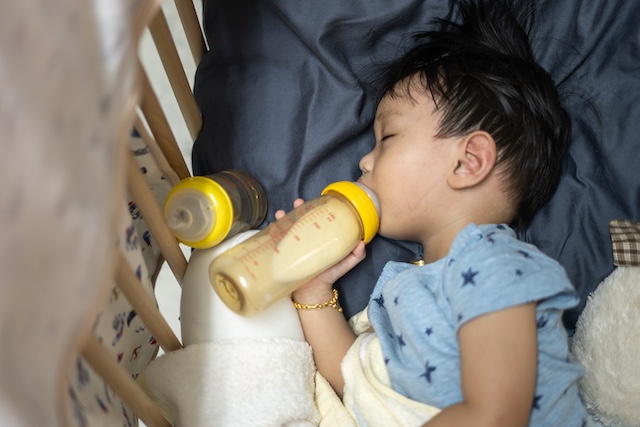
Bottle Feeding Toddlers to Sleep Linked to Tooth Decay and Excess Weight in Early Childhood
Key Takeaways:
- More than three in ten toddlers were still being bottle fed to sleep at two years of age
- Bottle feeding to sleep at age two was linked to almost double the risk of overweight in early childhood
- Continuing the practice at age three was associated with nearly twice as many teeth affected by decay
Parents and carers are being urged to avoid using bottles to help toddlers fall asleep, after new research found clear links between the practice, early childhood tooth decay, and excess weight gain.
The study, published in the Australian and New Zealand Journal of Public Health, was led by researchers at the University of Sydney and drew on data from more than 700 toddlers participating in Western Sydney University’s Healthy Smiles Healthy Kids (HSHK) cohort study. The long running study follows children from birth to examine factors influencing oral health and broader health outcomes.
Study design and data sources
Researchers analysed information collected through surveys completed by mothers, alongside clinical dental examinations and measurements of children’s height and weight. Importantly, the analysis also accounted for a range of other factors known to influence dental health and body weight, allowing the researchers to better isolate the impact of bottle feeding to sleep.
What the researchers found
The findings showed that bottle feeding to sleep remains common well beyond infancy and is associated with measurable health risks:
- More than 30 percent of children were still bottle fed to sleep at two years of age
- Children who were bottle fed to sleep at age two were almost twice as likely to have overweight in early childhood
- Children who were bottle fed to sleep at age three had nearly double the number of teeth affected by dental decay
Why bottle feeding to sleep matters
Lead author Heilok Cheng, a PhD candidate in the Susan Wakil School of Nursing and Midwifery at the University of Sydney, emphasised that most parents and carers are acting with good intentions but may not be fully aware of the longer term risks.
“Australian recommendations advise parents to start introducing cups at 6 months of age and stop using baby bottles at 12 months. Bottle feeding in bed is not recommended at any age. Our research now provides a much more robust evidence base for that advice.”
She explained that many commonly used drinks for toddlers can increase the risk of dental decay.
“Common toddler drinks, including cow’s milk and formula, often contain either natural or added sugars, increasing the risk of tooth decay. When a bottle is offered at bedtime it’s often being used by carers to calm an unsettled child or encourage the child to drift off to sleep. Because the bottle isn’t being offered in response to hunger, it can lead to overfeeding, putting children at risk of unhealthy weight gain.”
Cheng also highlighted the need for better support for families navigating infant and toddler feeding practices.
“We need to do more to support families and help them avoid getting into the habit of putting a child or baby to bed with a bottle, so that our future generations are set up with a healthy future from the start.”
Wider implications for policy and prevention
The authors note that the findings reinforce the importance of coordinated public health action to reduce childhood obesity and improve oral health. They also point to the potential value of universal dental care as part of a broader strategy to prevent avoidable dental disease in early life.
About the Healthy Smiles Healthy Kids study
The Healthy Smiles Healthy Kids (HSHK) cohort study is led by Associate Professor Amit Arora from Western Sydney University, in collaboration with Sydney Local Health District, South Western Sydney Local Health District, the University of Sydney, the University of Queensland, the University of Technology Sydney, and Curtin University.
The study is funded by the Australian National Health and Medical Research Council, NSW Health, the Australian Dental Research Foundation, and the Oral Health Foundation. The full paper, “Bottle feeding to sleep beyond 12 months is associated with higher risk of tooth decay and overweight in Australian children: Findings from the Healthy Smiles Healthy Kids cohort study”, was published in the Australian and New Zealand Journal of Public Health.
CCH insight:
This is an interesting study, which provides very strong evidence for avoiding bedtime bottle-feeding to help infants get to sleep. It would be interesting to know if the excess weight gain resulting from bedtime bottle-feeding is due simply to the extra calories provided by the bedtime milk, or if it also encourages increased emotional eating – it is believed that emotional eating, which is a common cause of overeating in adults, has its behavioural origin in the soothing effect we experience when suckling as a baby, so we come to associate fatty sugary food (like breast or formula milk) with bringing relief from anxiety and stress.
Read More
Maternal Obesity Linked to Early Changes in Infant Gut Microbiome, Study Suggests
Key Takeaways:
- Infants born to mothers with obesity show distinct differences in gut bacteria during the first six months of life, including reduced microbial diversity.
- These early microbial changes are associated with pathways linked to fat metabolism, particularly in the first three months after birth.
- Researchers suggest that early-life interventions targeting the gut microbiome may help reduce longer-term metabolic risks for children.
Maternal obesity and the infant gut microbiome
Babies born to mothers with obesity may begin life with a markedly different gut microbiome, a factor that could influence their metabolism and long-term health, according to new research from Nazarbayev University (NU).
The study, led by researchers Almagul Kushugulova and Samat Kozhakhmetov, explored how maternal obesity may shape the early development of the gut microbiome in infants. The research team followed 24 mothers and their babies from birth to six months of age, analysing stool samples using advanced DNA sequencing techniques.
By comparing infants born to mothers with obesity with those born to mothers without obesity, the researchers identified clear differences in the composition and diversity of gut bacteria during early life.
Reduced microbial diversity and altered metabolic pathways
The analysis showed that infants of mothers with obesity had significantly lower gut microbial diversity. In addition, these infants had a higher abundance of bacterial species associated with fat metabolism.
These differences were most pronounced during the first three months of life, a period widely recognised as critical for the establishment of the gut microbiome and for metabolic programming.
“During the first three months of life, we observed what appears to be a shift in how gut bacteria process nutrients – with a tendency toward fat storage pathways rather than breaking down carbohydrates for energy,” Kozhakhmetov explained.
He noted that this early metabolic pattern may have implications for how energy balance is regulated later in life.
Opportunities for early intervention
The researchers suggest that their findings open the door to preventive strategies during infancy. Kozhakhmetov highlighted that understanding these early microbial shifts could inform interventions aimed at promoting healthier metabolic outcomes.
This discovery, he said, “opens up possibilities for early intervention”, including approaches such as targeted probiotics or tailored dietary guidance designed to support a more balanced gut microbiome and potentially reduce future metabolic risk.
Beyond metabolism – immune and appetite regulation
The implications of the findings may extend beyond metabolism alone. The researchers propose that maternal obesity could also influence immune system development and appetite regulation in children through microbial transmission.
“We tend to think that we only pass on our genes to our children. But our research suggests that we may also pass on our bacteria – and the type of bacteria a child inherits could have important effects on their long-term health, potentially influencing their health trajectory as they grow,” Kushugulova said.
This perspective reinforces the idea that early-life exposures play a significant role in shaping health across the life course.
Placing the findings in context
The study, published in the journal Biomedicines, adds to a growing body of research highlighting the importance of the early-life microbiome. Previous studies have linked maternal weight status and gut dysbiosis to disrupted nutrient metabolism, inflammation, and changes in immune, metabolic, or neurodevelopmental outcomes in children.
As obesity during pregnancy becomes increasingly common worldwide, the authors argue that maternal health should be viewed as a key determinant not only of pregnancy outcomes, but also of a child’s longer-term metabolic health.
Implications for future research and practice
The researchers conclude that interventions targeting the gut microbiota during early infancy may represent a promising avenue for reducing health risks associated with maternal obesity. Further research will be needed to determine which strategies are most effective, when they should be implemented, and how they can be integrated into routine maternal and child healthcare.
Taken together, the findings underline the importance of addressing obesity before and during pregnancy, while also highlighting the potential of microbiome-focused approaches to support healthier outcomes for future generations.
CCH insight:
Evidence for the role of the gut microbiome in obesity and metabolic health continues to grow. This study is ground-breaking in demonstrating that maternal obesity influences the new-born child’s microbiome, potentially priming the child for health challenges later in life right from their first few weeks of life. On the positive side, this offers the potential to identify babies at risk of metabolic diseases from a very early stage of life, and also the opportunity for early interventions though diet, pre- and probiotics.
Read More
AI Model Could One Day Help Prevent Childhood Obesity by Counting Bites
Key Takeaways:
- Researchers at Penn State have developed an artificial intelligence (AI) system capable of counting how many bites a child takes during a meal, achieving around 70% accuracy compared to human observers.
- Eating too quickly increases the risk of obesity in children because the body has less time to register fullness, leading to overeating.
- The AI system, named ByteTrack, may in future help parents, clinicians, and researchers monitor and guide children’s eating habits in real-world environments.
AI and eating behaviours: A new frontier in obesity prevention
The faster a child eats, the greater their risk of developing obesity, according to researchers from the Penn State Department of Nutritional Sciences. However, accurately measuring bite rate—the number of bites taken during a meal—has long posed a challenge. Traditionally, this requires a researcher to watch and manually record each bite from hours of video footage, limiting most studies to small, controlled laboratory environments.
In a collaborative effort between Penn State’s Departments of Nutritional Sciences and Human Development and Family Studies, researchers have created an AI model designed to automate this process. Their pilot study, published in Frontiers in Nutrition, shows that the system is currently around 70% as effective as a human observer in counting bites. Although still under development, the researchers believe the technology could eventually help identify when a child needs to slow their eating rate or adjust their eating behaviour.
The link between eating speed and obesity
“When we eat quickly, we do not give our digestive tract time to sense the calories,” explained Professor Kathleen Keller, the Helen A. Guthrie Chair of Nutritional Sciences at Penn State and co-author of the study. “The faster you eat, the faster it goes through your stomach, and the body cannot release hormones in time to let you know you are full. Later, you may feel like you have overeaten, but when this behaviour repeats, faster eaters are at greater risk for developing obesity.”
Keller’s research group has previously demonstrated that a faster bite rate, especially when combined with larger bite size, correlates with a higher likelihood of obesity in children. Other studies have also linked larger bite size to an increased risk of choking.
“Bite rate is often the target behaviour for interventions aimed at slowing eating rate,” noted Dr Alaina Pearce, research data management librarian at Penn State and co-author of the study. “This is because bite rate is a stable characteristic of children’s eating style that can be targeted to reduce their eating rate, intake, and ultimately risk for obesity.”
Manually recording bite rate, however, is both labour-intensive and costly. As Keller pointed out, “Measuring bite rate is tedious, labour-intensive work, meaning it is expensive, which often limits the amount of data considered in bite rate studies.”
Using AI to support healthier habits
To overcome these limitations, Yashaswini Bhat, a doctoral candidate in nutritional sciences and lead author of the study, set out to develop the first AI-powered bite counter designed specifically for studying children’s eating behaviours.
“I have an interest in AI and data science, but I had never developed a system like this one,” Bhat explained.
She partnered with Associate Professor Timothy Brick, from Penn State’s Department of Human Development and Family Studies, to create a system capable of detecting children’s faces within videos and identifying when a child takes a bite.
“An experienced and knowledgeable collaborator like Dr Brick was invaluable to this project,” Bhat added.
The team trained the system using 1,440 minutes of video footage from Keller’s Food and Brain Study, funded by the National Institute of Diabetes and Digestive and Kidney Diseases. The footage featured 94 children aged seven to nine, each consuming four meals with identical foods on different occasions.
Researchers manually identified bites in 242 videos to train the AI. Once the system had been trained to recognise what a bite looks like, it was tested on an additional 51 videos. The AI’s results were then compared to those of human researchers.
Promising early results
“The system we developed was very successful at identifying the children’s faces,” Bhat said. “It also did an excellent job identifying bites when it had a clear, unobstructed view of a child’s face.”
While the AI was 97% as effective as a human observer at recognising faces, it achieved about 70% accuracy in counting bites. Bhat noted that challenges arose when children were partially obscured, turned away from the camera, or engaged in behaviours such as chewing on their spoons or playing with their food—actions common among younger participants.
“The system was less accurate when a child’s face was not in full view of the camera or when a child chewed on their spoon or played with their food, as often happens toward the end of a meal,” Bhat said. “Chewing on a utensil sometimes appeared to be a bite, and this complicated the task for the AI model.”
Next steps for the ByteTrack system
Although still in its early stages, the researchers view the pilot as an important step toward automating bite rate analysis. The system, called ByteTrack, will continue to be refined so it can distinguish between bites and similar movements such as sipping a drink.
“The eventual goal is to develop a robust system that can function in the real world,” Bhat said. “One day, we might be able to offer a smartphone app that warns children when they need to slow their eating so they can develop healthy habits that last a lifetime.”
The research was supported by the National Institute of Diabetes and Digestive and Kidney Diseases, the National Institute of General Medical Sciences, the Penn State Institute for Computational and Data Sciences, and the Penn State Clinical and Translational Science Institute.
Read More