Fungal Disease Is Rising and Underdiagnosed – Can AI Help Close the Gap?
Key Takeaways:
- Fungal diseases affect more than 300 million people each year and are linked to over 3.75 million deaths annually, yet they remain historically underrecognised, difficult to diagnose and poorly tracked compared with viral and bacterial infections.
- A World Health Organization (WHO) blueprint released in June 2026 sets out a framework for countries to raise awareness, build laboratory and surveillance networks, stimulate research and improve access to diagnosis and treatment.
- Australian researchers are finalising an automated surveillance platform that uses AI to extract evidence of fungal disease from electronic medical records, with the biggest obstacle being the standardisation of clinical annotations rather than the technology itself.
A threat that has grown in the shadows
Fungal disease and antifungal resistance are growing global threats that have long sat at the margins of public health planning. They are difficult to detect, difficult to track and, until recently, have attracted comparatively little policy attention. That is beginning to shift, driven by two parallel developments: a new international policy framework and a set of digital health initiatives designed to make fungal infection visible in routine clinical data.
The scale of the problem is substantial. More than 300 million people are affected by fungal diseases every year, and over 3.75 million people die annually. Among patients who are immunocompromised, invasive fungal infections are the “leading cause of mortality and morbidity”, according to a 2025 WHO report.
In recent years, the number of new infections, and especially antifungal-resistant infections, has doubled. Two environmental drivers are implicated. As the climate warms, fungi are adapting to survive at higher temperatures, narrowing the thermal barrier that has historically protected humans from many environmental fungi. Increased flooding events have also contributed to mould growth, which in turn leads to disease spread. A third driver sits outside the clinical environment altogether: the use of fungicides on agricultural crops is a major cause of antifungal resistance encountered in healthcare settings, because agricultural compounds and clinical antifungals share overlapping mechanisms of action.
Despite rising prevalence, fungal infections are still not as common as viral infections, so far fewer diagnostic tools have been developed to test for them. With relatively fewer resources allocated to fungal disease research, surveillance and response, fungal diseases also lag behind bacterial infections in terms of treatment options. Recent policy developments and digital health initiatives are working to change this.
Why fungal diseases are difficult to diagnose and treat
One of the biggest challenges to fungal disease preparedness is underdiagnosis, which makes research, surveillance and response considerably more difficult. Without a diagnosis, there is no case to count, and without counted cases there is no evidence base to justify investment.
“If we don’t have good diagnostic tests, these diseases don’t exist because we don’t know who has them,” said Tom Chiller, MD, former chief of the Mycotic Diseases Branch at the Centers for Disease Control and Prevention.
Chiller adds that diagnosing fungal disease is inherently difficult because fungal cells look similar to human cells, making it challenging to develop a diagnostic test sensitive enough to tell the difference. Fungi are also everywhere around us, in their billions. Exposure is “near universal”, and it is hard to distinguish the colonies that are causing disease from those that are entirely harmless. A positive result, in other words, does not automatically indicate infection.
That same cellular similarity creates a second problem at the point of treatment. Because fungal cells so closely resemble human cells, it remains very challenging to kill one type of cell without also damaging the other, which makes treatment toxicity a major issue for the patients who most need therapy.
There is also the matter of range. Only three major classes of antifungal drugs are available – azoles, echinocandins and polyenes – so resistance carries disproportionate consequences. When a fungal pathogen becomes resistant, there are simply fewer tools left in the toolbox.
New antifungal agents in development
Encouragingly, several new antifungal drugs are at various stages of development and investigation, and may help to address resistance. Oteseconazole and rezafungin have received US Food and Drug Administration approval in recent years, building on the existing antifungal classes and expanding the available arsenal. Two newer treatments, olorofim and fosmanogepix, represent entirely new classes and will hopefully be approved in the coming years. New classes matter more than new agents within existing classes, because they offer options where cross-resistance is less likely.
A blueprint for improving antifungal care
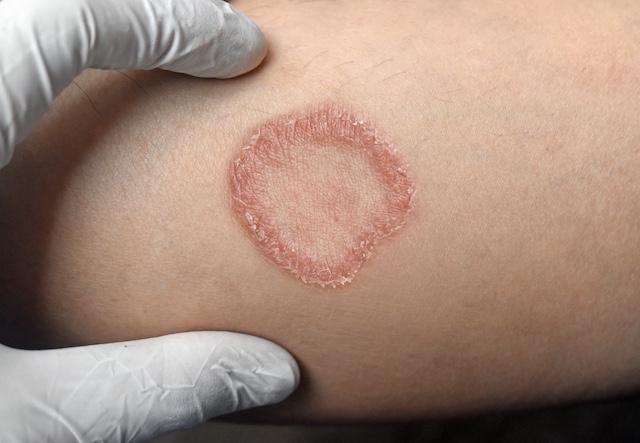
While millions of fungi exist, only a few hundred can cause disease in humans. Some of the most common and well-known fungal diseases include ringworm, vaginal yeast infections, athlete’s foot, skin infections such as sporotrichosis, and mould infections such as aspergillosis, as well as invasive infections including cryptococcal meningitis and candidiasis.
The most dangerous fungal disease is multidrug-resistant Candida auris, which was first identified in a Japanese hospital in 2009 and has been found fatal in 29% to 62% of cases.
Without surveying when these conditions are diagnosed and treated, there can be no accurate picture of which diseases are most prevalent, or of when they become resistant to available antifungal treatments. Stewardship programmes designed to protect against resistance also remain weak and limited in scope, particularly in underresourced countries.
Recognising this gap, the WHO released a new blueprint in June 2026 to help countries begin to create uniform tools to respond to the growing public health threat of fungal disease and antifungal resistance. The report provides a framework with recommendations to guide implementation across four areas: increasing awareness and strengthening public health initiatives; building laboratory networks and surveillance systems; stimulating research and improving access to diagnosis and treatment; and addressing the factors that contribute to disease and resistance.
It also aims to support countries in their disease response and to make more fungal diseases reportable to public health officials. Across the United States, for example, reporting priorities vary between states, and the only fungal diseases prioritised as legally reportable nationally are coccidioidomycosis (Valley fever) and Candida auris – a small fraction of those that can affect human health.
Chiller said he hopes the report will draw more attention to both the prevalence and the morbidity of these infections in order to improve available funding. Increased resources would be particularly useful for investing in new treatments to stave off antifungal resistance.
A digital platform for fungal disease and antifungal resistance surveillance
Alongside the policy work, Australian researchers are in the final stages of launching an automated fungal infection surveillance platform that will digitally survey fungal disease across the continent.
The digital platform, called the Design Thinking Framework, was built from a review of multiple sources of clinical information across a wide array of healthcare settings in Melbourne. It extracts information from electronic medical records (EMRs) using AI trained to detect episodes of fungal disease even when the diagnosis is not explicitly recorded. The tool will also provide a web-based platform accessible to physicians so that they can properly report future episodes of fungal disease and resistance.
Vlada Rozova, PhD, a senior lecturer in AI in Health at Monash University, who originally led the project at the University of Melbourne, said the Design Thinking Framework will be helpful in monitoring what is being prescribed for fungal diseases across a range of hospitals, in order to understand when prescribing leads to resistance and what can be done to reduce it, while also identifying which treatments are most effective for patients.
“It will help clinicians to better evaluate the therapies that they’re providing their patients to know what’s necessary and in what particular types of patients certain antifungal agents are most effective,” said Rozova.
Why the hardest problem is human, not technical
The biggest challenge for Rozova and her colleagues has not been the algorithm. It has been standardising clinical annotations to ensure that reports are consistent across the platform. Getting clinicians to agree on which notes within EMRs indicate fungal disease, and which indicate resistance, has been and will continue to be a complex task, because humans, unlike machines, are not standardised.
“If we can’t get humans to agree on what a fungal disease is, we can’t train a machine to look for it,” said Rozova.
This is a familiar theme across clinical AI. Tools that read free-text records depend on consistent human documentation and shared definitions, which is why clinicians increasingly need a working understanding of how these systems are built, what they can reasonably infer and where they are likely to fail. Practitioners looking to develop that grounding often begin with structured CPD, such as the College of Contemporary Health’s AI Essentials for Primary Care short course, which introduces how AI-driven tools are being applied in clinical practice and how to appraise them critically.
Looking ahead
Increased awareness will hopefully bring increased agreement. With guidance from global bodies such as the WHO, and with new digital surveillance platforms of the kind being finalised in Australia, the global response to fungal infections and antifungal resistance stands to be meaningfully strengthened – provided the diagnostic, documentation and funding gaps are addressed in parallel.
CCH insight
Digital surveillance tools are only as reliable as the clinical documentation that feeds them, and clinicians are increasingly being asked to work alongside AI systems rather than simply receive their outputs. Our CPD-accredited short course AI Essentials for Primary Care is designed for healthcare professionals who want a practical, jargon-free grounding in how these technologies work and how to evaluate them in day-to-day practice.
Explore AI Essentials for Primary Care →
Source: JMIR Publications