
GLP-1 receptor agonists linked to greater dementia risk reduction than metformin in people with type 2 diabetes
Key Takeaways:
- In people with type 2 diabetes, initiating GLP-1 receptor agonist therapy rather than metformin was linked to a 10% lower overall risk of dementia over two years.
- The largest benefits were observed for Alzheimer’s disease and other non-vascular forms of dementia, with reductions of 8% and 12%, respectively.
- Older adults and women appeared to experience greater protective effects from GLP-1 receptor agonists compared with men and younger individuals.
Study overview
A large retrospective analysis has found that among people with type 2 diabetes, those who newly began treatment with a glucagon-like peptide-1 (GLP-1) receptor agonist had a significantly lower risk of developing dementia compared with those who started metformin.
The study, published in BMJ Open Diabetes Research & Care, examined real-world health data over a two-year follow-up period. Overall dementia risk – defined as the first recorded diagnosis of vascular dementia, Alzheimer’s disease (AD), unspecified dementia, or dementia due to other diseases – was 2.4% in the GLP-1 receptor agonist group, compared with 4.8% in the metformin group, representing a 10% relative risk reduction.
Specific dementia outcomes
While the difference in vascular dementia risk between the two groups was not statistically significant (0.7% for GLP-1 receptor agonists versus 1.3% for metformin), there were clear benefits for other dementia types:
- Alzheimer’s disease – 1.2% incidence in GLP-1 receptor agonist users compared with 2.6% in metformin users, an 8% relative risk reduction.
- Other non-vascular dementias – 1.0% incidence in GLP-1 receptor agonist users versus 2.4% in metformin users, a 12% relative risk reduction.
“These findings address a key knowledge gap by directly comparing the neuroprotective efficacy of GLP-1 [receptor agonists] and metformin in dementia prevention,” write lead author Jiaqiang Zhang of The People’s Hospital of Zhengzhou University, Henan, China, and colleagues. “They provide actionable insights for clinical decision-making and may inform future guidelines.”
Possible neuroprotective mechanisms
Previous research has shown that both GLP-1 receptor agonists and metformin may exert neuroprotective effects, including:
- Reduction of neuroinflammation and oxidative stress
- Improved insulin sensitivity
- Enhanced cerebrovascular health
However, no earlier study had directly compared the two in terms of their potential cognitive benefits.
Study design and population
The researchers used the TriNetX global federated health network, which contains deidentified electronic health records from more than 98 healthcare organisations worldwide.
From this database, they identified more than 174,000 adults with type 2 diabetes who received a first-line prescription for either a GLP-1 receptor agonist or metformin between 2004 and 2024.
Propensity score matching created two equal groups – 87,229 participants in each – ensuring they were comparable in age (mean of around 58 years) and other baseline characteristics. Just under two-thirds of participants in each group were women.
Eligibility criteria included:
- Continuous prescription of the assigned medication for at least six months
- At least 24 months of follow-up data
Analyses were adjusted for factors such as age, sex, ethnicity, comorbidities (including hypertension, ischaemic heart disease, and cerebrovascular disease), metabolic measures (such as glycated haemoglobin and obesity), and other medication use.
Subgroup findings
The dementia risk reduction associated with GLP-1 receptor agonists was consistent across all subgroups analysed, with particularly strong effects in:
- Older adults – Those aged 60 years or older had a 15–20% lower overall dementia risk compared with metformin users.
- Women – Women had a greater reduction in dementia risk (adjusted hazard ratio [HR] 0.83) than men (HR 0.90).
Additional outcomes and limitations
The study also found a significant all-cause mortality benefit with GLP-1 receptor agonists compared to metformin, with cumulative mortality rates of 4.8% versus 8.8% (HR 0.89).
The authors acknowledged several limitations:
- Potential residual confounding despite propensity score matching and sensitivity analyses
- Possible misclassification of dementia subtypes or under-reporting of outcomes
- Exclusion of people with prior use of the study medications, which may limit generalisability to those with mixed treatment histories
Conclusions and next steps
The authors concluded:
“GLP-1 [receptor agonists] were more effective than metformin in reducing the risk of dementia – especially AD and non-vascular types – highlighting their potential as a preferred first-line treatment in [type 2 diabetes mellitus].”
They added: “Further randomised trials are warranted to validate these findings.”
CCH Insight:
This study provides further evidence for the neuroprotective effects of GLP-1RAs, and it is interesting to note that the effect was greater in non-vascular forms of dementia, suggesting these benefits are independent of the known cardiovascular benefits of these medications. It also supports the case for increased prescribing of GLP-1RAs as an alternative to metformin as a first-line treatment for type 2 diabetes – currently GLP-1RAs are generally considered a second or third choice of second-line treatment.
Read More
Year-long support needed after stopping weight loss injections says NICE
Key Takeaways:
- NICE advises that people stopping GLP-1 receptor agonist weight loss injections should receive at least 12 months of structured follow-up support to help maintain weight loss and associated health benefits.
- Experts welcome the recommendation but warn that NHS capacity and resources may be insufficient to deliver consistent, nationwide “wraparound” care.
- Around 1.5 million people in the UK are thought to be using weight loss injections, with an estimated 240,000 expected to be offered tirzepatide (Mounjaro) on the NHS within the next three years.
NICE Urges Long-Term Support After Weight Loss Treatment
The National Institute for Health and Care Excellence (NICE) has updated its guidance to recommend that people who stop taking weight loss injections receive structured advice and ongoing support for at least a year. The aim is to ensure that the benefits achieved through treatment—both weight loss and related health improvements—are maintained over the long term.
NICE’s advice applies to people coming off glucagon-like peptide-1 receptor agonist (GLP-1RA) medications such as semaglutide (Wegovy) and tirzepatide (Mounjaro). These drugs work by mimicking the GLP-1 hormone, which helps regulate appetite and food intake.
Without continued support, the risk of regaining lost weight is high. Studies suggest that about four in five people who discontinue these medications regain the weight they lost once their prescription ends.
Implementation Challenges and NHS Capacity
While the update has been welcomed by obesity care experts, there is widespread concern about whether the NHS has the resources to deliver such long-term, structured follow-up.
Around 1.5 million people in the UK are estimated to be using weight loss injections, and NHS England plans to offer tirzepatide to approximately 240,000 people over the next three years. The scale of potential demand raises questions about the availability of trained staff, access to services, and consistency of care across different regions.
Almost one-third (29%) of adults in England have obesity, and 64% are categorised as overweight or obese. Obesity is estimated to cost the NHS £11.4 billion annually through its impact on related health conditions.
Details of the Guidance
NICE states that general practitioners (GPs) and specialist overweight and obesity services must have clear protocols for supporting people once their prescription ends or they are discharged from treatment. The support should be designed to help individuals maintain lifestyle changes, prevent weight regain, and preserve associated health benefits.
The recommended interventions may include practical advice from initiatives such as NHS Better Health, tailored strategies to adapt daily habits, and adjustments in home or work environments to support healthier choices.
NICE also advises that if a patient approaches their GP for similar guidance after using a weight loss drug obtained privately, the GP should provide appropriate support or make a referral. However, NICE notes that such cases are expected to be uncommon.
Expert Perspectives
Jonathan Benger, Deputy Chief Executive and Chief Medical Officer at NICE, emphasised the importance of continuity in care:
“Successful weight management doesn’t end when medication stops or when someone completes a behavioural programme. We know that the transition period after treatment is crucial, and people need structured support to maintain the positive changes they’ve made.”
Obesity UK welcomed the recognition of the need for ongoing care but expressed doubt about the NHS’s ability to implement it effectively. Alison Forster, Operations Manager at Obesity UK, commented:
“We remain concerned about the limited resourcing of NHS weight management services and the significant variability in access and provision across the country. This guidance just doesn’t go far enough.
Many of the people we support face long waits, inconsistent care pathways, and a lack of psychological and social support—issues that are not sufficiently addressed by the current system.
We know from existing evidence that about 80% of people will regain the weight once they come off the medication, and wraparound care is what is lacking after someone has stopped.”
Positive Direction but Further Reform Needed
Nicola Heslehurst, President of the Association for the Study of Obesity and an expert in maternal and child nutrition at Newcastle University, welcomed the move:
“It is a really positive move in the right direction to see the recognition that longer term support is required for managing obesity beyond short term programmes, whether these are medication or weight management programmes.”
However, she highlighted the need for structural changes in service commissioning:
“The lack of continued support has been a major flaw in service commissioning and delivery to date.”
The Role of General Practice and Broader Obesity Care
Kamila Hawthorne, Chair of the Royal College of General Practitioners, said:
“Patients will likely need support to sustain their weight loss once they stop taking the medication. As such, this is important and sensible guidance from NICE.
As a college we’ve been clear that whilst weight loss medications have significant potential benefits for patients who are struggling to lose weight, they mustn’t be seen as a ‘silver bullet,’ and ensuring access to sufficient ‘wraparound’ services—particularly for when patients come off their medication—will be key to optimal health outcomes. It’s vital that the rollout of weight loss medications as a treatment for obesity does not come at the expense of other weight loss services.”
Government Strategy
Expanding access to GLP-1RAs forms part of the UK government’s 10-year NHS plan to tackle obesity. This strategy aims not only to provide effective treatment options but also to integrate them within a broader system of ongoing care and prevention, ensuring that people who achieve weight loss have the resources to maintain it in the long term.
CCH Insight:
This new guidance from NICE seems, at first, like a sensible idea… until you think about how these drugs are meant to be used, and the evidence available for weight regain. GLP-1-based medications are meant to be used as an adjunct to diet and lifestyle support. So patients should be receiving the type of advice advocated by NICE whilst taking the drugs, not after they stop. By the time a patient stops taking the medication, they should have already established healthier eating and lifestyle habits.
If they have not done so by then, it is probably too late – because you are then asking people to eat more healthily just as their appetite and cravings are increasing after ceasing their medication. The other issue is that the current evidence, from clinical trials, suggests that lifestyle interventions DO NOT prevent weight regain after cessation of these drugs. NICE appear to be ignoring this evidence – why? Because the inconvenient truth is that obesity is a chronic relapsing condition, and many people with the condition may need to continue GLP-1 therapy for life if they are to maintain weight loss and health benefits it brings. NICE probably don’t like the implications of this in terms of cost, but it would actually save money in the long run through prevention of obesity-related complications.
Read More
Updated Canadian guideline highlights expanded role of obesity medications
Key Takeaways:
- New Canadian recommendations highlight obesity pharmacotherapy as a safe, effective, and long-term treatment option, focusing on improving overall health rather than weight loss alone.
- The guideline moves away from sole reliance on body mass index (BMI), advocating a more individualised approach that incorporates multiple health indicators and personal treatment goals.
- Updated recommendations include new medicines such as tirzepatide and setmelanotide, and address obesity-related complications including cardiovascular disease, osteoarthritis, and heart failure with preserved ejection fraction.
Focus on Health, Not Just Weight Loss
“Pharmacotherapy can help people living with obesity improve overall health, not just lose weight,” says Dr Sue D Pedersen, MD, endocrinologist and obesity medicine specialist in Calgary, and lead author of the updated guideline. “The goal of obesity medications is to improve metabolic, mechanical, and/or mental health, and improve quality of life, incorporating treatment goals that are important to each individual patient.”
The updated recommendations reflect the evolving understanding of obesity as a complex, chronic disease that requires a personalised treatment approach. Rather than focusing solely on weight reduction, the guideline emphasises outcomes that matter most to each person, including improvements in energy, mobility, mental wellbeing, and the management of related health conditions.
Updated and Expanded Recommendations
This latest update introduces six new and seven revised recommendations, building on evidence published since the 2022 and 2020 versions of the guideline.
Key changes include:
- Recognition of new medications – tirzepatide and setmelanotide are now included as treatment options.
- Expanded scope – the guideline now addresses pharmacological approaches for obesity-related complications such as atherosclerotic cardiovascular disease, heart failure with preserved ejection fraction, and osteoarthritis.
- Revised assessment criteria – moving away from BMI as the sole measurement, the guideline recommends using additional indicators such as waist circumference, waist-to-hip ratio, and waist-to-height ratio. These should be adjusted for sex and ethnicity where appropriate and interpreted alongside the presence of obesity-related complications.
Pharmacotherapy as a Core Pillar of Obesity Care
“Obesity pharmacotherapy is a safe and effective option to support long-term obesity care,” says Dr Pedersen. “It is one of three pillars of treatment outlined in the full Canadian Adult Obesity Clinical Practice Guideline, with other pillars being behavioural and psychological and surgical approaches. Obesity treatment should always be tailored to each person’s specific health needs, values, and preferences. Recommendations also support sustained use of obesity pharmacotherapy as part of a long-term strategy to maintain improvements in health and quality of life.”
This long-term strategy underscores the importance of maintaining health gains rather than viewing weight loss as a one-time intervention. By integrating medication into a comprehensive care plan, healthcare providers can help people sustain improvements in physical and mental health over time.
Safety and Quality Considerations
The guideline also cautions against the use of compounded obesity medications due to concerns about content, safety, efficacy, and quality. These risks highlight the importance of using approved medications with established quality controls and safety profiles.
CCH Insight:
This new guidance is very welcome, and reflects the rapid advances in this area of obesity treatment over the last few years. The recommendations should be applauded for several reasons. Firstly, the recognition that pharmacotherapy offers more than weight loss alone; it is an important tool in improving the overall health of people living with obesity, improving metabolic function, reducing cardiovascular disease risk and enhancing mental well-being, all tailored to the unique circumstances of each individual. Secondly, they emphasise the fact that these drugs are meant to be used as an adjunct to diet and lifestyle advice, not an alternative to it, which is a message that often seems to get lost in the hype around them. Thirdly, the use of central adiposity indicators (such as waist circumference) as well as BMI for assessing suitability for GLP-1 therapy, and finally the recommendation that these drugs be considered for anyone with a BMI > 30 (or the equivalent adjusted for ethnicity), with or without the presence of obesity-related conditions.
Read More
GLP-1 drugs found to boost testosterone in men with obesity or diabetes
Key Takeaways:
- Anti-obesity medications significantly raised testosterone levels in men with obesity or type 2 diabetes.
- After 18 months of treatment, the percentage of men with normal testosterone levels increased from 53% to 77%.
- These medications may now be considered as part of broader reproductive health strategies for men with obesity or diabetes.
Introduction: A Link Between Obesity, Diabetes and Low Testosterone
Men living with obesity or type 2 diabetes frequently experience reduced testosterone levels, a condition associated with symptoms such as fatigue, diminished libido, and lower quality of life. A new study presented at ENDO 2025, the annual meeting of the Endocrine Society held in San Francisco, provides compelling evidence that anti-obesity medications may offer an effective intervention.
“While it is well known that weight loss from lifestyle changes or bariatric surgery increases testosterone levels, the impact that anti-obesity medications may also have on these levels has not been widely studied,” said Dr Shellsea Portillo Canales, endocrinology fellow at SSM Health St. Louis University Hospital. “Our study is among the first to provide compelling evidence that low testosterone can be reversed with the use of commonly prescribed anti-obesity medications.”
Study Design and Participant Profile
The research team conducted a retrospective analysis using electronic health records of 110 adult men diagnosed with obesity or type 2 diabetes. All participants were undergoing treatment with one of three commonly prescribed anti-obesity medications: semaglutide, dulaglutide or tirzepatide. Importantly, none of the men were receiving testosterone or other hormonal therapy at the time of the study.
Researchers measured both total and free testosterone levels before and during treatment, over an 18-month observation period.
Findings: Weight Loss and Hormonal Restoration
Over the course of treatment, participants achieved an average weight reduction of 10%. This weight loss was accompanied by a marked improvement in testosterone levels: the proportion of men with normal total and free testosterone levels rose from 53% at baseline to 77% at follow-up.
These outcomes suggest a dual benefit of anti-obesity medications – not only aiding in weight reduction and glycaemic control, but also potentially restoring reproductive hormone balance.
“Results from this study show that there is a direct correlation between the use of anti-obesity medications and testosterone levels,” said Portillo Canales. “Doctors and their patients can now consider this class of medications not only for the treatment of obesity and to control blood sugar, but also to benefit men’s reproductive health.”
Implications for Clinical Practice
The study underscores the broader systemic benefits of GLP-1-based therapies and other anti-obesity agents, particularly in populations at high risk of endocrine dysfunction. By contributing to weight loss and improving metabolic health, these treatments may also serve as valuable tools in addressing hypogonadism in men affected by obesity or type 2 diabetes.
While further research is warranted to confirm causality and examine long-term effects, these findings support a more holistic view of obesity pharmacotherapy — one that encompasses not only cardiometabolic outcomes but also hormonal and reproductive health.
Read More
Sustained weight loss seen even when GLP-1 availability is inconsistent
Key Takeaways:
- Even with inconsistent access to GLP-1 medications, people achieved substantial weight loss when treatment was combined with lifestyle interventions and coaching.
- Participants who experienced gaps in their GLP-1 treatment still saw an average weight loss exceeding 13% after one year.
- Consistent use of GLP-1 medications alongside lifestyle changes produced the most pronounced weight reductions, underscoring the value of an integrated approach.
Research underscores weight loss success despite gaps in GLP-1 treatment
Popular anti-obesity medications continue to deliver meaningful weight loss results, even when access is inconsistent, according to new research presented at ENDO 2025, the Endocrine Society’s annual meeting held in San Francisco, California. The findings were shared by Calibrate, a privately held weight-loss company based in New York.
Kaelen L. Medeiros, M.S., director of data and research at Calibrate, highlighted the difficulties many people face in maintaining uninterrupted treatment. “Patients taking GLP-1 treatments like semaglutide and tirzepatide often face challenges consistently accessing their medications due to supply shortages or insurance coverage obstacles,” she explained.
Impact of treatment interruptions
To explore how such interruptions might affect outcomes, researchers examined data from people enrolled in Calibrate’s commercial metabolic health programme. This programme integrates intensive lifestyle change with medical treatment, focusing on four key areas of metabolic health: food, exercise, sleep, and emotional wellbeing. Participants also benefited from personalised, one-on-one health coaching.
The study analysed records from 6,392 individuals living with overweight or obesity who had received at least one month of GLP-1 treatment and completed a minimum of one year in the programme. Among these, 72.5% experienced at least one disruption in their GLP-1 access, while 11.1% faced multiple disruptions. On average, participants received 8.13 GLP-1 prescriptions in the first year, increasing to 15.25 in the second year.
Weight loss outcomes across groups
Despite the access challenges, participants still achieved notable weight loss. After 12 months:
- Those who experienced interruptions in their medication saw an average weight reduction of 13.7%.
- Those without any treatment gaps achieved an average weight loss of 17%.
At 24 months, the figures rose to:
- 14.9% average weight loss for participants with treatment disruptions.
- 20.1% average weight loss for those with uninterrupted access.
Even participants who received only between one and four GLP-1 treatments over the course of a year achieved clinically meaningful weight reductions, losing over 10% of their body weight on average.
The role of lifestyle change and coaching
“While unpredictable GLP-1 medication access is frustrating, the good news is that our research shows effective weight loss can still be achieved if paired with appropriate lifestyle changes and coaching support,” said Medeiros.
She added, “Given the often-unpredictable availability and shifting insurance coverage associated with anti-obesity medications, it’s important that patients understand the significant impact that lifestyle changes and coaching paired with treatment can have on their health outcomes.”
Consistency remains the most effective approach
While the findings underscore that significant weight loss is possible even when GLP-1 medication use is inconsistent, Medeiros emphasised that a steady, uninterrupted course of treatment combined with comprehensive lifestyle support remains the most effective strategy.
This research provides further reassurance for people managing overweight and obesity that meaningful progress can be made even when medication access is not always predictable, particularly when combined with structured lifestyle interventions and personalised coaching.
CCH Insight:
This study shows that significant weight loss can be achieved despite an interrupted supply of GLP-1 medications, but not as much as with a continuous supply. Although the reporting emphasises the fact that participants received diet and lifestyle coaching, the study cannot make any conclusions regarding its impact, because all participants received the coaching – there was no control group without coaching for comparison. These medicines are meant to be used as an adjunct to diet and lifestyle advice, and outcomes are likely to be better when this is the case, but this study does not provide evidence to support that.
Read More
Tirzepatide outperforms other GLP-1 drugs in diabetes for blood sugar and weight loss
Key Takeaways:
- Tirzepatide demonstrated the strongest reductions in HbA1c and body weight among all GLP-1 RAs analysed, outperforming even Semaglutide and Liraglutide.
- Gastrointestinal side effects were common across long-acting agents, while hypoglycaemia risk varied, with Liraglutide offering a safer profile for some individuals.
- The findings reinforce a clinical shift towards long-acting and dual agonist therapies for managing type 2 diabetes, offering guidance for clinicians, payers, and policymakers.
Growing burden of type 2 diabetes drives search for optimal treatments
Every ten seconds, someone around the globe develops type 2 diabetes mellitus (T2DM) — a chronic disease that substantially raises household healthcare costs and doubles the risk of cardiovascular events such as heart attacks. The worldwide prevalence is projected to soar to 643 million by 2030, intensifying the need for treatments that lower blood glucose levels without contributing to weight gain.
Glucagon-like peptide-1 receptor agonists (GLP-1 RAs) both stimulate insulin secretion and suppress appetite. However, with a crowded marketplace of differing doses, formulations, and costs, families, clinicians, and health systems continue to seek the medication that offers maximum benefit with minimal drawbacks. This underscores the importance of robust comparative studies.
Rigorous study design to compare eight GLP-1 RAs
In a comprehensive study recently published in Scientific Reports, researchers undertook a systematic review and Bayesian network meta-analysis (NMA) to evaluate the glycaemic, weight, cardiovascular, and safety outcomes of eight GLP-1 RAs. The analysis compared these agents to placebo and standard antidiabetic drugs in adults living with T2DM.
The review adhered to the Preferred Reporting Items for Systematic Reviews and Meta-Analyses for Network Meta-Analyses (PRISMA-NMA) guidelines and was registered with the International Prospective Register of Systematic Reviews. The research team systematically searched PubMed, Cochrane Library, Embase, Web of Science, and Chinese databases up to 2 October 2024.
Eligible studies were randomised controlled trials (RCTs) lasting at least eight weeks, involving adults with T2DM. These trials compared twice-daily Exenatide (EBID), once-weekly Exenatide (EQW), Semaglutide, Albiglutide, Lixisenatide, Dulaglutide, Liraglutide, or Tirzepatide against each other, placebo, or traditional antidiabetic agents such as insulin, metformin, sodium-dependent glucose transporter 2 (SGLT2) inhibitors, dipeptidyl peptidase-4 (DPP-4) inhibitors, or sulfonylureas.
For analysis, oral and injectable Semaglutide were grouped due to their comparable efficacy. Independent reviewers conducted study selection, data extraction, and Cochrane risk-of-bias assessments, resolving any differences through consensus.
Outcomes assessed and statistical approach
The primary outcomes were changes from baseline in glycosylated haemoglobin A1c (HbA1c) and fasting plasma glucose (FPG). Secondary outcomes included changes in body weight, body mass index (BMI), systolic and diastolic blood pressure (SBP, DBP), total cholesterol (TC), high-density and low-density lipoprotein cholesterol (HDL-C, LDL-C), and reported adverse events.
Mean differences (MD) or risk ratios (RR) were calculated with 95% confidence intervals (CIs). When heterogeneity exceeded 50% (as measured by I²), a random-effects model was applied, with Chi-squared tests used to quantify variability.
Tirzepatide shows leading benefits in blood glucose and weight outcomes
From 64 eligible trials involving 25,572 participants, a dense evidence network emerged. Compared with placebo, all GLP-1 RAs lowered HbA1c, but the extent varied markedly:
- Tirzepatide achieved the largest absolute HbA1c reduction (MD −2.3 percentage points; 95% CI −2.7 to −1.9), followed by Semaglutide (−1.5) and Liraglutide (−1.2).
- Lixisenatide’s modest reduction of −0.56 placed it last.
When compared to a pooled group of conventional drugs (including insulin, metformin, SGLT2 inhibitors, DPP-4 inhibitors, and sulfonylureas), only Tirzepatide (−1.5), Semaglutide (−0.73), Liraglutide (−0.40), Dulaglutide (−0.34), and EQW (−0.36) demonstrated statistically significant superiority.
A similar hierarchy was evident for FPG reductions: Tirzepatide lowered FPG by −3.1 mmol/L, followed by Semaglutide (−2.0) and Liraglutide (−1.6). Short-acting agents and Albiglutide offered negligible improvements. The Surface Under the Cumulative Ranking Curve analysis gave Tirzepatide a 100% probability of being the top agent for glycaemic outcomes.
Marked differences in weight outcomes
The weight loss data revealed even starker contrasts. Compared to placebo:
- Tirzepatide achieved a striking −9.1 kg reduction,
- Semaglutide −2.8 kg,
- EBID −1.8 kg, and
- Liraglutide −1.2 kg.
Notably, EBID outperformed Liraglutide in this comparison. When benchmarked against traditional drugs, all GLP-1 RAs except Albiglutide reduced weight, with Dulaglutide and Lixisenatide also showing meaningful effects. Tirzepatide again led with a −10 kg difference.
Changes in blood pressure, BMI, and lipid fractions did not reach statistical significance across interventions, suggesting that glucose and weight benefits did not yet translate into short-term shifts in these cardiovascular parameters.
Safety profile: balancing gastrointestinal effects and hypoglycaemia risk
Gastrointestinal side effects were the most common adverse events. Compared with placebo:
- Semaglutide, Dulaglutide, Liraglutide, Lixisenatide, and Tirzepatide each tripled the risk of nausea and vomiting.
- However, when compared to older drugs already known for gastrointestinal intolerance, the risks were similar.
Hypoglycaemia risk varied considerably:
- EBID and Semaglutide significantly increased episodes (RR 3.3 and 4.6, respectively) versus placebo.
- In contrast, Liraglutide and Lixisenatide actually reduced hypoglycaemia risk compared with traditional regimens, highlighting a possible advantage for people prone to low blood sugar.
Other side effects, such as nasopharyngitis, headache, and elevated lipase levels, showed no material differences. Robust statistical checks (node-splitting, loop inconsistency tests) found no significant discrepancies between direct and indirect comparisons, and funnel plots suggested low publication bias.
Clinical implications and concluding remarks
This analysis positions Tirzepatide as the most effective agent overall for lowering blood glucose and achieving weight loss, with Semaglutide as a reliable second choice. As the authors note, Tirzepatide’s dual agonist activity at GIP and GLP-1 receptors likely underpins its superior outcomes.
Meanwhile, Liraglutide offers moderate glucose improvements with the least risk of hypoglycaemia, potentially making it preferable for leaner adults or those at risk of underweight and frequent hypoglycaemic episodes.
Short-acting formulations and Albiglutide rarely dominated in any category, emphasising the current shift towards once-weekly or dual agonist therapies. Sensitivity and subgroup analyses confirmed these rankings, increasing their practical relevance.
For clinicians, these findings offer valuable guidance in tailoring treatment to individual needs — balancing glucose targets, weight goals, gastrointestinal tolerance, and hypoglycaemia risk. For policymakers and payers, prioritising agents like Tirzepatide or Semaglutide may provide the best outcomes for people with obesity-related diabetes, while reserving Liraglutide for specific patient profiles.
Read More
Global study suggests universal GLP-1 access could halve obesity rates and save millions of lives in five years
Key Takeaways:
- Universal access to GLP-1 receptor agonists could reduce global obesity prevalence by around 52%, potentially improving the health of more than half a billion people.
- A large-scale microsimulation study estimated that such access could prevent approximately 37.5 million deaths over a five-year period by lowering all-cause mortality by nearly 7%.
- Researchers hope these findings will encourage international policy efforts to improve availability and affordability of GLP-1 treatments.
Ambitious modelling seeks to quantify global impact
Universal access to GLP-1 receptor agonists (GLP-1RAs) for eligible people could dramatically cut global obesity rates by half and save tens of millions of lives over just five years, according to new research presented by Elizabeth Staton, a doctoral candidate at Emory University’s Rollins School of Public Health.
“There has been a lot of interest in GLP-1s and how they seem so effective and widely beneficial, but it wasn’t yet quantified what would be that impact on a global level,” Staton told Healio. “We found a probability study … [but] it wasn’t very rigorous.”
Seeking to close this gap, Staton and her team constructed a detailed microsimulation model to predict the worldwide effect of offering GLP-1 therapies such as semaglutide (marketed as Ozempic, Wegovy and Rybelsus by Novo Nordisk) to all eligible individuals. Their work was unveiled during a presentation at a major conference.
The GEM model – a vast global microsimulation
Staton developed what she termed the GEM model (Global Epidemiology Multimorbidity microsimulation model), building on the established Bravo diabetes model created by her colleague Hui Shao, PhD, at the Emory Global Diabetes Research Center.
“I work in a research group in the Emory Global Diabetes Research Center with Hui Shao, PhD, who has a very well-validated Bravo model of diabetes complications. Stemming from that, I’ve created a global epidemiology multimorbidity microsimulation model, which we call the GEM model. This uses peer-reviewed studies for risk ratios, … So then our estimates are slightly more rigorous,” Staton explained.
The study encompassed a synthetic population of roughly 6.57 billion individuals aged 12 years and older, using detailed health data from the 2021 Global Burden of Disease and Non-Communicable Disease Risk Factor Collaboration studies. Eligibility for treatment was defined as having obesity and being at least 12 years old, or having type 2 diabetes with overweight and being at least 18 years old.
“Because it’s a microsimulation, we have individual level data, so we can just subset into people who would fit in the cohort studies. Then we compare our estimates that are predicted vs. the actual cohort studies,” Staton said.
The researchers validated their model by comparing it with prospective cohort studies and existing probability models to ensure robust estimates.
Striking findings on obesity and mortality
The results were remarkable. Staton and colleagues estimated that more than 1 billion people worldwide meet the criteria for semaglutide treatment. Under a scenario of universal access:
- Global obesity prevalence would decline by approximately 52%, an absolute reduction of about 9 percentage points, potentially improving the lives of around 565 million people.
- All-cause mortality would fall by nearly 7%, an absolute reduction of 0.6 percentage points, preventing an estimated 37.5 million deaths within five years.
“The compelling finding is that obesity would be reduced by almost 50% [and] mortality reduced by about 7% globally. These are hugely impactful [estimations] in just a 5-year time horizon,” Staton emphasised.
Hopes for policy and pricing changes
Staton hopes that these findings will help spur global efforts to expand access to GLP-1 therapies. “I hope these data move the conversation about global access forward. There are a number of reasons why access to GLP-1s are limited, with costs, supply and access to providers who prescribe them,” she told Healio.
Ultimately, she hopes that evidence of such a substantial potential benefit might encourage policymakers, manufacturers and global health agencies to invest more heavily in reducing drug costs and expanding prescribing infrastructure.
A tool for thought – not an immediate roadmap
Despite the eye-catching figures, Staton cautioned that this microsimulation is not intended as a direct prediction of what will happen. “The joy of microsimulation is that it’s not really a realistic scenario, but it’s an interesting one to explore,” she said.
Even so, the research underscores the scale of potential benefits if barriers to GLP-1 access could be overcome – offering a powerful data-driven argument for rethinking the global approach to obesity and metabolic disease treatment.
CCH Insight:
The potential benefits of GLP-1 receptor agonists and other, similar, anti-obesity medications are indeed huge, and possibly much greater than predicted in this study, due to the wide-ranging impact of these medicines. Not only do they treat obesity, they also improve glycaemic control and reduce cardiovascular disease risk, and may also protect against liver disease, kidney disease and neurodegenerative diseases like Parkinson’s and dementia.
Read More
Novo Nordisk Expands Digital Health Partnerships to Enhance GLP-1RA Weight Loss Outcomes
Key Takeaways:
- Novo Nordisk launches the Novo Nordisk Partner Platform to integrate digital tools into the care pathway for individuals using semaglutide (Wegovy) for weight loss.
- The initiative seeks collaborations with AI-powered nutrition apps, body composition scanners, telehealth services, and pharmacies to improve clinical outcomes.
- The company aims to consolidate its leadership in the global weight loss market amidst growing competition from Eli Lilly and expanding its obesity pipeline beyond GLP-1 receptor agonists.
Strategic expansion through digital integration
Novo Nordisk has unveiled a new initiative designed to enhance the weight loss outcomes of people receiving treatment with its glucagon-like peptide-1 receptor agonist (GLP-1RA), semaglutide, marketed as Wegovy for obesity and Ozempic for type 2 diabetes. The company is now seeking partnerships with digital health innovators across all stages of the weight management journey to better support individuals in achieving and maintaining clinically significant weight loss.
This effort is being formalised through the Novo Nordisk Partner Platform (NNPP), announced at the HLTH Europe conference in Amsterdam, held from 16 to 19 June. The announcement was made by Anne Cathrine Fleischer, Vice President of Global Obesity Consumer Engagement and New Business Models at Novo Nordisk.
A digital ecosystem for personalised support
Fleischer described the NNPP as a strategy to build a “marketplace of selected solutions” designed to complement pharmacological treatment with digital support. “The idea is that we create this ecosystem or marketplace of selected solutions that people can pick and choose from, so when a patient has started treatment, we know they have received help,” she said.
She continued: “We know when we look at our own digital tools that when intervention is combined with those efficient weight loss medications, patients are receiving better weight loss, so we hope we can significantly improve outcomes by combining education with digital tools.”
Through this platform, individuals prescribed semaglutide for weight management will gain access to additional services such as exercise coaching and nutritional guidance, either via the Novo Nordisk website or its Novo Care platform. The company is also exploring the development of a consolidated mobile application to house these resources in one accessible interface.
Targeting muscle loss and optimising nutrition
A particular focus for the company is addressing muscle mass loss, a known issue associated with GLP-1RA therapies. Novo Nordisk is in discussions with a technology partner whose AI-powered application can scan a person’s plate of food and assess whether it meets their nutritional requirements – especially protein intake.
In addition, the company is exploring collaborations with developers of mobile apps that scan body composition, allowing individuals to monitor changes in lean mass and fat distribution throughout their treatment.
The muscle loss that can accompany GLP-1RA treatment underlines why nutritional expertise matters alongside the medication – the focus of professional training such as the College of Contemporary Health’s Nutrition & Weight Management Essentials, a CPD-accredited online short course.
Broader partnerships to enhance the care pathway
In a bid to offer more integrated care, Novo Nordisk is also seeking partnerships with telehealth providers and community pharmacies to deliver accessible medical advice to people receiving GLP-1RA treatment. “By partnering with these players, we can provide a much better patient journey and care pathway,” Fleischer added.
The company’s approach reflects a broader ambition to deliver not just medication, but a holistic model of obesity care that supports long-term behavioural change and health outcomes.
Advancing the competitive edge in obesity care
Novo Nordisk’s push into digital health partnerships comes as it faces growing competition from Eli Lilly. Earlier this year, Lilly’s dual agonist Zepbound (tirzepatide) demonstrated superior weight loss outcomes to Wegovy in a Phase III clinical trial. Novo Nordisk is responding by accelerating the development of its next-generation therapies.
In early June, the company announced that it had moved both subcutaneous and oral formulations of amycretin into Phase III trials for people living with obesity or overweight. It has also launched two additional Phase III trials of CagriSema, another pipeline candidate.
Further, Novo Nordisk has strengthened its drug discovery capabilities through an $812 million partnership with Deep Apple Therapeutics, aimed at identifying novel small molecules for obesity and other conditions that target pathways beyond GLP-1. This was complemented by a strategic collaboration with NVIDIA, leveraging advanced AI technologies to support future drug development.
With the launch of the NNPP, Novo Nordisk aims to not only optimise outcomes for individuals prescribed GLP-1RAs but also to solidify its leadership in the increasingly competitive obesity treatment landscape by embedding digital innovation across the full spectrum of care.
CCH insight
Industry moves like this reflect a growing consensus that medication works best as part of a wraparound model of obesity care – with nutrition a critical piece. CCH’s Nutrition & Weight Management Essentials CPD short course (10 CPD hours, fully online, CPD-accredited) gives healthcare professionals a solid grounding in nutrition and weight management, including how to help patients on GLP-1 medications meet their protein and micronutrient needs and protect lean muscle during rapid weight loss.
Explore Nutrition & Weight Management Essentials →

Leading health organisations release nutrition guidance for GLP-1 obesity therapies
Key Takeaways:
- Four major U.S. health organisations have released a joint clinical advisory detailing nutrition and lifestyle strategies to support people receiving GLP-1 receptor agonist (GLP-1RA) therapy for obesity.
- The guidance addresses both the therapeutic potential and risks of GLP-1 drugs, such as micronutrient deficiencies, muscle loss, and long-term adherence challenges.
- Eight evidence-based nutritional priorities are outlined, including personalised dietary planning, adequate protein intake, and integrated lifestyle support to improve outcomes and sustain benefits.
Introduction
In an unprecedented collaboration, four prominent American health organisations—the American College of Lifestyle Medicine (ACLM), the American Society for Nutrition (ASN), the Obesity Medicine Association (OMA), and The Obesity Society (TOS)—have released a joint clinical advisory titled “Nutritional Priorities to Support GLP-1 Therapy for Obesity.” Published across four leading peer-reviewed journals, the document presents consensus-driven guidance aimed at equipping clinicians with the tools to support people receiving GLP-1 receptor agonist (GLP-1RA) treatment with comprehensive, evidence-informed nutrition and behaviour strategies.
The Therapeutic Promise and Challenge of GLP-1RAs
GLP-1 therapies—comprising both mono- and combination agents—have become pivotal in modern obesity care. Clinical trials have demonstrated substantial placebo-adjusted weight loss outcomes, ranging from 5% to 18%, alongside significant metabolic, functional, and cardiovascular improvements.
Yet, experts caution that these results cannot be sustained through medication alone. As lead author Dr Dariush Mozaffarian of Tufts University noted:
“GLP-1s represent an important advancement in obesity care. But these medications can present challenges, including gastrointestinal side effects, risk of micronutrient deficiencies, muscle and bone loss, poor long-term adherence with subsequent weight regain, and high costs; and, on their own, are not enough. Nutrition therapy and lifestyle support are essential components to address these challenges, help patients maximise and maintain health gains over time, and ensure we are using these drugs wisely, effectively, and without bankrupting the healthcare system.”
Eight Nutritional Priorities to Support GLP-1 Therapy
The advisory sets out eight core nutritional priorities for clinicians managing people on GLP-1RA therapy:
- Patient-Centred Therapy Initiation – Considering individual goals, preferences, and medical history before prescribing.
- Baseline Nutritional Assessment – Evaluating dietary intake and nutritional status to identify existing deficiencies.
- Gastrointestinal Side Effect Management – Addressing common symptoms such as nausea or constipation that may deter adherence.
- Personalised, Nutrient-Dense Diets – Emphasising minimally processed foods tailored to the individual’s needs.
- Micronutrient Deficiency Prevention – Monitoring and supplementing as necessary to avoid complications.
- Adequate Protein Intake and Strength Training – Preserving lean body mass and preventing sarcopenia.
- Maximising Weight Loss via Diet Quality – Leveraging dietary composition to enhance the efficacy of pharmacotherapy.
- Supporting Broader Lifestyle Change – Integrating physical activity, sleep, mental health, substance use reduction, and social connection.
Evidence for Integrated Care
Several recent studies have reinforced the importance of combined treatment strategies. In research comparing pharmacological treatment alone with integrated care models—including structured nutrition support—people receiving both GLP-1 therapy and nutrition counselling achieved superior weight loss outcomes, greater adherence, and improved weight maintenance post-treatment (Wadden et al., 2021; Kushner et al., 2022).
Despite these promising findings, a significant implementation gap remains. Many individuals prescribed GLP-1RAs do not receive adequate dietary or behavioural guidance, leaving them vulnerable to avoidable adverse outcomes and reduced therapeutic benefit.
Addressing the Care Gap
John E. Courtney, PhD, Chief Executive Officer of the American Society for Nutrition, commented:
“GLP-1s are reshaping the landscape of obesity treatment, but it’s clear that medication alone is not a complete solution. This consensus-based guidance highlights the critical role of nutrition in supporting patients on GLP-1 therapy, with clear recommendations for health care providers to optimise outcomes, reduce risks, and fill urgent gaps in care through practical, evidence-informed nutrition strategies.”
The advisory encourages clinicians to implement a proactive, lifestyle-oriented approach. By prioritising nutrition and behaviour change alongside pharmacotherapy, clinicians can reduce risks such as gastrointestinal intolerance or micronutrient depletion, while enhancing patient outcomes and the cost-effectiveness of care.
A Scalable Strategy Amid a Growing Obesity Crisis
With obesity prevalence continuing to climb globally, the advisory positions integrated nutrition support as a scalable solution for improving the reach and sustainability of GLP-1-based therapies. The authors urge healthcare professionals to consider nutrition therapy and behavioural interventions as integral to every obesity care plan involving GLP-1RAs.
“Clinicians are encouraged to use the advisory’s tools and frameworks to help patients translate nutrition guidance into sustainable behaviours, making lifestyle medicine an active ingredient in every ‘prescription’ for obesity care.”
Publication and Upcoming Discussions
The joint advisory has been published concurrently in the following journals:
- American Journal of Lifestyle Medicine (ACLM)
- The American Journal of Clinical Nutrition (ASN)
- Obesity Pillars® (OMA)
- Obesity (TOS)
Further discussion will take place during the American Society for Nutrition’s annual meeting, NUTRITION 2025, held from 31 May to 3 June in Orlando, Florida:
- Fatima Cody Stanford, MD, will speak on Nutrition Considerations with Long-term Use of GLP-1RA on Saturday, 31 May (07:45–08:15 EDT).
- Monica Agarwal, MD, will present on Nutritional Priorities to Support GLP-1 Therapy for Weight Loss during the Energy and Macronutrient Metabolism (EMM) GEM Forum on Sunday, 1 June (15:05–15:20 EDT).
Conclusion
This advisory marks a critical step toward more holistic, patient-centred obesity care. By embedding evidence-based nutrition and behavioural support within GLP-1 therapy plans, clinicians can better safeguard against side effects, support long-term success, and elevate the standard of care for people living with obesity.
CCH Insight:
These guidelines are very important. They remind us that GLP-1 medications are not just about weight loss, but also about providing lasting health benefits for people living with obesity. This can only really be accomplished by combining the drugs with sustainable changes to diet and lifestyle, and most patients will need help to achieve this. The guidelines also remind us of the potential drawbacks of GLP-1 therapy, like nutrient deficiencies and muscle loss, and the importance of taking steps to minimise the risk of these through an integrated/multidisciplinary approach to obesity care.
Read More
GLP-1 prescriptions for weight loss climb sharply, despite persistent barriers
Key Takeaways:
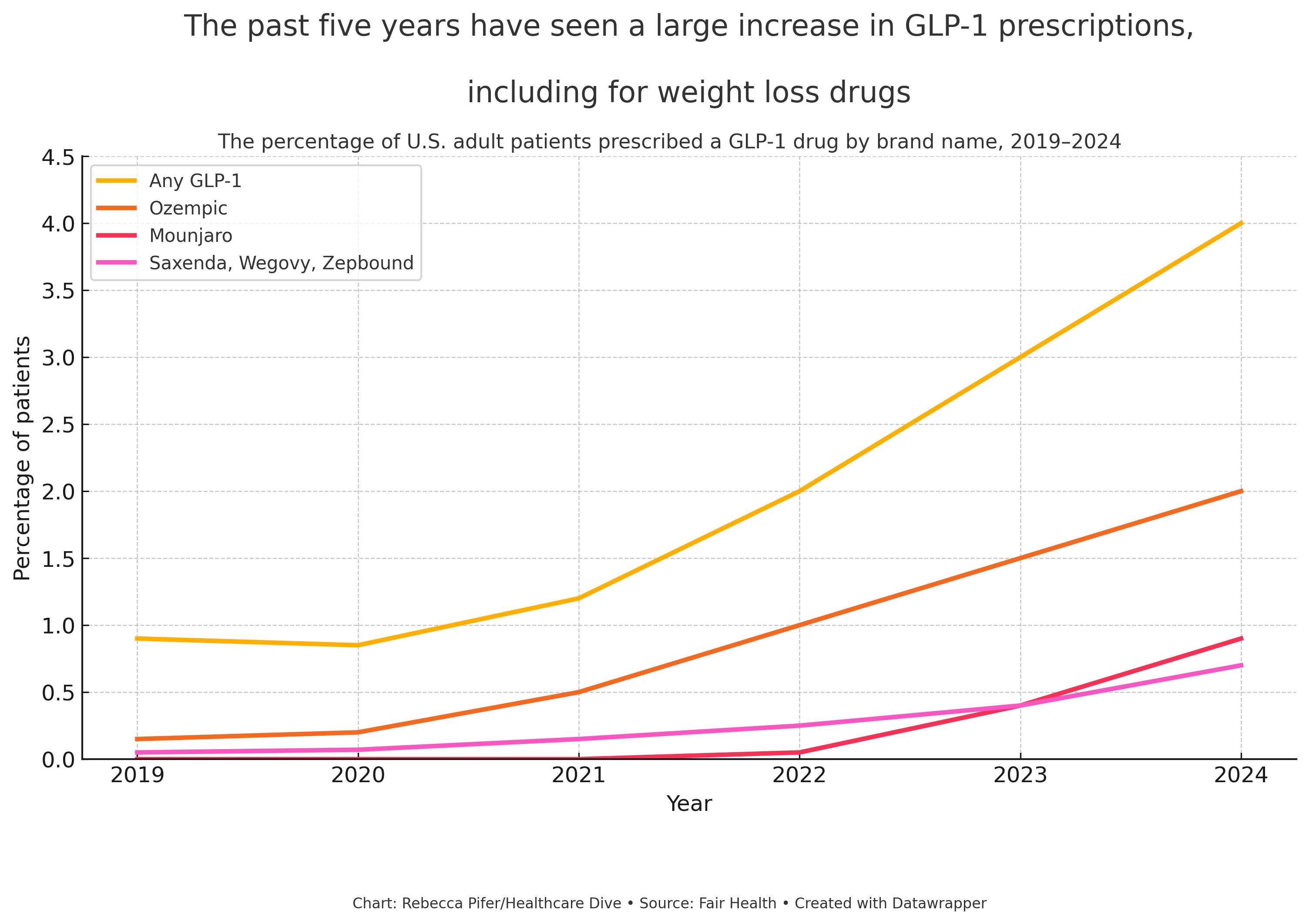
- GLP-1 prescriptions for weight loss have increased by nearly 2,000% among people without diabetes between 2019 and 2024, according to Fair Health data.
- Drugmakers face criticism and logistical challenges, including high costs, shortages, and concerns about replacing behavioural and surgical interventions.
- Government resistance to subsidising obesity medications and rising public scrutiny may slow broader uptake, despite clinical success and commercial demand.
Background: GLP-1 Receptor Agonists and Rising Obesity Treatment Demand
Glucagon-like peptide-1 receptor agonists (GLP-1 RAs) are a class of drugs that simulate a gut-derived hormone responsible for lowering blood glucose levels and suppressing appetite. Initially approved for the treatment of type 2 diabetes, these medications have more recently demonstrated efficacy in supporting weight loss. Their expansion into the field of obesity care has transformed both patient outcomes and the commercial pharmaceutical landscape.
Fair Health, a U.S.-based non-profit organisation, analysed over 51 billion commercial claims to identify trends related to GLP-1 prescriptions and obesity care. The data show a significant rise in GLP-1 prescriptions, particularly for weight loss purposes rather than diabetes management.
Explosive Uptake in Weight Loss Prescriptions
Among individuals prescribed GLP-1 medications in the past year, approximately half received the prescription for weight management, not for diabetes. When people living with type 2 diabetes were excluded from the dataset, the data revealed a 1,961% increase between 2019 and 2024 in prescriptions to individuals with overweight or obesity but without diabetes.
This staggering growth reflects both public demand and shifting clinical practice. GLP-1 RAs are increasingly viewed not only as antidiabetic medications, but as a frontline treatment option for obesity—a chronic and often intractable condition.
An Expanding Market and the Role of Industry
The commercial implications have been profound. Industry analysts project the anti-obesity drug market could exceed $100 billion globally by 2030. At present, three GLP-1 drugs are approved by the U.S. Food and Drug Administration (FDA) specifically for weight management:
- Saxenda (liraglutide) – Novo Nordisk
- Wegovy (semaglutide) – Novo Nordisk
- Zepbound (tirzepatide) – Eli Lilly
Although Saxenda received approval in 2014, it was not until Wegovy’s launch in 2021 that the weight loss potential of GLP-1s gained widespread public attention. Eli Lilly’s Zepbound followed and quickly contributed to $4.9 billion in sales in its first full year. In 2023, Novo Nordisk reported $9.9 billion in combined sales from Saxenda and Wegovy.
Shortages, Substitutes, and Setbacks
Rapid uptake led to supply shortages, during which telehealth companies partnered with compounding pharmacies to distribute non-branded formulations. Although these shortages have since resolved—restoring market exclusivity to the original manufacturers—the episode dented both projected 2025 revenues and investor confidence. It also contributed to leadership changes at Novo Nordisk.
Affordability and Access Barriers
The high cost of GLP-1 drugs remains a critical issue, with monthly list prices reported as follows:
- Wegovy: $1,350
- Zepbound: $1,060
(Source: Institute for Clinical and Economic Review)
Because long-term use is generally required to maintain weight loss, the financial burden on health plans is substantial. In 2024, fewer than 20% of employer-sponsored insurance plans covered GLP-1s for weight loss, largely due to cost constraints.
To address this, manufacturers have sought partnerships with major pharmacy benefit managers. Recent collaborations include:
- Novo Nordisk and Eli Lilly with Cigna’s health services subsidiary to offer discounts and cap out-of-pocket costs
- Novo Nordisk with CVS Caremark, granting Wegovy preferred formulary status
Policy Resistance and Political Backdrop
Obesity remains a public health emergency in the United States. According to the Centers for Disease Control and Prevention (CDC), over 40% of adults are currently living with obesity, a figure projected to reach 50% by 2030. Yet federal support for pharmacological obesity treatment remains limited.
Earlier this year, the Trump administration rejected a proposal to expand Medicare coverage to include anti-obesity drugs, a move that would have added $40 billion to taxpayer expenditures over ten years.
The decision coincides with political and cultural scrutiny of pharmaceutical interventions. Health and Human Services Secretary Robert F. Kennedy Jr. has been vocal in his opposition to pharmacological weight loss treatments, attributing rising obesity rates to poor dietary choices. He has argued that medication should not replace healthier food and lifestyle interventions.
“We cannot medicate our way out of a nutrition crisis,” Kennedy stated in a White House report released last week.
Impact on Other Forms of Obesity Care
Fair Health’s findings suggest that the rise in GLP-1 prescribing has coincided with a decline in bariatric surgery rates. This supports prior research indicating that patients are increasingly turning to pharmacotherapy instead of more invasive interventions.
However, the trend has also been linked to a reduction in behavioural health interventions, which raises significant clinical concerns. GLP-1s have been associated with increased risks of depression, anxiety, and suicidal ideation in some individuals, making ongoing psychological support an essential component of care.
Looking Ahead
While new partnerships and forthcoming price negotiations under the U.S. Inflation Reduction Act (effective 2027) may improve affordability—particularly for Medicare recipients—current dynamics underscore the complex interplay of clinical promise, economic burden, and political ideology.The rapid growth of GLP-1 prescribing marks a new chapter in the treatment of obesity. Yet its future success will depend not only on drug efficacy, but also on ensuring equitable access, maintaining comprehensive care, and fostering public trust in what remains a deeply politicised health issue.
Read More
GLP-1 receptor agonists show early promise in reducing BMI among children with severe obesity, study finds
Key Takeaways:
- GLP-1 receptor agonists appear to enhance treatment outcomes for children with severe obesity when added to existing intensive behavioural and lifestyle interventions.
- Clinically meaningful BMI reductions were observed in a higher proportion of children following the integration of GLP-1 medications into their care plans.
- Families reported additional benefits beyond weight loss, including reduced conflict around food and improved ability to follow lifestyle recommendations.
Background: Addressing Severe Obesity in Children
Children living with severe obesity face considerable health challenges and are at increased risk of metabolic and psychological complications. While glucagon-like peptide-1 (GLP-1) receptor agonists are now widely used to treat obesity in adults, their use in paediatric care remains a developing area.
These medications mimic the hormone GLP-1, which helps reduce appetite, prolong satiety, and slow gastric emptying. When prescribed as part of a holistic care plan, they may support young people in achieving clinically significant improvements in weight and health outcomes.
At the 2025 European Congress on Obesity (ECO), new data were presented suggesting that incorporating GLP-1 receptor agonists into childhood obesity treatment regimens could enhance the likelihood of meaningful BMI reduction.
The Study: Real-World Outcomes from Sweden’s National Childhood Obesity Centre
Dr Annika Janson and her research team at the National Childhood Obesity Centre, Karolinska University Hospital, Stockholm, investigated the real-world effects of GLP-1 receptor agonists when used in conjunction with intensive health behaviour and lifestyle treatment (IHBLT).
The retrospective study included 1,126 children aged 0–16 years (51.6% boys), all living with severe obesity as defined by the International Obesity Task Force criteria. Each participant was enrolled in the IHBLT programme, which involves a multidisciplinary approach to support children and their families in modifying lifestyle behaviours, such as:
- Healthy eating and nutrition education
- Managing meal portions and timing
- Reducing screen time
- Promoting physical activity
- Supporting psychological wellbeing
This intensive intervention is tailored in collaboration with families, schools, and other community stakeholders.
Introduction of GLP-1 Agonists into the Programme
From 2023 onwards, GLP-1 receptor agonists – initially liraglutide, later including semaglutide – were prescribed to approximately one in four children within the programme. The study aimed to determine whether adding these medications led to improved BMI outcomes, acknowledging the complexities and inconsistencies of medication use in real-world settings.
“GLP-1 drugs are increasingly used to treat obesity in adults. They can also be used in children from the age of 12 and clinical trials have shown children lose 5–16% of their body weight after a year of treatment,” said Dr Janson.
She also highlighted that real-life application presents challenges absent in clinical trials:
“Children have varying degrees of obesity, co-morbidities and complications and may have faced problems in supply of the drug, financing it or taking it. As a consequence, it is difficult to isolate the effect of adding GLP-1 drugs to the plethora of treatments that are already available.”
Findings: BMI Improvements and Emerging Trends
The study compared outcomes from children treated prior to 2023 with those treated during and after 2023, when GLP-1 drugs were introduced. Prior to 2023, the average BMI reduction across patients was relatively stable. However, among those treated in 2023, 30% of children achieved a clinically significant BMI reduction – defined as at least a 0.25 standard deviation drop – compared with 27% in previous years.
While the difference is modest, researchers believe it reflects a positive early trend.
“Only a fraction of the children had GLP-1 drugs and most of those who did started on them 6–12 months into the treatment programme,” explained Dr Janson. “Longer-term treatment may lead to greater improvements in BMI.”
Moreover, a point prevalence estimate from January 2025 found that approximately one quarter of the 2023 cohort were actively taking GLP-1 medications at that time.
“These are just early indications but it does look as if the average effect of being a patient at our clinic has improved after adding GLP-1 drugs to the toolbox,” she added.
Beyond BMI: Family Experiences and Behavioural Shifts
Notably, Dr Janson reported that families described benefits that extended beyond measurable weight outcomes.
“Many children with severe obesity describe hunger and a strong appetite – both of which GLP-1 receptor agonists are known to help with,” she said.
“Results beyond obesity are also important. The families reported reduced conflicts around food and improved capacity for other lifestyle adaptations. It was easier to stick to meals and limit snacks. Portions could be down-sized. For some children, not being hungry all the time is a new feeling.”
Conclusion: A Valuable Tool with Cautious Optimism
While not a universal solution, GLP-1 receptor agonists appear to be a promising adjunct in the care of children living with severe obesity. The study’s findings support their wider use, particularly when integrated within a comprehensive treatment plan.
“GLP-1 receptor agonists are clearly beneficial to many children with severe obesity and while they won’t help in all cases, more children should have access to these important medications,” Dr Janson concluded.
CCH Insight:
This study is a great example of how GLP-1RAs are meant to work. They are not, as some people think, a ‘lazy way’ or an ‘easy way’ to lose weight. They are a tool which, when used as part of a holistic care plan and supported by a multidisciplinary team, enables people (in this case children with severe obesity) to follow a healthier diet and lifestyle. The children were able to achieve this because GLP-1 medications modified their appetites, so they were no longer constantly hungry or thinking about food.
Read More
Weight-loss medications may halve risk of obesity-related cancers, landmark study reveals
Key Takeaways:
- GLP-1 receptor agonist medications may reduce the risk of obesity-related cancers by nearly 50%, rivalling the effects of bariatric surgery.
- The protective effects appear to extend beyond weight loss alone, potentially due to reductions in inflammation.
- Researchers and experts are calling for large-scale clinical trials to test weight-loss drugs as a new strategy for cancer prevention.
Introduction
A major new study suggests that weight-loss injections known as GLP-1 receptor agonists could nearly halve the risk of developing obesity-related cancers. Presented at the European Congress on Obesity in Málaga, Spain, and published in The Lancet’s eClinicalMedicine, the research has been described as “transformational” by leading cancer experts and may signal the beginning of a new era in preventive oncology.
Obesity, Cancer Risk, and Weight-Loss Interventions
Obesity is strongly linked with an increased risk of at least 13 different types of cancer. While losing weight is already known to reduce cancer risk, this study indicates that weight-loss medications may have protective effects that go beyond weight reduction alone.
The research, conducted by scientists in Israel, involved 6,000 adults with no previous cancer diagnoses. Participants had either undergone bariatric surgery or taken GLP-1 receptor agonists (GLP-1RAs), including liraglutide (Saxenda), exenatide (Byetta), or dulaglutide (Trulicity). These medications mimic the GLP-1 hormone, which plays a role in lowering blood sugar levels and promoting feelings of satiety.
Weight Loss vs Cancer Risk Reduction
Although participants who had undergone bariatric surgery lost approximately twice as much weight as those who used medication, both groups experienced a similar reduction in cancer risk. According to the study’s authors, bariatric surgery is associated with a 30–42% reduction in the risk of cancer. However, after adjusting for the greater weight loss associated with surgery, the protective effect of GLP-1 medications appeared stronger relative to the amount of weight lost.
Professor Dror Dicker, co-lead author of the study and head of internal medicine at Hasharon Hospital, Rabin Medical Center in Petah Tikva, Israel, commented:
“The protective effects of GLP-1RAs against obesity-related cancers likely arise from multiple mechanisms, including reducing inflammation.”
He also highlighted the potential of more advanced drugs:
“New generation, highly potent GLP-1RAs with higher efficacy in weight reduction may convey an even greater advantage in reducing the risk of obesity-related cancers, but future research is needed to make sure these drugs do not increase the risk for non-obesity-related cancers.”
Newer Medications Show Even Greater Promise
A second study, also presented at the European Congress on Obesity and published in the New England Journal of Medicine, compared different GLP-1 medications. It found that participants taking tirzepatide (sold as Mounjaro) lost around 50% more weight than those taking semaglutide (sold as Wegovy). Specifically, individuals using Mounjaro lost an average of 20.2% of their body weight, compared to 13.7% among those taking Wegovy.
Expert Reactions: A Transformational Moment
Professor Mark Lawler, an internationally recognised cancer researcher from Queen’s University Belfast, emphasised the significance of the findings:
“We already know bariatric surgery cuts obesity-related cancer risk by about a third; these data suggest target GLP-1s may cut that risk by nearly 50% – an approach that would be transformational in preventing obesity-related cancer.”
He continued:
“Biologically, this makes sense, as targeting GLP-1 dampens down inflammation, one of the hallmarks of cancer.
While further work is required on how it works, these data raise the intriguing possibility that a GLP-1 jab could prevent multiple cancers in the general population, including common cancers like breast and colorectal, and difficult to treat cancers like pancreatic and ovarian. This work could herald a whole new era of preventive cancer medicine.”
Professor Jason Halford, former president of the European Association for the Study of Obesity and head of psychology at the University of Leeds, proposed that GLP-1 drugs also be trialled in people with newly diagnosed cancer, to evaluate whether they could improve survival rates:
“The drugs have the potential to be a new dawn. And it’s not just prevention – weight management in people recently diagnosed with cancer is also critical in terms of outcomes. That would be the next thing to look at. More and more cancers are being associated with obesity.”
A Global Call to Action
In light of the findings, a coalition of 54 international experts from 12 countries released a joint statement at the conference urging that GLP-1 drugs be trialled urgently for cancer prevention. In response, a team of researchers at the University of Manchester, funded by Cancer Research UK, are planning a major clinical trial involving tens of thousands of participants. The study is anticipated to begin within the next three to five years.
Dr Matthew Harris, from the Manchester Cancer Research Centre, commented:
“Weight-loss jabs provide genuinely fantastic weight loss, and may provide an intervention that could be delivered on a population-scale, where we have not been able to achieve this before.”
Conclusion
This growing body of evidence suggests that GLP-1 receptor agonists may offer far more than just weight loss benefits. With their potential to dramatically reduce cancer risk, these medications could form the basis of a proactive, large-scale approach to cancer prevention, particularly for people living with obesity. Further clinical research will be critical to confirm these findings and determine the full scope of benefits—and risks—associated with long-term use.
Read More