

Exposure to violence linked to obesity
In a study from Duke University, it was found that teens that were exposed to violence consumed more unhealthy food and beverages and suffered from fatigue. The researchers used data from mobile phone applications for over 500 teens in California and North Carolina. The groups carried out initial assessments and baseline measurements were taken; follow up was completed 18 months later. The teenagers were then given an application on their phones which created a survey for them to fill out, they reported on their exposure to violence, their diet, physical activity and their hours of sleep. ‘Exposure to violence’ was defined as physical fighting at home, school, in their neighbourhoods or elsewhere.
The group from California reported unhealthier diets on the days that they were exposed to violence, and fatigue for the day after (attributed to poor sleep quantity and quality). The North Carolina group also reported the fatigue, but no change in diet. However, both groups reported an increase in physical activity on the days that they were exposed to violence; this data was logged using wearable devices. As adolescence is a key period for the development of eating habits and many other behaviours, the researchers are hoping to continue their research in order to examine the full mechanism behind this effect as well as to address the high levels of obesity amongst this age group.
Read More
Chemicals in urine can predict how body will respond to junk food diet
Researchers at Imperial College London have found that certain compounds in urine can be used to show who is at a greater risk of developing obesity or diabetes due to a poor diet. The research was conducted in mice and helps us to understand how the gut microbiome contributes to our health, as the chemicals that were detected were released by the bacteria in our gut. It has been known for some time that different people will have varying outcomes when exposed to a high-fat diet, making it difficult to create a universal diet plan that works for everyone, however the effect of the gut microbiome is less well known.
By using genetically similar mice and analysing their urine, the researchers were able to identify some chemical signatures that were predictive of some outcomes, such as weight gain and glucose tolerance – which is an early sign of diabetes. The findings themselves will be made part of a larger trial that will involve around 2,000 participants which aims to identify how and why people react differently to similar diets and how their microbiomes influence this. It is also hoped that this could lead to a more personalised diet for those wishing to control their weight or to avoid health conditions such as diabetes or cardiovascular disease.
Read More
Maternal obesity linked to childhood neurodevelopmental problems
A study published in the American Journal of Preventative Medicine has linked maternal obesity to an increased risk of behavioural problems in male children. In this study data from the 1979 and 1986 U.S. National Longitudinal Survey of Youth was used. They also assessed whether the effect of maternal weight on childhood behavioural problems was affected by race or gender of the child. In total, nearly 5,000 mother and child pairs were involved from 1986 to 2012, the study itself focused on children between the ages of 9 and 11 as this is a time when behavioural problems commonly manifest.
Interestingly, the study showed that boys whose mothers entered pregnancy with a higher weight were at a higher risk of behavioural problems in later life than their female counterparts, in fact there was no link demonstrated with females. Further to this, boys whose mothers entered pregnancy underweight were also at a higher risk of behavioural problems. There was no difference for race. It is hoped that this research will be furthered by looking into the effects by adolescence. The researchers are also hoping to highlight the need for early intervention with women to attain a healthy weight before they become pregnant, as it not only affects them but the future health of their children too.
Read More
Being large at birth correlates to childhood obesity
A new study, from the University of Virginia School of Medicine, has suggested that infants with a high birthweight are more likely to become obese children. The study itself examined the data of 10,186 children born both prematurely and at term. The findings were consistent for both sets of children. It was found that children born with a high birthweight (described as >10lb) were 69% more likely than average weight children to be obese by age four and by age six, 23.1% of high birthweight children were obese, whilst only 14.2% of average birthweight children were.
The study found the relationships consistent despite adjusting for factors such as socioeconomic status. The researchers are calling for doctors to counsel parents of high birthweight children, so that the development of obesity in later life can be prevented. It is also hoped that even if doctors do not counsel their patients, new parents will alter their lifestyle habits to help their children avoid future weight and health problems.
Read More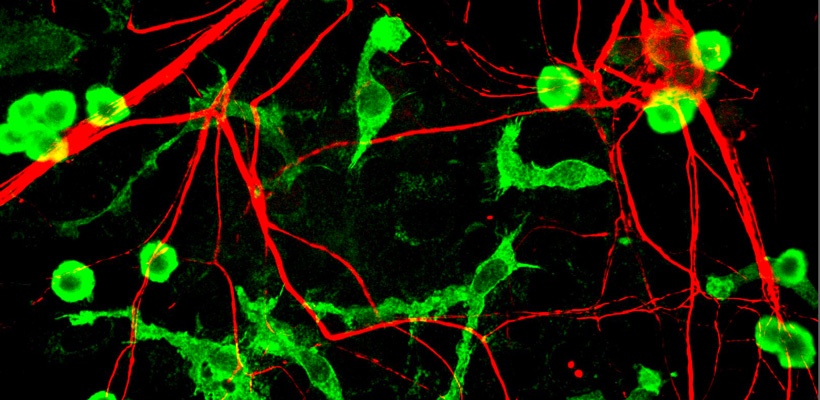
Immune cells in brain drive overeating
A study, from the University of California in San Francisco, has found that immune cells within the brain, known as microglia, could be responsible for weight gain caused by overeating. It has been known for some time that the hypothalamus contains neurons that regulate food intake and energy expenditure; in this study the researchers fed mice a high fat diet which is known to cause an increase in microglia. It was found that the high fat diet caused local inflammation within the hypothalamus, when compared to the control group of mice. They also found that the mice who had been fed high fat foods continued to consume more afterwards.
In order to prove that the increase in microglia was the cause of the overeating, some of the mice were given a drug that depleted their levels of the cell. They found that mice treated with the drug consumed 15% less and gained 20% less weight, compared to mice on the same diet. Mice were then engineered to form microglia that couldn’t mount an inflammatory response and they gained 40% less weight, suggesting that the effect of microglia could be crucial in our understanding of the development of obesity. The researchers are hoping to move their study on to humans in the near future to properly examine the effect of microglia on overeating and obesity and potentially help control them. In the immediate future they are going to investigate how the consumption of high-fat foods leads to the activation of microglia, and whether there is any way to stop these signals from being processed.
Read More
TV in the bedroom linked to childhood obesity
Preschool children can spend up to 12 hours a day in sedentary time, which can include watching television, playing electronic games and reading. Few preschool children are meeting the current recommendations of less than 1 hour of screen time per day, and are spending large amounts of time engaging in screen time. According to new research, children who have a TV in their bedroom at the age of 7 are more likely to become overweight.
Prof Russell Viner of the Royal College of Paediatrics and Child Health, who was not involved in the study, has said that “The study indicates, more research is needed to fully understand this complex area, but this is a high quality study covering a very large and nationally representative sample and provides a reasonably strong basis to think that the links shown here are real….it highlights that having a TV in the bedroom from seven years increases the risk of being overweight four years later, regardless of the child’s weight in earlier childhood. As such, the findings must be taken very seriously.”
Read More
Specialist clinics key to tackling obesity complications in pregnancy
In the UK, approximately 20% of pregnant women are obese and 2% have very severe obesity (BMI) ≥40 kg/m2.
According to a recent study, attendance at a specialised antenatal clinic for obesity was associated with reduced rates of stillbirth and low birthweight. It was also associated with improved detection of gestational diabetes.
The improvement in clinical outcomes was associated with an increase in the mother-to-be being attended to by healthcare staff. This allowed for complications to be identified earlier and therefore to obstetric triage and clinical interventions. This included induction of labour as well as caesarean sections.
Specialist antenatal clinics for severely obese mothers-to-be could help to cut the rates of pregnancy complications linked to obesity.
Read More
Maternal obesity linked to birth defects
A major study has found that women who are obese when they conceive are more likely to have a baby with serious birth defects.
Risks of any major congenital malformation and several subgroups of organ specific malformations progressively increased with maternal overweight and increasing severity of obesity.
The study concluded that for women who are planning a pregnancy, efforts should be taken to encourage a reduced adiposity in those with a BMI above the healthy range, therefore greater than 25.
Read More
New type of weight measurement more accurate than BMI in teenagers
Researchers from the University of Alabama have found that triponderal body mass index (TMI) may be more accurate than BMI in estimating body fat amongst adolescents. In a study published in JAMA Paediatrics the researchers found that during adolescent development, weight was not proportional to height squared, which is the calculation for BMI. By examining data from 2,285 children and adolescents, in the Nutrition and Health Examination Survey, they found that TMI estimated body fat better than BMI. TMI itself is calculated by dividing weight by the cube of the height, they also reported that comparing TMI was much easier as it did not involve complicated percentiles, as comparing BMI does.
One particular area that the authors found BMI to be worse than TMI was the incorrect diagnosis of overweight. BMI calculations would do this 19.4% of the time, whilst TMI would result in 8.4% incorrect diagnoses, this data is especially important in lean adolescents. The authors stress that tracking body fat through adolescence is difficult as there is a complex relationship between height and weight due to the commencement of puberty. Further to this they highlighted that TMI should be considered in the context of other health and demographic factors. It is hoped that more research will be undertaken to assess the accuracy of TMI in a wider range of ethnicities and age ranges.
Read More
Childhood obesity quadruples risk of developing Type 2 Diabetes
According to a large-scale study published in the Journal of the Endocrine Society a child with obesity faces a four-fold increased risk of developing type 2 diabetes by the time they are 25 than their normal weight counterparts. The study examined data from 375 GP practices around the UK, using the UK Clinical Practice Research Datalink. In total this amounted to 369,362 children between the ages of 2 and 15. Children and adolescents with obesity constituted nearly half of all diagnoses of Type 2 Diabetes between 1994 and 2013. As expected, there was no relationship between obesity and Type 1 diabetes, which is caused by an underlying autoimmune disorder.
Dr Ali Abbasi, lead author from King’s College London said, “given that diabetes and obesity are preventable from early life, our findings and other research will hopefully motivate the public and policymakers to invest and engage in diabetes prevention efforts.” Both obesity and type 2 diabetes are large scale health problems that often present together, hopefully this research will be taken into account by experts and policy makers in the future.
Read More
Routine and regular bedtimes may help stave off obesity
A study from the Ohio State University has concluded that regular bedtimes, mealtimes, and limited screen time is related to emotional health and obesity in preschool children. The study has been published in the International Journal of Obesity, and uses data from the UK Millennium Cohort Study. For the research itself, data from 10,955 children was included; this was then combined with reports of routine and self-regulation to make the link with obesity rates. Regular bedtimes, mealtimes and limited screen times were all associated with improved emotional health regulation, children with greater dysregulation were more likely to be obese in later life. Even children who ‘usually’ had a bedtime had much higher rates of emotional dysregulation than those who ‘always’ had a bedtime.
It is hoped that this research will prompt further work into looking at the role of emotional self-regulation in weight gain and how routines can support healthy development. It is important to note that this work does not prove that routines prevent obesity, only that they improve emotion regulation, which in turn has a large effect on obesity.
Read More
Weight management program reduces job absenteeism
Obesity does not only have direct medical costs, but it also has wider economic costs that many of us do not think about. Examples of this are, missed time from work and lost productivity. This study, from the University of Michigan, aimed to analyse the effects of a weight management program with the focus being the impact that it had at work. The program itself is billed as a two year, multicomponent and multidisciplinary program for people with moderate to severe obesity. Low-calorie meal replacements are used in the early stages with a stepwise progression to food based diets and an eventual change in behaviour being the final outcome.
92 participants from a range of industries were involved in the study, the program itself was shortened to six months. However, the individuals lost an average of 41 pounds, further to this it was reported that before the program was initiated they were spending 5.2 fewer hours at work than what their employers expected, after the program they were spending 6.4 hours more than expected. A change in job performance was not seen, therefore the authors are hoping to further this research to discover if they can affect job productivity.
Read More